Are your heat exchangers leaking again? Frequent leaks stop production and cost you money. I will show you why gaskets fail and how to fix this problem forever.
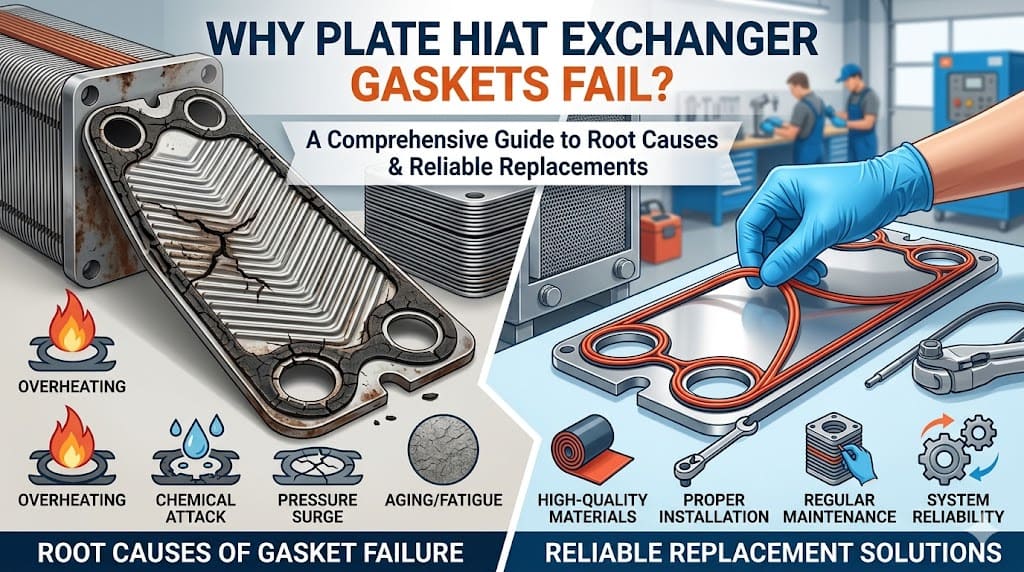
Plate heat exchanger gaskets fail due to overtemperature, chemical incompatibility, water hammer, and improper tightening.1 Different physical signs point to specific root causes. Identifying these causes helps you choose the right replacement and prevent future leaks.
You might think a leak just means a bad gasket. You might just buy another cheap spare part. But if you stop reading now, you will keep breaking your plates and wasting your maintenance budget.
Why Do Gaskets Become Hard and Crack?
Do you see dry and broken rubber in your heat exchanger? This brittle material cannot seal anything. Let us look at what bakes your gaskets to death.
Gaskets harden and crack because of overtemperature or oxidation.2 The process temperature goes over the limit of the gasket material. Then the rubber loses its elasticity. You must check your operating temperature immediately.
I remember visiting a palm oil refinery last year. The plant manager showed me his gaskets. They snapped like dry twigs in my hands. The physical sign was very clear. The root cause was severe overtemperature.
The Science of Heat Damage
Rubber gaskets have strict heat limits. You push them past this limit. The molecular structure breaks down.3 The rubber cures too much. It becomes very hard. Once it hardens, it cannot bounce back. It loses its rebound ability. This means it cannot keep a tight seal between the metal plates.
Common Material Limits
You must know the limits of your materials. Your process gets hotter than these limits. The gasket cooks. Here is a simple guide to common materials and their heat limits4.
| Gasket Material | Safe Temperature Limit | Common Application |
|---|---|---|
| NBR5 (Nitrile) | Up to 110°C (230°F) | Water, oil, HVAC |
| EPDM6 | Up to 150°C (300°F) | Steam, hot water, acids |
| FKM (Viton) | Up to 200°C (392°F) | High heat, harsh chemicals |
Always check your system gauges. Keep your process temperature below the safe limit of your gasket material.
Why Do Gaskets Swell and Become Soft?
Does your gasket look like a wet sponge? Soft and swollen gaskets cause sudden and messy leaks. We need to find out what is eating your rubber.
Gaskets swell and soften due to chemical incompatibility.7 The gasket material cannot fight off the chemicals in your fluids. For example, standard NBR rubber will fail quickly in strong solvents.8
A few months ago, a customer sent me a picture of a gasket. It looked twice its normal size. It was very soft and sticky. This is a classic physical sign. The root cause is chemical incompatibility.
How Chemicals Destroy Rubber
Your gasket life depends on its weakest point. The temperature might be fine. But the wrong chemical will destroy the rubber. The fluid soaks into the gasket. The rubber absorbs the fluid and swells.9 As it swells, it loses its shape and strength. It becomes too soft to hold the pressure. The seal breaks. The fluid leaks out.
Matching Material to Fluid
You must match your gasket material to your exact fluid. You cannot guess. You use NBR in a strong acid system. It will melt.10
| Fluid Type | Bad Choice | Good Choice |
|---|---|---|
| Oils and Fats | EPDM | NBR |
| Steam and Acids | NBR | EPDM |
| Strong Solvents | EPDM / NBR | FKM (Viton) |
Check your fluid type before you buy replacements. Make sure the chemical makeup matches the rubber type perfectly.
Why Do Gaskets Squeeze Out of the Sides?
Are your gaskets hanging out from the sides of the plates? This blowout causes massive fluid loss. Let us explore the hidden forces pushing them out.
Gaskets squeeze out laterally because of water hammer effects or wrong tightening dimensions. A sudden shockwave of pressure pushes the gasket out. Also, the plate pack might lack proper tightening.
Many people think lateral extrusion means the normal working pressure is too high. This is usually wrong. I saw a huge district cooling plant face this issue. The normal pressure was low. But the gaskets still blew out.
The Water Hammer Effect
The real killer is the water hammer effect. A valve closes too fast. The fluid stops suddenly. This creates a massive shockwave.11 This shockwave hits the heat exchanger. The sudden spike in pressure is huge. It rips the gasket right out of the groove.12
Installation Mistakes
Another big reason is bad installation. You do not close the plate pack tight enough. The groove cannot hold the rubber. The gasket needs firm walls to stay in place.
| Cause of Extrusion | How It Happens | How to Fix It |
|---|---|---|
| Water Hammer | Fast valve closing creates shockwaves | Install slow-opening valves |
| Loose Plate Pack | Tightening dimension is too big | Tighten to the standard A-value |
| Pressure Spikes | Pump starts up too quickly | Use variable speed drives |
Always check your system controls. Make sure valves open and close slowly to protect your seals.
Why Does Overtightening Cause More Leaks?
Do you tighten the bolts more when you see a leak? This instinct actually destroys your heat exchanger. I will show you why pulling harder ruins everything.
Blind overtightening causes irreversible damage. Every plate pack has a standard tightening dimension. We call this the A-value.13 You compress the plates too much. The metal deforms. The gasket loses its rebound space.14
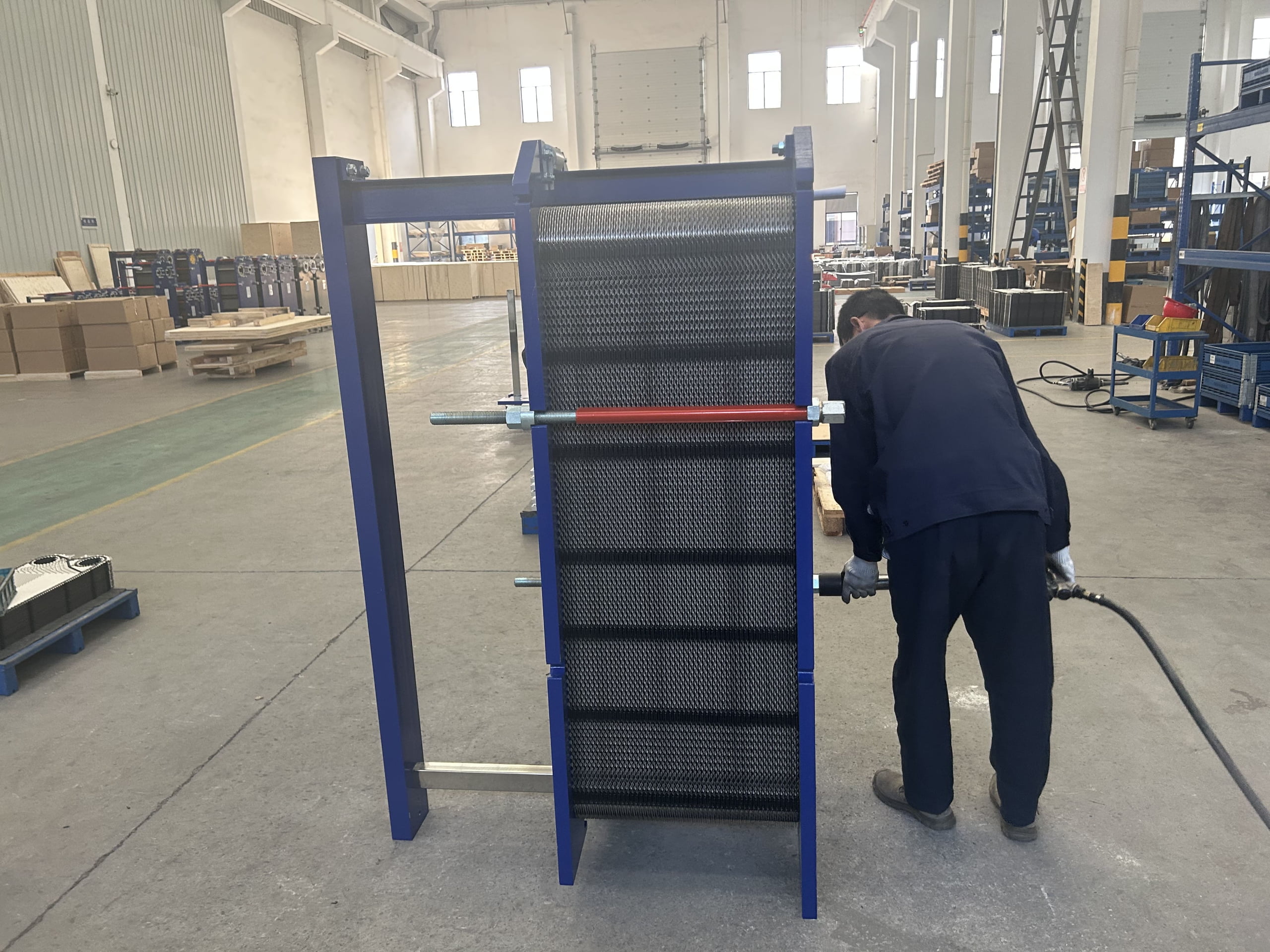
I always warn maintenance teams about the monkey-wrench habit. A leak starts. The first reaction is to grab a wrench. The worker pulls the bolts tighter. I watched a factory ruin fifty expensive titanium plates this way. Many leaks are not even gasket damage. They just have the wrong tightening dimension.
The Danger of Exceeding the A-Value
Every heat exchanger manual gives you an A-value. This is the exact distance for the closed plate pack. You tighten past this value to stop a leak. You crush the plates. The metal bends. The gasket groove flattens out. The rubber loses all its space to bounce back.
Permanent System Damage
Once the metal bends, the game ends. You cannot unbend it. The gasket suffers permanent damage.
| Action | Result on Gasket | Result on Plate |
|---|---|---|
| Correct Tightening | Perfect rebound | Safe and flat |
| Slight Overtightening | High stress | Minor stress |
| Blind Overtightening | Permanent loss of elasticity | Irreversible metal deformation |
Never use overtightening as a quick fix. Always measure the A-value with a tape measure. Keep it exact.
How to Choose the Right Replacement Gasket15?
Are you tired of buying spare parts that fail in two months? Cheap copies look the same but perform terribly. Let us find out how to get exact matches.
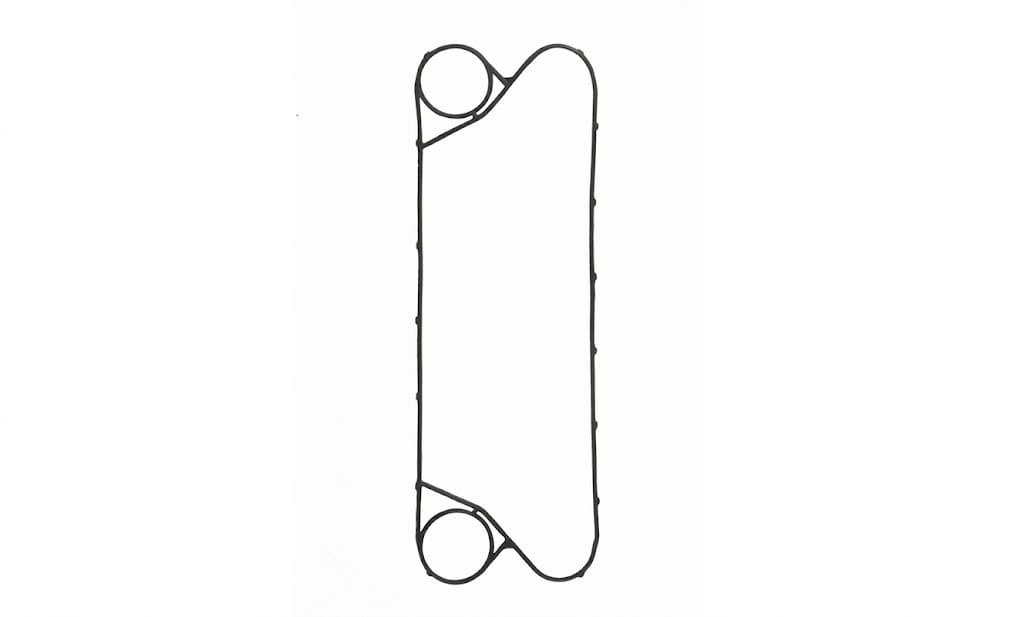
You must provide a complete media composition list. Do not just give temperature and pressure. High-quality replacements use 3D modeling based on original gasket groove data. This ensures identical compression ratios.
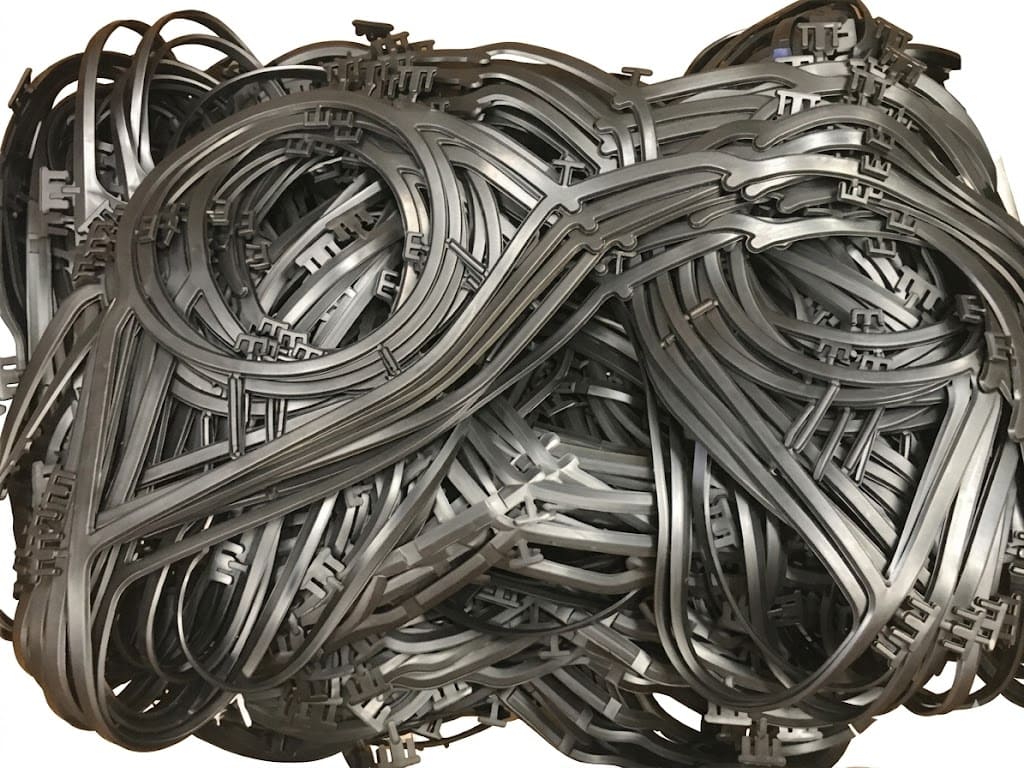
A client in Saudi Arabia bought a container of cheap gaskets. They looked exactly like the original parts. But they all leaked within a week. The outside shape was the same. The inside volume was wrong.
Beyond Temperature and Pressure
You buy new gaskets. You must give the full media composition. Do not just give the temperature and pressure. The gasket life depends on the least tolerable environment factor. We need every detail. We use this to pick the right rubber compound.
The Secret of Compression Ratios
At Tivo, we do not just copy the look. We use advanced technology. We scan the original plate grooves. We build a perfect 3D model. This ensures the volume of the rubber perfectly matches the space in the metal groove.
| Factor | Cheap Copy | Tivo Replacement |
|---|---|---|
| Media Check | Basic Temp/Pressure | Full Chemical Analysis |
| Design Method | Copying the old rubber | 3D Modeling the metal groove |
| Compression Ratio | Random | 100% Identical to Original |
This exact compression ratio gives you a perfect seal. It makes your aftermarket parts work perfectly.
Conclusion
Understanding physical signs helps you find the true root cause of gasket failure. Choose exact-match replacements based on groove data to keep your heat exchangers running safely and efficiently.
"[PDF] Simulation of gasketed-plate heat exchangers using a generalized ...", https://www.ou.edu/class/che-design/pub-papers/Simulation%20of%20gasketed-plate%20heat%20exchangers%20using%20a%20generalized%20model%20with%20variable%20physical%20properties(Nahes%20et%20al)-22.pdf. Maintenance and failure-analysis literature on plate heat exchangers identifies thermal degradation, chemical attack, pressure transients, and incorrect compression or assembly as recurring gasket-leakage mechanisms. Evidence role: general_support; source type: other. Supports: Plate heat exchanger gasket failures can result from overtemperature, chemical incompatibility, water hammer, and improper tightening.. Scope note: This would support the categories of failure, but may not establish their relative frequency in all industries. ↩
"Study on the Mechanical Behavior of Nitrile Rubber Materials Under ...", https://pmc.ncbi.nlm.nih.gov/articles/PMC12941664/. Polymer aging studies support that elevated temperature and oxidative exposure can increase hardening, embrittlement, cracking, and loss of elastomeric sealing performance in rubber materials. Evidence role: mechanism; source type: paper. Supports: Rubber gaskets can harden and crack because of overtemperature or oxidation.. Scope note: The evidence would describe elastomer behavior generally; the exact aging rate depends on the gasket compound and service environment. ↩
"Scission, Cross-Linking, and Physical Relaxation during Thermal ...", https://pmc.ncbi.nlm.nih.gov/articles/PMC6723081/. Research on thermal degradation of elastomers describes heat-induced chemical changes such as chain scission, crosslinking, and oxidation that alter the polymer network and reduce mechanical performance. Evidence role: mechanism; source type: paper. Supports: Excessive heat can damage the molecular structure of rubber gasket materials.. Scope note: The source would explain the degradation mechanism broadly and may not address every gasket material used in plate heat exchangers. ↩
"[PDF] Elastomer Characteristics", https://www.nrc.gov/docs/ML0720/ML072040257.pdf. Elastomer materials references provide typical upper service-temperature ranges for NBR, EPDM, and FKM, supporting the need to match gasket compound to operating temperature. Evidence role: definition; source type: institution. Supports: NBR, EPDM, and FKM have different safe operating-temperature limits.. Scope note: Published temperature limits vary by formulation, exposure time, pressure, and fluid chemistry; a general table should not be treated as a universal rating. ↩
"Timeline of United States inventions (1890–1945) - Wikipedia", https://en.wikipedia.org/wiki/Timeline_of_United_States_inventions_(1890%E2%80%931945). The source identifies NBR as nitrile rubber, describes its common use in seals and gaskets due to oil and fuel resistance, and gives a typical service-temperature range with an upper limit close to 110°C. Evidence role: general_support; source type: encyclopedia. Supports: NBR (nitrile rubber) is a common gasket material with a typical safe temperature limit around 110°C and is often used where oil resistance is needed.. Scope note: Exact temperature limits and fluid compatibility vary by NBR formulation, compound additives, and operating conditions. ↩
"EPDM: heat and steam resistance | O-Ring ERIKS", http://o-ring.info/en/materials/epdm/epdm-heat-steam-resistance/. A materials reference describing EPDM as an elastomer suitable for elevated-temperature water/steam service, with typical upper service temperatures around 150°C and resistance to many acids, would support the article’s gasket-material selection table. Evidence role: definition; source type: encyclopedia. Supports: EPDM is a common plate heat exchanger gasket material suitable for steam, hot water, and acids, with a safe temperature limit of up to about 150°C (300°F).. Scope note: Exact temperature limits and chemical compatibility vary by EPDM formulation, cure system, exposure time, and fluid concentration. ↩
"Solvent Swelling-Induced Halogenation of Butyl Rubber Using ...", https://pmc.ncbi.nlm.nih.gov/articles/PMC10610726/. Elastomer compatibility references and polymer studies support that incompatible fluids can be absorbed into rubber, causing swelling, softening, and reduced mechanical strength. Evidence role: mechanism; source type: research. Supports: Chemical incompatibility can cause rubber gaskets to swell and soften.. Scope note: The degree of swelling depends on the exact elastomer formulation, fluid composition, temperature, and exposure duration. ↩
"[PDF] Nitrile Glove Chemical-Compatibility Reference - UPenn EHRS", https://ehrs.upenn.edu/sites/default/files/2019-03/glove%20compatibility%20poster_0.pdf. Elastomer compatibility data generally show that nitrile rubber has limited resistance to several strong organic solvents, supporting the warning that NBR may be unsuitable in such services. Evidence role: general_support; source type: institution. Supports: Standard NBR rubber can fail in some strong-solvent applications.. Scope note: The term “strong solvents” is broad; compatibility must be checked against the specific solvent, concentration, and temperature. ↩
"Influence of swelling on the elasticity of polymer networks cross ...", https://pmc.ncbi.nlm.nih.gov/articles/PMC11305141/. Polymer swelling theory describes solvent or fluid uptake into elastomer networks, leading to volumetric expansion and changes in mechanical properties. Evidence role: mechanism; source type: paper. Supports: Rubber can absorb process fluids and swell, changing its shape and sealing properties.. Scope note: This supports the physical mechanism of swelling, but not the specific compatibility of any individual plant fluid without composition data. ↩
"[PDF] Ansell Chemical Resistance Guide - Environment, Health and Safety", https://ehs.sfsu.edu/sites/default/files/documents/Glove%20Chemical%20Resistance%20Guide%20-%20Ansell.pdf. Chemical resistance references for elastomers support that nitrile rubber is generally unsuitable for many strong-acid environments compared with more acid-resistant elastomers such as EPDM or FKM. Evidence role: general_support; source type: institution. Supports: NBR is generally a poor choice for many strong-acid systems.. Scope note: “Melt” is informal and may overstate the mechanism; actual failure may involve swelling, softening, cracking, or chemical degradation depending on acid type and concentration. ↩
"Water hammer Flows", https://web.eng.fiu.edu/arleon/courses/Transient_flows/Lectures_2013/Lecture7.pdf. Hydraulic engineering references define water hammer as a pressure surge caused by rapid changes in fluid velocity, including sudden valve closure in piping systems. Evidence role: definition; source type: education. Supports: Rapid valve closure can create a water-hammer pressure surge.. Scope note: The source would define the water-hammer mechanism, while the magnitude of the surge depends on pipe length, wave speed, valve closure time, and system design. ↩
"Rethinking Water Hammer Solutions: Why Expansion Joints Are Not ...", https://fluidsealing.com/blog/expansion-joints-blog/rethinking-water-hammer-solutions-why-expansion-joints-are-not-enough/. Engineering sources on gasket extrusion and hydraulic transients support that sudden overpressure can exceed sealing retention forces and contribute to gasket displacement or blowout. Evidence role: mechanism; source type: research. Supports: A sudden pressure spike can contribute to gasket extrusion or blowout from its groove.. Scope note: This would be contextual support; direct proof for a specific plate heat exchanger requires system pressure data and inspection findings. ↩
"[PDF] Plate heat exchangers - Alfa Laval", https://assets.alfalaval.com/documents/p4026c63d/alfa-laval-maintenance-manual-en.pdf. Plate heat exchanger maintenance manuals describe a specified compressed plate-pack dimension, often labeled the A-dimension or A-value, used to set correct assembly compression. Evidence role: definition; source type: other. Supports: Plate heat exchangers have a specified tightening dimension commonly referred to as an A-value or A-dimension.. Scope note: Terminology and exact measurement procedures can vary by manufacturer and model. ↩
""Overtightening plate heat exchangers/failure to seal?"", https://groups.google.com/g/westcoastporteng/c/1A4Fyr6dDTk. Plate heat exchanger service literature supports that tightening beyond the specified plate-pack dimension can overcompress gaskets and deform plates, reducing proper sealing geometry. Evidence role: mechanism; source type: other. Supports: Overtightening a plate heat exchanger can deform plates and overcompress gaskets.. Scope note: The evidence would support the risk in principle; actual permanent deformation depends on plate material, thickness, pattern, and degree of overtightening. ↩
"[PDF] Parker O-ring Handbook", https://wp.optics.arizona.edu/optomech/wp-content/uploads/sites/53/2016/10/Parker-O-ring-handbook.pdf. Engineering guidance on elastomer seal selection and gasket design supports that replacement gaskets must be chosen for chemical/media compatibility and operating conditions, and that correct groove geometry and compression are necessary for reliable sealing. Evidence role: expert_consensus; source type: institution. Supports: A replacement plate heat exchanger gasket should be selected based on full media/chemical compatibility and correct gasket geometry/compression fit, rather than on appearance, temperature, and pressure alone.. Scope note: Neutral sources may support the general engineering principles of elastomer compatibility and compression/groove fit, but may not specifically validate the article’s claim about a particular company’s 3D modeling process. ↩