Are your cheap replacement parts causing unexpected leaks? Plant shutdowns cost thousands of dollars every hour. Here is how strict technical standards solve your worst maintenance nightmares.
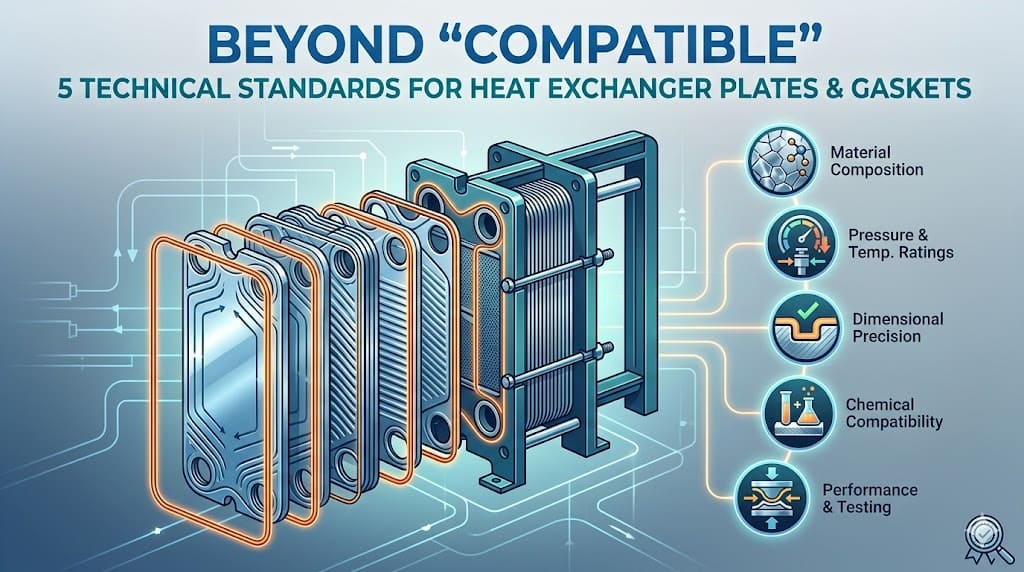
True compatibility goes beyond basic size matching. It requires exact corrugation alignment, zero-defect surface finishes1, rigorous dye penetrant testing2, proper rubber post-curing, and flash-free gasket edges3. Meeting these five technical standards ensures your heat exchanger runs safely, prevents leaks, and extends your equipment's lifespan.
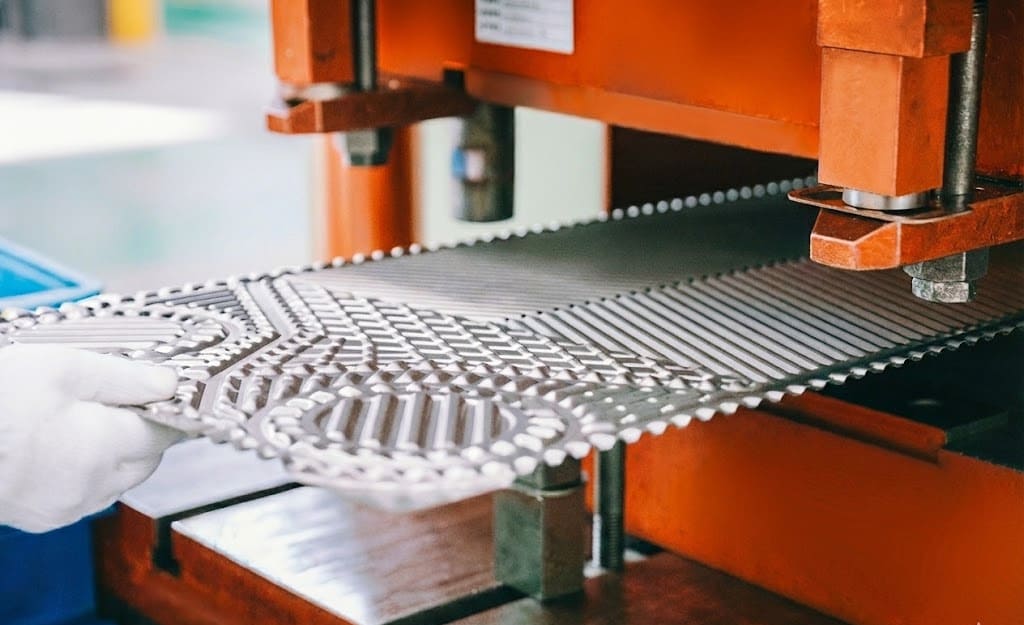
Many plant managers buy replacement parts4 that look identical to the original brands. They install them, start the system, and hope for the best. But hoping is not a good strategy when high pressure and corrosive fluids are involved. I have seen too many cheap plates crack and cheap gaskets shrink after just a few months of use. This happens because "looking the same" is not enough. You need true technical compatibility. Let me show you the five strict standards we use at TIVO5 to make sure your parts never fail.
Why Is Peak Synchronization Crucial for Heat Exchanger Plates?
Do your plates vibrate under pressure? Micro-vibrations wear down the metal and cause sudden cracks. Exact peak synchronization6 stops this vibration and saves your equipment.
Peak synchronization means the wave shapes on replacement plates match the original perfectly. This creates dense, even contact points between plates. It stops micro-vibrations7 during pressure changes, preventing the metal from getting thin and cracking over time.
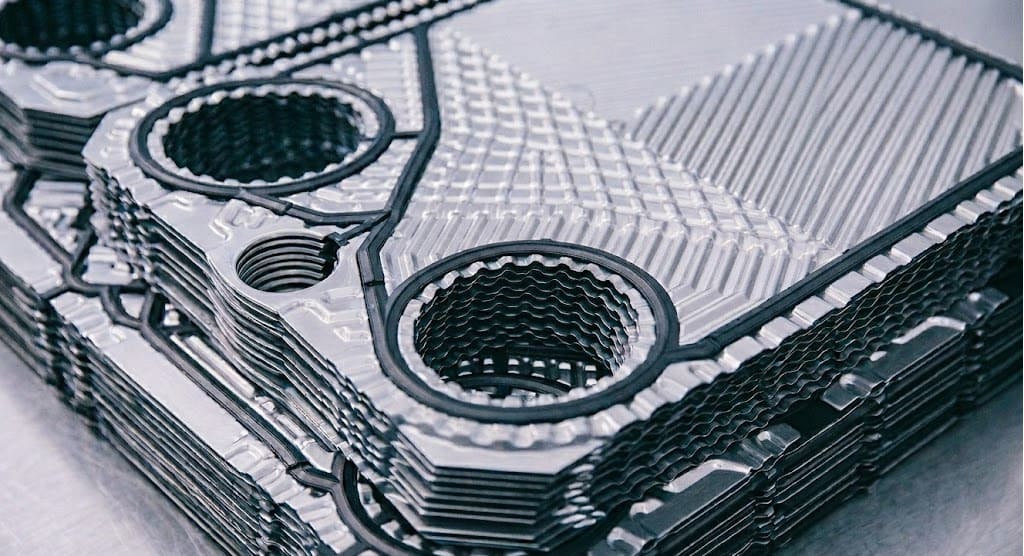
Plates are not just a medium for heat transfer. They are structural parts that support each other. When you put them together, the waves on the plates cross over each other. These crossing places are the contact points.
The Danger of Misaligned Plates
If a replacement plate has even a tiny shift in its wave shape, the number of contact points drops. When the system pressure changes, the plates do not have enough support. They start to shake. We call this micro-vibration. Over time, this shaking rubs the top of the waves. The metal gets thin. Eventually, it cracks, and the fluids mix. This is a disaster for any plant.
How We Solve This at TIVO
To stop this, we use strict 1:1 mold calibration. We make sure thousands of contact points line up perfectly. This spreads the pressure evenly across the whole plate. It extends the physical life of the metal.
| Standard | Cheap Plates | TIVO 1:1 Plates |
|---|---|---|
| Contact Points | Sparse and uneven | Dense and perfectly matched |
| Vibration | High micro-vibration | Stable under pressure |
| Fatigue Life | Short (cracks easily) | Long and reliable |
This structural match is the first step to real safety in your heat exchanger system.
How Does Dye Penetrant Inspection Stop Hidden Internal Leaks?
Invisible cracks can cause internal leaks8 that ruin your products. Finding them after assembly is too late. Dye penetrant testing catches these tiny flaws before shipping.
Dye Penetrant Inspection (PT) uses capillary action to pull red liquid into microscopic cracks. It reveals flaws that are only a few microns wide. This strict zero-tolerance test ensures the plates are completely sealed the moment you start your equipment.
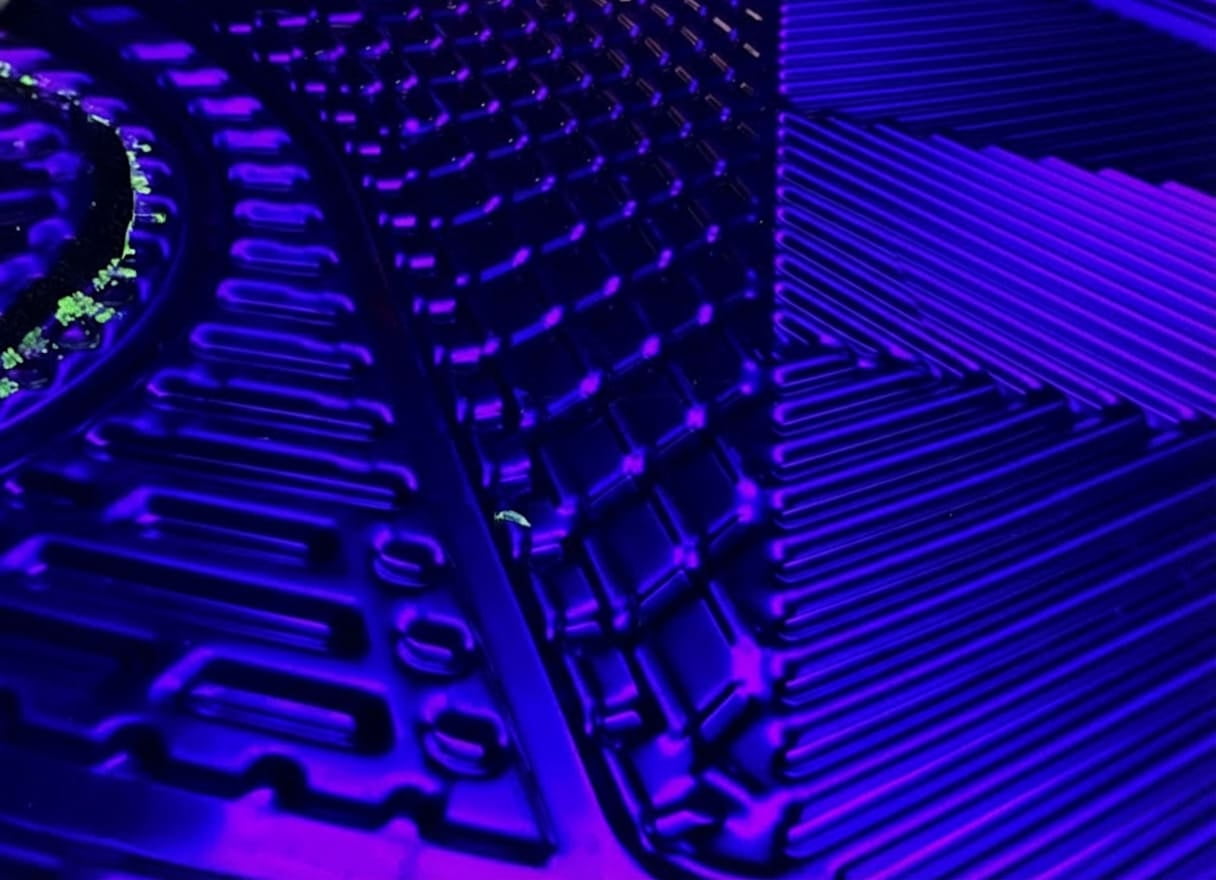
Internal leaks are the worst nightmare for food processing and chemical plants. If a crack is too small to see, you will not know it is there until your clean fluid is ruined by your dirty fluid.
The Power of Capillary Action
We do not guess if our high-end plates are safe. We test them. Before any premium plate leaves our factory, it goes through Dye Penetrant Inspection (PT). We put a special red liquid on the metal. Because of capillary action, this liquid gets sucked into any crack, even if it is just a few microns wide. Then, we clean the surface and apply a developer. If there is a crack, a bright red line appears.
Zero Tolerance for Leaks
We have a zero-tolerance policy for internal leaks. If a plate shows even one tiny red mark, we throw it away.
| Inspection Step | Action Taken | Result |
|---|---|---|
| Application | Apply red penetrant dye | Dye enters micro-cracks |
| Cleaning | Wipe surface clean | Only hidden dye remains |
| Developing | Apply white developer | Cracks show as red lines |
This is the most important safety backup9 for 1:1 replacement parts. It guarantees that your heat exchanger is absolutely sealed from the very first second of operation.
Why Does Surface Roughness Cause Heat Exchangers to Foul Faster?
Are you cleaning your heat exchangers too often? Rough plates catch dirt and scale quickly, killing your efficiency. Smooth plates stop this buildup and save energy.
Cheap molds create plates with a high surface roughness10. These rough surfaces act like tiny hooks that catch micro-particles and biofilms, increasing fouling rates11 by over 30%. Controlling surface roughness below 0.4um keeps the plates clean and extends the efficient heat transfer cycle.
Many third-party suppliers use cheap molds to press their plates. The material might be good, like SS316, but the mold makes the metal surface very rough at a microscopic level.
The Anchor Effect
Think of a rough surface like thousands of tiny hooks. When fluid flows over it, these hooks grab onto small dirt particles, minerals, and biofilms. This makes the dirt stick fast. We call this fouling. Because of this, cheap plates get dirty and block the flow much faster. In fact, their fouling rate is often 30% higher than the original brand parts.
The TIVO Smoothness Standard
At TIVO, we control the surface roughness of our plates to be less than 0.4 microns. A smoother surface means the dirt just slides off.
| Plate Type | Surface Roughness | Fouling Speed | Maintenance Need |
|---|---|---|---|
| Cheap Molds | More than 0.8 microns | Fast (Acts like an anchor) | Frequent cleaning |
| TIVO Plates | Less than 0.4 microns | Slow (Dirt slides off) | Long run times |
When you use smooth plates, your heat exchanger stays highly efficient for a much longer time. You do not have to open and clean it as often.
Why Do Cheap Gaskets Shrink and Leak After Three Months?
Does your system leak suddenly after a few months? Unfinished rubber releases gases when hot, shrinking the gasket. Proper post-curing stops this dangerous shrinkage completely.
Shaping the rubber in a mold is only the first step. If the gasket skips the long post-curing process, volatile chemicals stay inside. When the heat exchanger gets hot, these chemicals escape, causing the gasket to shrink and leak suddenly. Proper heat treatment guarantees zero shrinkage.
Making a gasket looks simple, but the chemistry is complex. When you press raw rubber into a mold, it takes the right shape. But the process is not finished yet. The rubber still has chemical compounds12 trapped inside it.
The Danger of Skipped Steps
Many cheap suppliers want to save time and money. They skip the most important step: post-curing. If you put these unfinished gaskets in your heat exchanger, the high working temperatures will bake the rubber. The trapped chemicals will turn into gas and escape. When this happens, the physical size of the rubber gets smaller. It shrinks. This is the main reason cheap gaskets suddenly leak after just three months.
Our Four-Hour Heat Treatment
We never skip steps. At TIVO, every gasket goes through more than four hours of secondary heat treatment.
| Manufacturing Step | Purpose | Result for the User |
|---|---|---|
| Mold Pressing | Shape the rubber | Fits the plate initially |
| 4-Hour Post-Curing | Remove trapped gases | Zero shrinkage over time |
This long baking process completely releases the stress inside the rubber. It removes all the hidden chemicals. This ensures your gasket will have zero shrinkage for its entire working life.
How Does Gasket Flash Cause Stress and Assembly Failures?
Do your glueless gaskets refuse to fit perfectly? Tiny bits of leftover rubber block the grooves and create stress points13. Pure, clean edges ensure a perfect, safe fit.
In glueless systems, even 0.5mm of extra rubber on the gasket edge causes interference. This extra rubber stops the gasket from sitting perfectly in the groove. During high-temperature expansion, this tiny mismatch becomes a stress point. Removing all extra rubber ensures easy, stress-free installation.
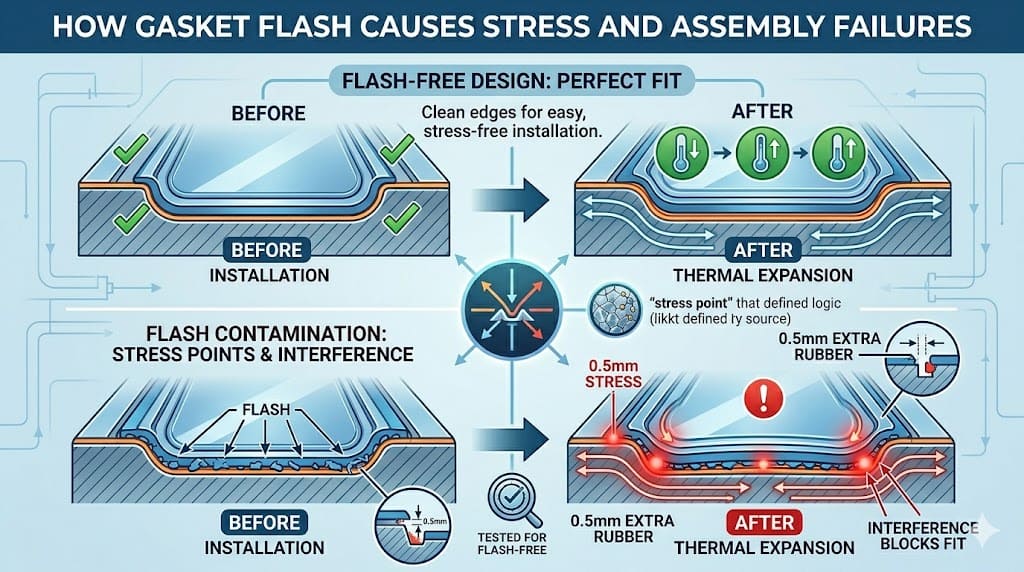
In modern heat exchangers like GEA or APV, we often use glueless clip-on gaskets. These gaskets must fit into the plate grooves perfectly. There is no glue to hold them in place.
The Problem with Extra Rubber
When rubber is pressed in a mold, some extra material always squeezes out the sides. This is called flash. If a factory does not remove this flash properly, even a tiny 0.5mm piece will cause trouble. When you try to push the gasket into the groove, the flash pushes back. This creates a tiny interference force. The gasket cannot sit flat. When the system gets hot, the rubber expands. That tiny mismatch turns into a big stress point, and the seal can break.
Automatic Freezing Trimming
We use a very special method to fix this. We use fully automatic freezing trimming14 technology.
| Trimming Method | Edge Quality | Assembly Result |
|---|---|---|
| Manual Cutting | Rough, leaves 0.5mm flash | Hard to fit, high stress |
| Freezing Trimming | 100% clean and pure | Easy 1:1 fit, no stress |
We freeze the gaskets so the extra rubber becomes hard and brittle. Then we tumble them to break off every tiny piece of flash. This makes sure the sealing lip is absolutely pure in its geometry. You get a perfect, trouble-free installation every time.
True compatibility means exact peak synchronization6, zero-defect surfaces, strict leak testing, proper rubber curing, and clean gasket edges. These five standards keep your system safe, efficient, and running longer.
Understand the significance of zero-defect surface finishes in preventing leaks and ensuring reliability. ↩
Find out how dye penetrant testing can help identify hidden flaws in heat exchanger plates. ↩
Explore the benefits of flash-free gasket edges for ensuring a perfect fit and preventing leaks. ↩
Explore this resource to learn how to choose reliable replacement parts that enhance equipment performance and prevent costly failures. ↩
Explore how TIVO's strict standards ensure safety and efficiency in heat exchangers, preventing costly leaks and failures. ↩
Discover how peak synchronization enhances the performance and durability of heat exchanger plates. ↩
Learn about the impact of micro-vibrations on heat exchanger performance and how to mitigate them. ↩
Learn about the causes of internal leaks and effective prevention methods for heat exchangers. ↩
Discover the essential safety backups that ensure the reliability of heat exchanger systems. ↩
Understand the relationship between surface roughness and fouling rates in heat exchangers. ↩
Explore strategies to reduce fouling rates and improve the efficiency of heat exchangers. ↩
Discover how trapped chemical compounds can lead to gasket failure and how to avoid it. ↩
Learn how to prevent stress points during gasket installation for better performance. ↩
Explore the benefits of automatic freezing trimming for achieving high-quality gasket edges. ↩