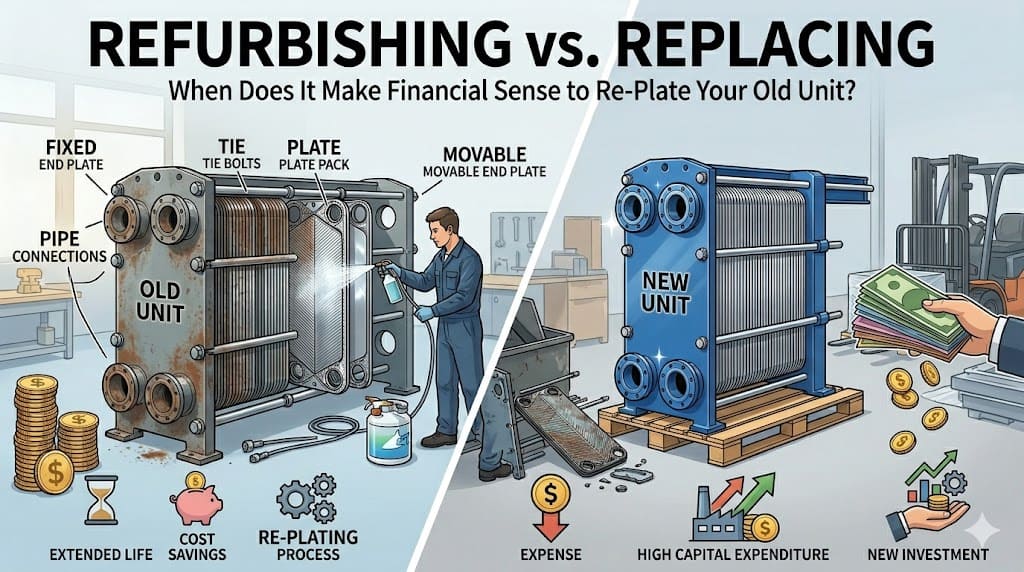
Your old heat exchanger is leaking. Buying a new one costs a lot of money. But refurbishing with new plates can save your budget and fix the problem fast.
It makes financial sense to re-plate your old unit when import taxes are high, piping changes are costly, and delivery times for new units are too long. Refurbishing saves 20% to 40% in hidden costs1 and gets your plant running weeks faster than buying new2.
You might think buying a new machine is the safest choice. But the hidden costs will surprise you. Let us look at the real numbers before you make a decision.
How do import taxes affect your choice between parts and new units?
High import tariffs eat up your budget. Buying a full unit brings heavy taxes and long customs checks. Spare parts face much lower taxes and pass customs easily.3
In markets like Brazil and Turkey, importing spare parts has a much lower tax rate than importing a full machine.4 Refurbishing your unit avoids non-tariff trade barriers and lowers your tax base.5 This strategy gives you at least 20% to 40% in hidden financial savings.
The Reality of Global Trade Rules
I work with many plant managers in Brazil and Turkey. They always complain about import rules. You bring a complete heat exchanger into the country. Customs treats it as finished equipment. This brings very high tariffs. Sometimes, customs delays the shipment for weeks.6 But you can buy replacement plates and gaskets7 from us. Customs treats them as spare parts. The rules are much easier.
A Simple Cost Breakdown
Let us compare the two choices. Buying parts lowers the base price. It also changes the tax category. You avoid many trade barriers. Here is a clear look at the differences:
| Cost Factor | Full Unit Import | Spare Parts Import |
|---|---|---|
| Base Price | Very High | Low to Medium |
| Import Tariff Rate | 20% to 30% | 5% to 10% |
| Customs Delay | Long | Short |
| Hidden Savings | None | 20% to 40% |
As a factory owner, you must look beyond the basic price. You must count the taxes. I always tell my clients to do the math. Re-plating saves a huge amount of money. It keeps your operating costs low. This is why many smart buyers choose our compatible plates instead of buying new units.
Why is the real cost of a new unit not on the invoice?
You buy a new unit and think the spending stops there. Then you find out the pipes do not fit. You must pay extra money to change your plant layout.
The most expensive part of a new unit is the onsite adaptation engineering.8 Even upgraded models from the same brand have different port locations, flange gaps, and base sizes.9 You must pay for new pipe welding, bracket adjustments, and CAD drawing changes.
The Hidden Costs of Installation
Many people think a new heat exchanger will drop right into place. I see this mistake many times. A client buys an upgraded model. They think it is the exact same size. But the factory changed the design. The port locations moved by just two centimeters. The flange gap is wider now. The base does not match the old concrete floor. You cannot just connect the hoses.
Why Old Units Are Hard to Replace
You might use an old or discontinued industrial size. The problem is much worse then. You cannot bolt the new unit in. You have to hire workers to change everything in your plant.
- Pipe Welding: Workers must cut and weld heavy steel pipes.
- Bracket Adjustments: You need new metal supports to hold the machine.
- CAD Drawings: Engineers must update your plant design files.
| Action Needed | Refurbishing Old Unit | Installing New Unit |
|---|---|---|
| Pipe Cutting | No | Yes |
| Welding Labor | $0 | High Cost |
| Engineering Time | None | Weeks |
You re-plate your old unit. You keep the original frame. Everything stays in the exact same place. You do not spend a single dollar on extra engineering. You just open the frame, swap the plates, and close it.
Why do new gaskets fail on old, uncleaned plates?
You try to save money by only buying new gaskets. But your old unit still leaks. The old plates are dirty and bent. The new gaskets cannot seal properly.
Old plates suffer micro-deformations in the gasket grooves from years of stress.10 You might install expensive new EPDM or FFKM gaskets11 without chemical cleaning and structural checks. The sealing pressure will be uneven.12 You must fully re-plate or deeply refurbish to stop leaks.
The Danger of Half-Measures
I see maintenance teams make this error often. They order expensive gaskets. They think this will fix their leaking heat exchanger. They take out the old plates. They pull off the old rubber. They glue the new rubber on. Then they turn on the pump. The machine leaks again. Why does this happen? The problem is not the gasket. The problem is the metal plate.
The Science of Plate Stress
A heat exchanger runs for years. The pressure goes up and down. This constant change causes stress. The gasket grooves on the metal plates get tiny bends. We call this micro-deformation. Also, dirt and hard scale stick to the metal13.
| Problem | Result | Solution |
|---|---|---|
| Micro-deformation | Uneven sealing pressure | Full plate replacement |
| Hard scale in grooves | Gaskets do not sit flat | Deep chemical cleaning |
| Worn out metal | Fluid mixes together | Structural testing |
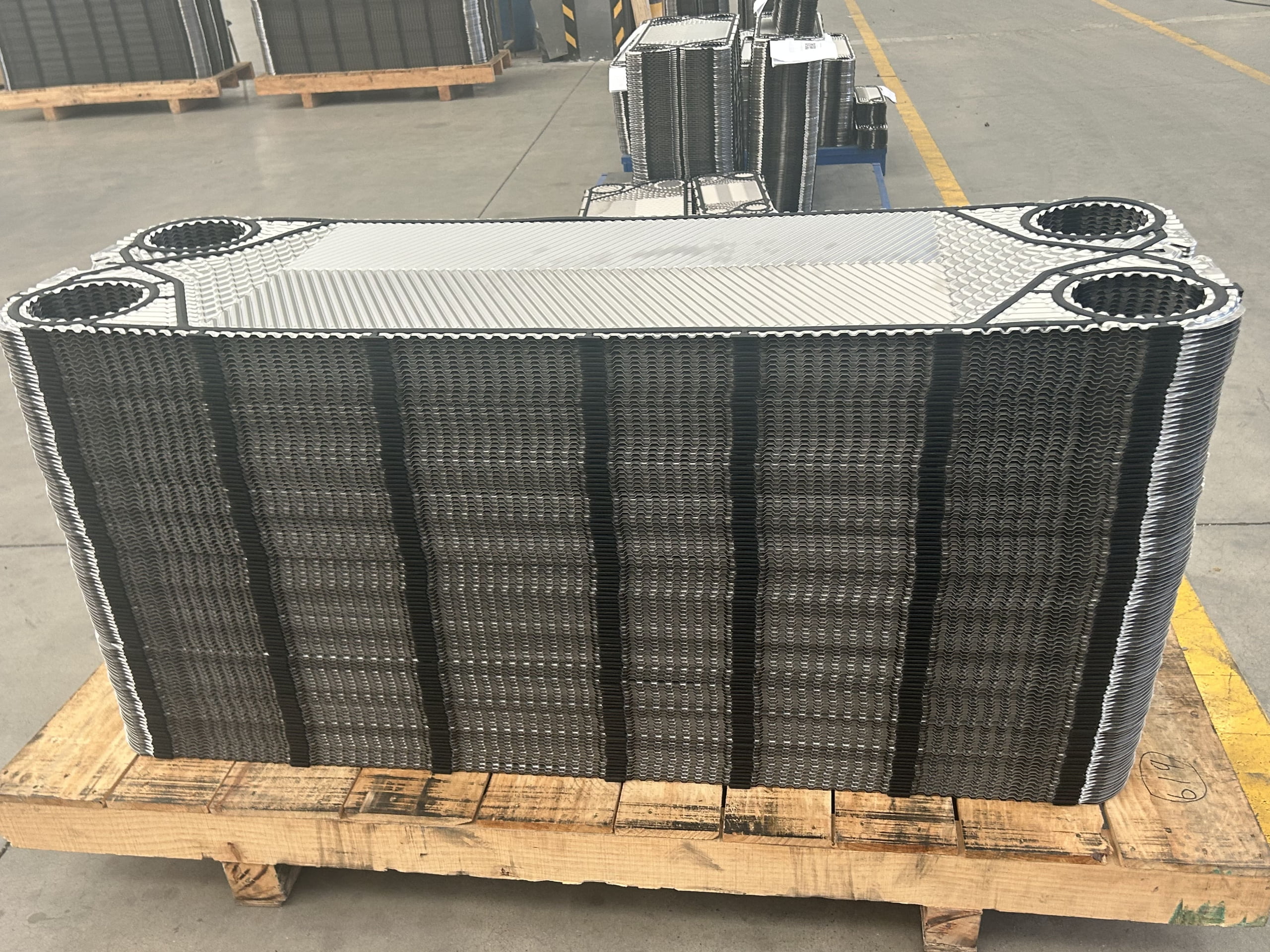
You put a perfect new gasket on a bent, dirty plate. It will fail. The pressure is not even across the unit. You need a proper refurbishing process to do the job right. We supply completely compatible replacement plates. They give you a perfect, flat surface. This ensures your expensive gaskets work perfectly. Your plant stays safe and dry.
Can you afford to wait 24 weeks for a custom heat exchanger?
Your plant stops working. Every day of downtime costs you massive profits.14 A new custom machine takes months to arrive. You need a fast fix right now.
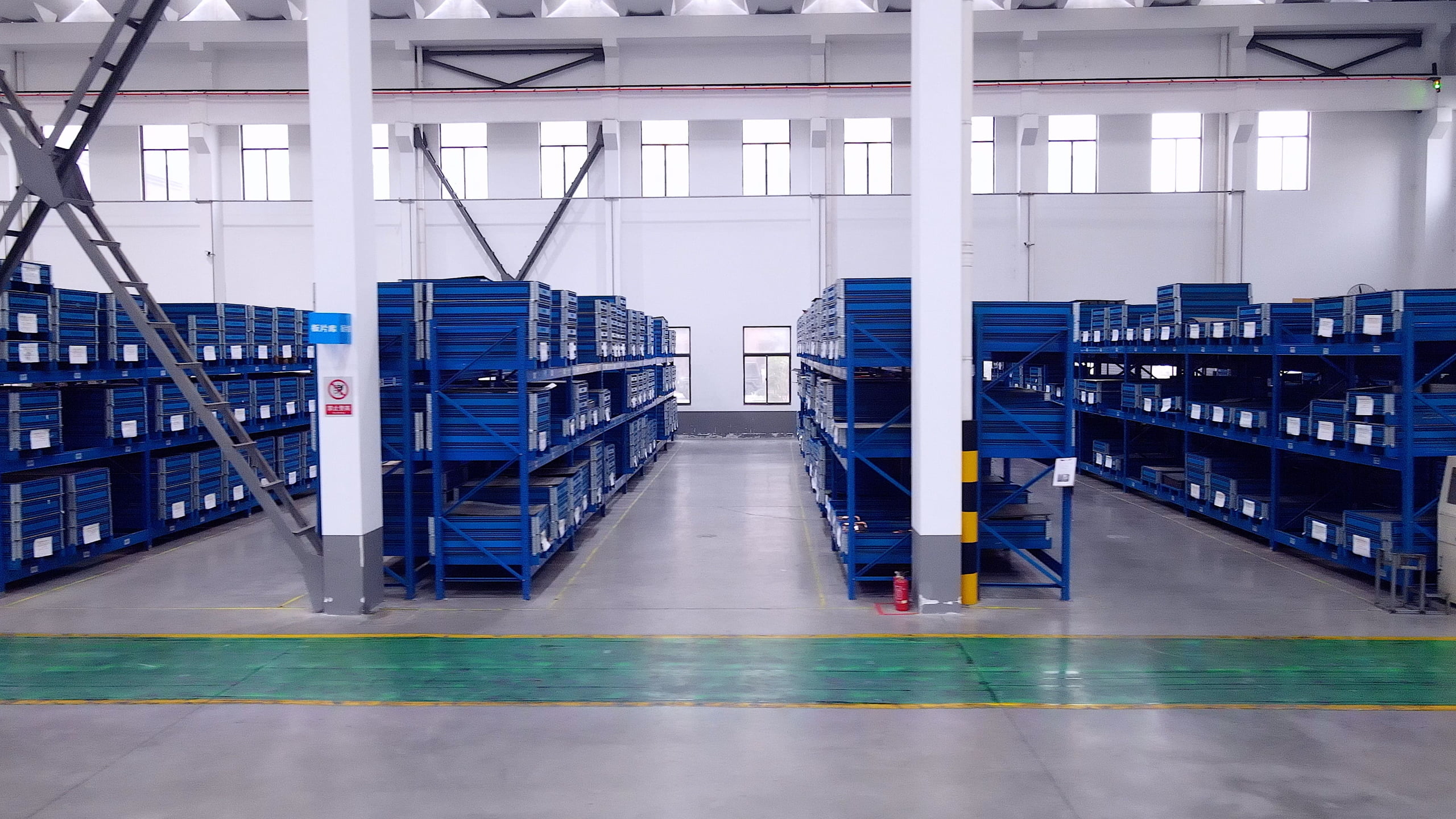
A brand new unit made of custom materials like Titanium or special stainless steel takes 16 to 24 weeks to build and ship. Refurbishing your unit with our stock replacement plates usually takes only 1 to 2 weeks. This saves you months of expensive downtime.
The Reality of Global Supply Chains
Time is money. Your processing plant shuts down. You lose thousands of dollars every hour. I talked to a manager at a palm oil refinery last year. His old unit failed. He asked for a price on a new titanium heat exchanger. The factory told him to wait six months. He could not wait that long. His business would die.
Why Custom Materials Take So Long
Special metals are hard to get. Materials like Titanium, Hastelloy, and 254SMO are not always in stock. The factory must order the metal. Then they press the plates. Then they build the frame. Finally, they test the unit.
| Material Type | New Unit Lead Time | Refurbish Lead Time |
|---|---|---|
| Standard 316L | 8 to 12 weeks | 1 week |
| Titanium | 16 to 24 weeks | 1 to 2 weeks |
| Hastelloy | 20+ weeks | 2 weeks |
You do not have to wait. We keep over 500,000 sets of spare parts ready to go. We have the exact plates and gaskets for global brands like Alfa Laval and GEA15. We ship them to you fast. You rebuild your machine locally. You get your plant running again in just a few days.
Conclusion
Refurbishing your old heat exchanger saves money on taxes, stops hidden installation costs, ensures perfect sealing, and cuts downtime. It is the smartest financial choice for your plant.
"Toward a New Era of Refurbishment and Remanufacturing of ... - PMC", https://pmc.ncbi.nlm.nih.gov/articles/PMC7930910/. A lifecycle-cost or repair-versus-replacement study can support that refurbishment may reduce total acquisition and installation costs compared with full equipment replacement. Evidence role: statistic; source type: paper. Supports: Refurbishing saves 20% to 40% in hidden costs.. Scope note: The cited source may support cost-saving mechanisms generally, but the exact 20%–40% range should be treated as case-dependent unless the source reports that range directly. ↩
"Enhancing industrial maintenance planning: Optimization of human ...", https://www.sciencedirect.com/science/article/pii/S2214716025000120. Industrial maintenance and turnaround literature can support that repairing or refurbishing existing process equipment often reduces outage duration relative to procuring and installing new equipment. Evidence role: general_support; source type: paper. Supports: Refurbishing gets a plant running weeks faster than buying a new unit.. Scope note: This supports the timing logic generally, not a guaranteed number of weeks for every heat-exchanger project. ↩
"United States Heat exchange units, non-domestic, non-electric ...", https://wits.worldbank.org/trade/comtrade/en/country/USA/year/2024/tradeflow/Exports/partner/ALL/product/841950. Customs tariff schedules and trade-facilitation data can show that complete machinery and replacement parts are classified separately and may carry different duties and clearance requirements. Evidence role: general_support; source type: government. Supports: Spare parts can face lower taxes and simpler customs treatment than complete equipment.. Scope note: The source may show classification differences, but exact taxes and clearance ease depend on HS code, country of import, documentation, and local customs practice. ↩
"Brazil Heat exchange units, non-domestic, non-electric exports by ...", https://wits.worldbank.org/trade/comtrade/en/country/BRA/year/2021/tradeflow/Exports/partner/ALL/product/841950. National tariff schedules or World Bank WITS data can compare applied duties for heat-exchange equipment and relevant parts classifications in Brazil and Turkey. Evidence role: statistic; source type: institution. Supports: Brazil and Turkey may apply different import-duty rates to spare parts and complete heat-exchanger units.. Scope note: The comparison is valid only for the exact HS codes and product descriptions used; compatible plates, gaskets, and complete units may not always fall under the same tariff headings. ↩
"[PDF] CLASSIFICATION OF NON-TARIFF MEASURES - WITS", https://wits.worldbank.org/wits/docs/multi-agency_classification_of_ntms.pdf. Trade-policy sources define non-tariff measures and explain that duties and import controls are applied according to product classification and declared customs value. Evidence role: mechanism; source type: institution. Supports: Using replacement parts instead of importing a full unit can change customs classification, declared value, and exposure to some trade measures.. Scope note: This supports the trade mechanism but does not prove that every refurbishment project avoids non-tariff barriers or lowers the tax base in every jurisdiction. ↩
"Logistics performance index: Frequency with which shipments reach ...", https://data.worldbank.org/indicator/LP.LPI.TIME.XQ?locations=BR. Trade-facilitation indicators and customs-performance reports document that import clearance times vary by country and can add substantial delay to cross-border shipments. Evidence role: statistic; source type: institution. Supports: Customs processes can delay imported industrial equipment shipments for significant periods.. Scope note: Such sources usually report average or median clearance times and may not prove that a specific heat-exchanger shipment was delayed for weeks. ↩
"8419.90.3000 - Customs Rulings Online Search System", https://rulings.cbp.gov/search?term=8419.90.3000. An official customs tariff schedule classifying heat-exchanger components, such as plates and gaskets, separately from complete heat-exchange units would substantiate the statement that such items can be imported as spare parts rather than as finished machinery. Evidence role: definition; source type: government. Supports: Replacement plates and gaskets for heat exchangers can be treated by customs as spare parts rather than complete heat-exchanger units.. Scope note: Tariff classification and duty treatment depend on the exact product specification, country, date, and customs ruling; the source may not by itself prove that clearance is always faster or cheaper. ↩
"[PDF] Peters et al (2003) - Table 6-17 Estimation of capital investment cost ...", https://personal.ems.psu.edu/~radovic/Peters_Table6-17.pdf. Process-plant cost-estimation references show that installation, piping, structural supports, and engineering can form a large share of total installed equipment cost. Evidence role: general_support; source type: education. Supports: Onsite adaptation engineering can be a major cost when installing new process equipment.. Scope note: This supports the importance of onsite adaptation costs, but it may not establish that adaptation engineering is always the single most expensive component. ↩
"[DOC] SECTION 235700 - HEAT EXCHANGERS", https://www.umaryland.edu/media/umb/af/dc/documents/division-23/235700P---Heat-Exchangers4.doc. Plate heat-exchanger technical manuals and dimensional drawings show that models vary by frame size, connection position, nozzle diameter, and mounting dimensions. Evidence role: general_support; source type: institution. Supports: Replacement heat-exchanger models can differ in port locations, flange spacing, and base dimensions.. Scope note: The source can demonstrate dimensional variability across models, but it may not show that every upgraded model from the same brand changes these dimensions. ↩
"Experimental Investigation into the Effect of Elastic Deformation of ...", https://ui.adsabs.harvard.edu/abs/2022ThEng..69..596M/abstract. Research on plate heat exchangers and gasketed plate assemblies describes how cyclic pressure, thermal loading, and mechanical compression can affect plate geometry and sealing surfaces over time. Evidence role: mechanism; source type: paper. Supports: Years of operating stress can deform plate or gasket-groove surfaces in gasketed plate heat exchangers.. Scope note: The source may support deformation mechanisms generally; direct evidence for micro-deformation in a specific unit would require inspection or measurement. ↩
"Troubleshooting Plate Heat Exchanger Leaks: A Pro Diagnostic ...", https://tivo-heatexchanger.com/troubleshooting-plate-heat-exchanger-leaks/. This source explains that elastomeric gaskets such as EPDM and FFKM are used for sealing in plate heat exchangers and that effective sealing depends on proper gasket compression and clean, undamaged sealing surfaces. Evidence role: mechanism; source type: paper. Supports: Installing new EPDM or FFKM gaskets on old plates without chemical cleaning and structural checks can result in uneven sealing pressure and continued leakage.. Scope note: The source may support the sealing mechanism and gasket-material context generally, but it may not quantify failure rates for old, uncleaned plates in every operating environment. ↩
"Calculation Model of Mechanical and Sealing Properties of NiTi ...", https://pmc.ncbi.nlm.nih.gov/articles/PMC9267744/. Gasket-sealing literature explains that surface irregularity, improper compression, and deformation alter gasket contact stress and can create nonuniform sealing pressure. Evidence role: mechanism; source type: paper. Supports: Damaged or contaminated plates can produce uneven gasket sealing pressure.. Scope note: This supports the sealing principle, but the actual pressure distribution in a given exchanger depends on plate condition, tightening force, gasket material, and assembly procedure. ↩
"(PDF) Study of mineral fouling mitigation on heat exchanger surface", https://www.academia.edu/80154279/Study_of_mineral_fouling_mitigation_on_heat_exchanger_surface. Heat-transfer and fouling studies document that mineral scale and deposits accumulate on heat-exchanger surfaces and can reduce performance or interfere with surface contact. Evidence role: mechanism; source type: paper. Supports: Hard scale can adhere to metal heat-exchanger surfaces and interfere with proper operation or sealing.. Scope note: The source supports fouling and scaling generally, not the condition of any particular heat-exchanger plate set. ↩
"Unplanned downtime costs US manufacturers up to $207 Weekly", https://pressroom.fluke.com/unplanned-downtime-costs-united-states-manufacturers-up-to-207m-weekly-exposing-critical-vulnerabilities-in-industrial-resilience/. Manufacturing and process-industry studies on downtime quantify production losses, lost revenue, and recovery costs associated with unplanned equipment outages. Evidence role: statistic; source type: paper. Supports: Unplanned downtime can create large financial losses for industrial plants.. Scope note: The magnitude of loss varies by industry, plant capacity, margins, and whether production can be recovered later. ↩
"Plate heat exchangers", https://www.alfalaval.us/products/heat-transfer/plate-heat-exchangers/plate-heat-exchangers/. A neutral company profile or encyclopedic source identifying Alfa Laval and GEA as multinational industrial engineering groups active in heat-transfer or plate-heat-exchanger equipment supports the characterization of these names as global heat-exchanger brands. Evidence role: general_support; source type: encyclopedia. Supports: Alfa Laval and GEA are global brands associated with heat exchanger equipment.. Scope note: Such a source can verify the companies’ global presence and heat-exchanger relevance, but it would not verify the article’s commercial claim that the author stocks exact compatible plates and gaskets for those brands. ↩