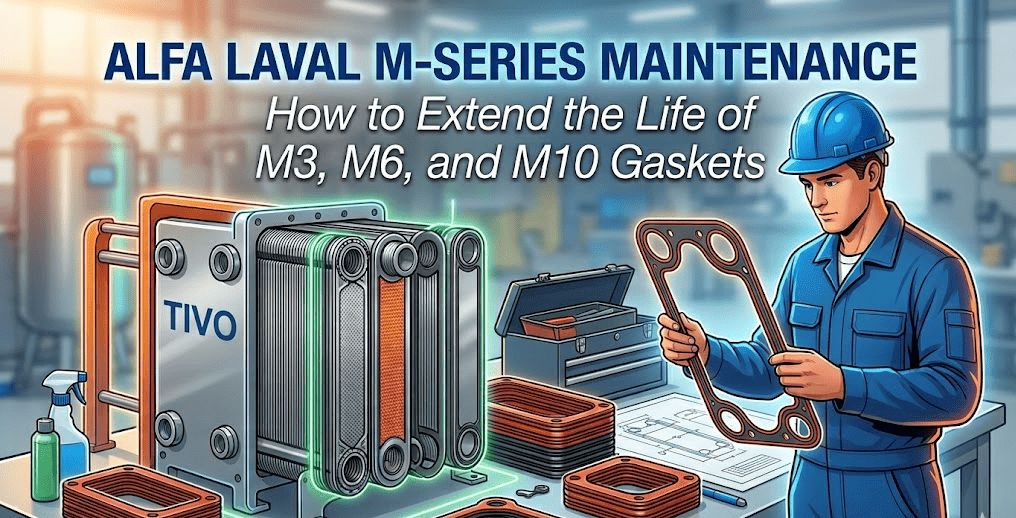
Are your Alfa Laval M-series heat exchangers1 leaking again? Frequent gasket failures2 waste your time and money. I will show you how to extend their lifespan today.
You can extend the life of M3, M6, and M10 gaskets3 by avoiding over-tightening4 during installation. You must check the guide bars for wear and choose the right EPDM material5 to prevent chemical oxidation6. This smart maintenance approach saves you money and reduces downtime.
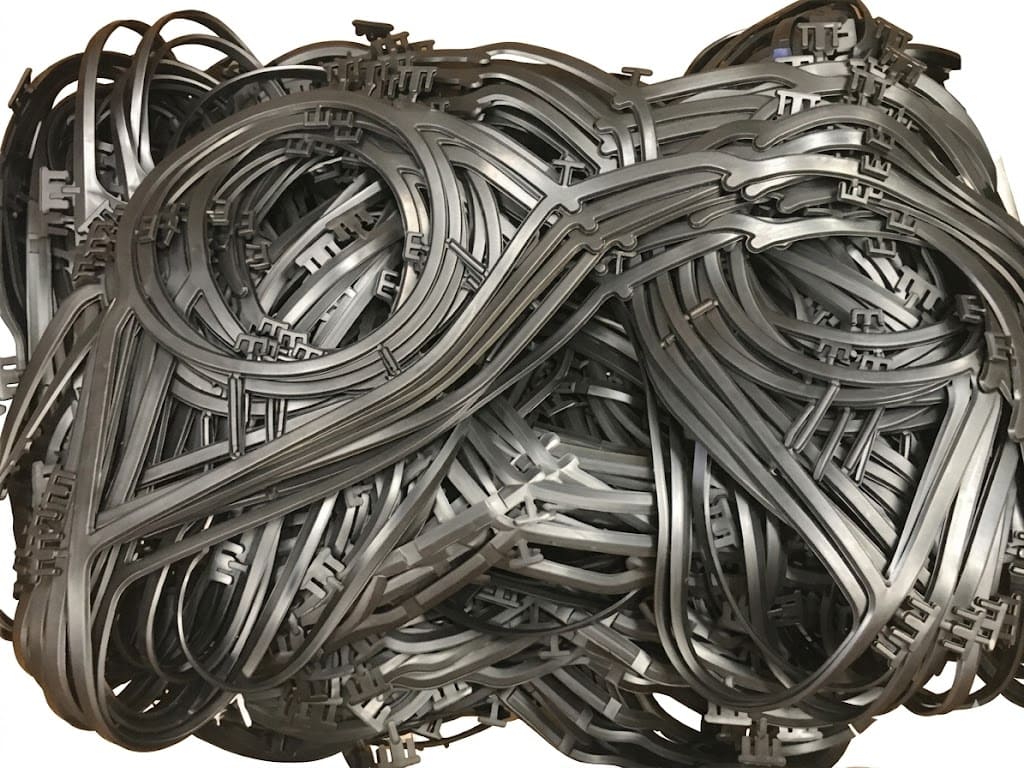
Many maintenance managers change gaskets but ignore the root causes of failure. This mistake will force you to stop your plant again soon.
Why Should You Avoid Tightening M10 Plates to the Minimum Dimension?
Do you lock your plate pack to the minimum size immediately? This common habit destroys your plates. You need a better tightening strategy7 to protect your equipment.
You should never tighten plates to the minimum dimension at once. Plates suffer micro-thinning8 at support points over time. You must leave some room during installation, let the unit heat up, and then check the seal. This prevents plate damage.
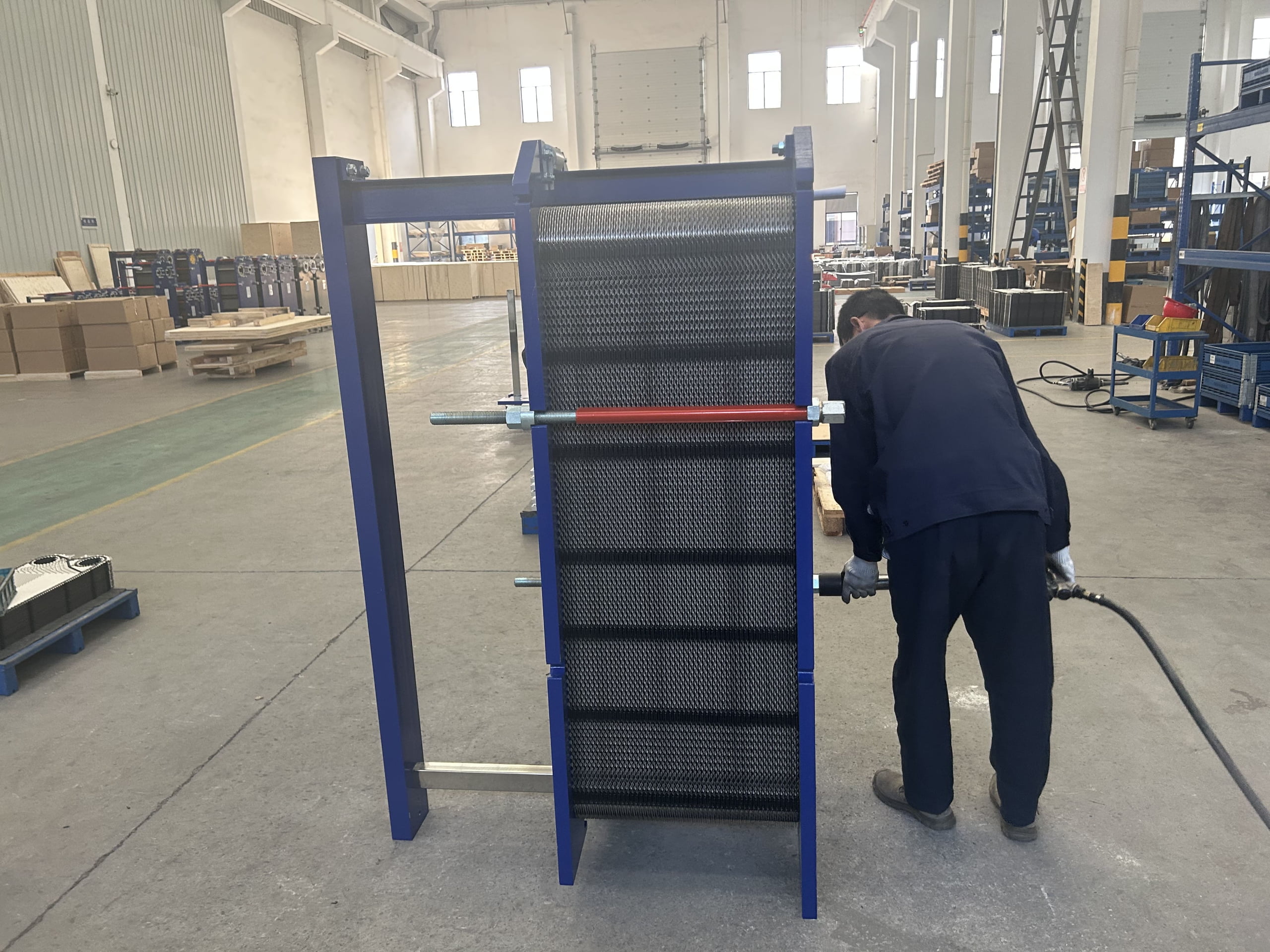
I have seen many operators make a huge mistake. They look at the manual and tighten the plate pack to the absolute minimum size on the first day. This is wrong. Alfa Laval M10 plates go through many cycles of running and cleaning. After long-term use and multiple disassemblies, the plate hooks and flow channel support points lose material. We call this micro-scale plastic thinning.
If you tighten these worn plates too much, you will crush the plate corrugations. The metal pattern will collapse. Instead, you should use a step-by-step tightening method. First, you close the unit to a safe dimension. Then, you start the equipment. You wait for the heat exchanger to reach its normal working temperature. The metal will expand. Finally, you check for leaks. If it leaks, you tighten it a little more.
This leave-some-room installation method is very effective. It stops early plate collapse. In my experience, this trick extends the total life of the plate pack by two to three maintenance cycles.
| Tightening Step | Action Required | Result for Plates |
|---|---|---|
| Step 1 | Close to a safe dimension | Protects thinned support points |
| Step 2 | Run and heat up | Allows natural thermal expansion |
| Step 3 | Check and adjust | Prevents corrugation collapse |
You must treat older plates with care. They are not new anymore. A gentle approach saves your expensive metal plates from permanent damage.
Why Do EPDM Gaskets Become Brittle in Less Than a Year?
Did your new EPDM gaskets turn hard and crack in just ten months? This early failure causes unexpected leaks. You need to understand the real chemical reason.
EPDM gaskets become brittle quickly because of chemical oxidation, not high temperatures. Trace additives in your cleaning agents or process fluids react with standard EPDM rubber. You must check your fluid chemistry to stop this fast degradation and protect your gaskets.
Many M10 users come to me with a common complaint. They tell me their EPDM gaskets become brittle and break in less than a year. They always think the temperature is too high. But I check their system data. The temperature is perfectly normal. So, what is the real problem?
The real problem is a hidden chemical reaction. Standard EPDM rubber is very sensitive to certain chemicals. Your plant uses cleaning agents to wash the pipes. Your process fluids carry different substances. These liquids often contain trace additives. These tiny chemical elements mix with the EPDM material5. They start an oxidation reaction. This chemical process slowly eats the rubber. The gasket loses its flexibility and turns into a hard, brittle piece.
You must break down this problem logically. Do not just look at the thermometer. Look at your fluid data sheets.
| Failure Cause | Common Mistake | Real Reason |
|---|---|---|
| Temperature | Blaming hot water | Heat is usually within limits |
| Chemicals | Ignoring trace elements | Additives cause oxidation |
| Cleaning Agents | Using harsh fluids | Acids and alkalis degrade rubber |
We at TIVO always ask our customers about their exact fluid composition. If you have aggressive trace additives, you might need a different rubber blend. You must match the gasket material to your specific chemical environment. This is the only way to stop premature failure.
How Does Guide Bar Alignment Affect M-Series Gasket Life?
Do your perfectly new gaskets get cut during installation? Misaligned equipment ruins good parts instantly. You must fix the geometry of your frame before you close it.
The Alfa Laval M-Series uses a five-point alignment system. Old guide bars often suffer from corrosion and wear, creating slight tilts. This geometric deviation causes shear stress during clamping. This stress cuts the gasket sealing root9. You must check the alignment before installing new gaskets.
The core design of the Alfa Laval M-Series is its five-point positioning system. This system keeps the plates straight. However, equipment gets old. The top and bottom guide bars carry heavy loads for years. They suffer from rust, corrosion, and physical wear. Because of this wear, the guide bars develop a tiny tilt.
Many maintenance workers ignore this small change. They put in perfect new gaskets and start clamping. But the plates do not sit straight. This geometric deviation creates a huge problem. When you tighten the bolts, the plates move sideways. This movement creates shear stress. The sharp edges of the plates act like scissors. They cut right into the sealing root of your new gasket.
Before you replace any gasket, you must use a feeler gauge. You must measure the gap between the plate and the guide bar.
| Alignment Issue | Cause | Consequence |
|---|---|---|
| Worn Guide Bars | Years of heavy friction | Creates a slight tilt |
| Geometric Deviation | Uneven plate hanging | Causes shear stress |
| Shear Stress | Clamping misaligned plates | Cuts the new gasket root |
We understand this mechanical problem deeply. That is why we do not just sell you gaskets. We provide a special Plate Alignment Checklist for the M-Series. We want to ensure that every single TIVO gasket receives pressure exactly at its geometric center. Perfect alignment means a perfect seal.
How Can You Secure the Best Replacement Parts for Your M-Series?
Are you tired of paying high prices for original brand spare parts? Long delivery times hurt your factory. You need a reliable, cost-effective replacement source right now.
You can secure the best replacement parts10 by choosing high-quality compatible plates and gaskets. TIVO provides parts that are 100% compatible with Alfa Laval M3, M6, and M10. You get the same material integrity at a lower cost, delivered fast to keep your plant running.
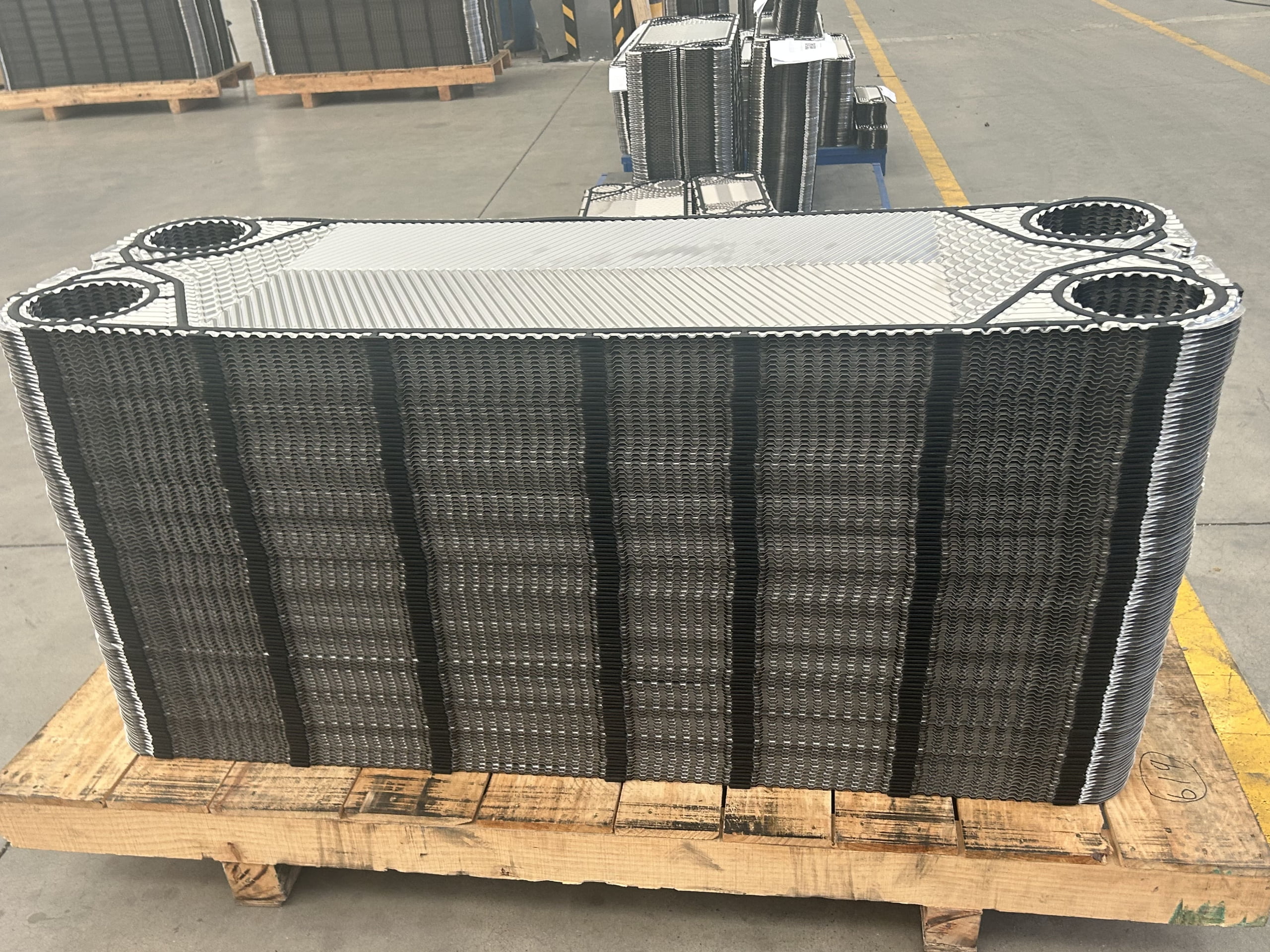
I often talk to operations directors who face extreme pressure. They must cut operational expenses. But they also must keep the plant running safely. When a heat exchanger fails, they call the original brand. The price is shocking. The delivery time is weeks away. This situation is unacceptable for modern factories.
You have a better choice. You can use 100% compatible spare parts. At TIVO, we manufacture plates and gaskets that fit global brands perfectly. We use the same high-quality materials. We test every single batch of 316L stainless steel, Titanium, and EPDM rubber. We run spectral material testing to guarantee safety.
You do not need to sacrifice quality to save money. You just need a smart supply chain partner.
| Benefit | Original Brand | TIVO Compatible Parts |
|---|---|---|
| Cost | Extremely high | Very cost-effective |
| Delivery | Often 12 weeks or more | 7 to 15 days standard |
| Compatibility | 100% | 100% guaranteed fit |
Our factory produces over 500,000 sets of spare parts every year. We help customers across Europe, Asia, and the Americas reduce their maintenance costs. When you use our parts and our alignment checklist, your M-Series heat exchanger will run like new. You will save money and sleep better at night.
Conclusion
You can extend gasket life by avoiding over-tightening, preventing chemical oxidation, and checking guide bar alignment11. Smart maintenance and high-quality compatible parts12 will save your factory time and money.
Explore the advantages of Alfa Laval M-series heat exchangers for efficient thermal management. ↩
Learn about the root causes of gasket failures to prevent costly downtime. ↩
Understand the specifications of these gaskets to ensure proper maintenance. ↩
Discover the impact of over-tightening on heat exchanger efficiency and longevity. ↩
Find out why EPDM material is crucial for gasket performance in heat exchangers. ↩
Explore the factors leading to chemical oxidation and how to mitigate them. ↩
Learn about effective tightening strategies to protect your heat exchanger plates. ↩
Understand micro-thinning and its effects on heat exchanger performance. ↩
Discover the importance of gasket sealing roots for optimal heat exchanger function. ↩
Explore the advantages of using compatible replacement parts for cost savings. ↩
Learn how proper guide bar alignment can extend the life of your gaskets. ↩
Discover high-quality compatible parts that can save you money and time. ↩