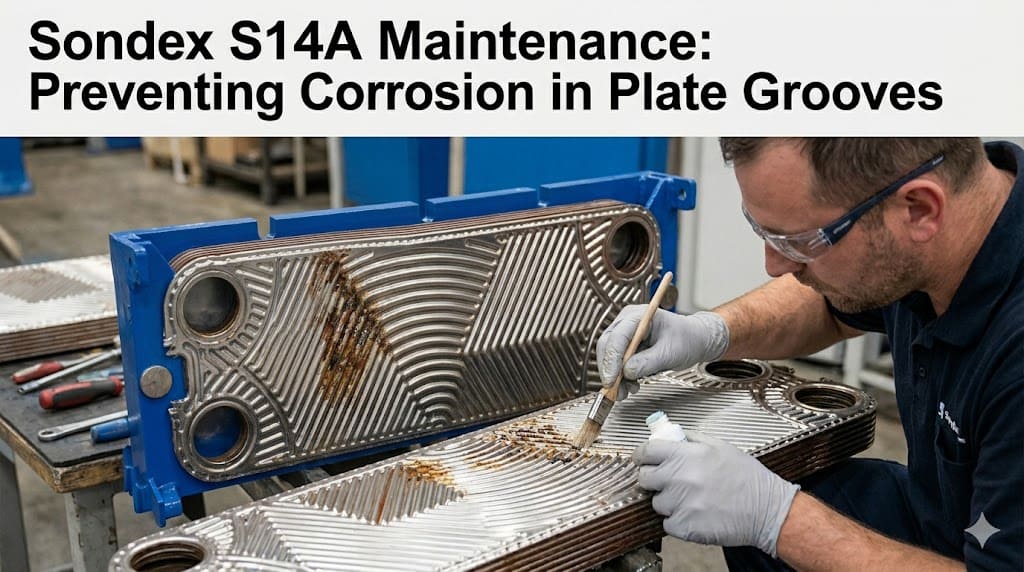
You spot a leak in your Sondex S14A1 heat exchanger. Replacing the gasket does not stop it. Hidden corrosion destroys the plate grooves. You must fix the root cause now.
To prevent corrosion in Sondex S14A plate grooves, you must stop chloride ion buildup2, avoid cheap sulfur-cured gaskets3, and use exact-match Sonder Lock replacements4. This stops stress cracking5 and acid attacks6 in the oxygen-depleted zones7 under the gaskets.
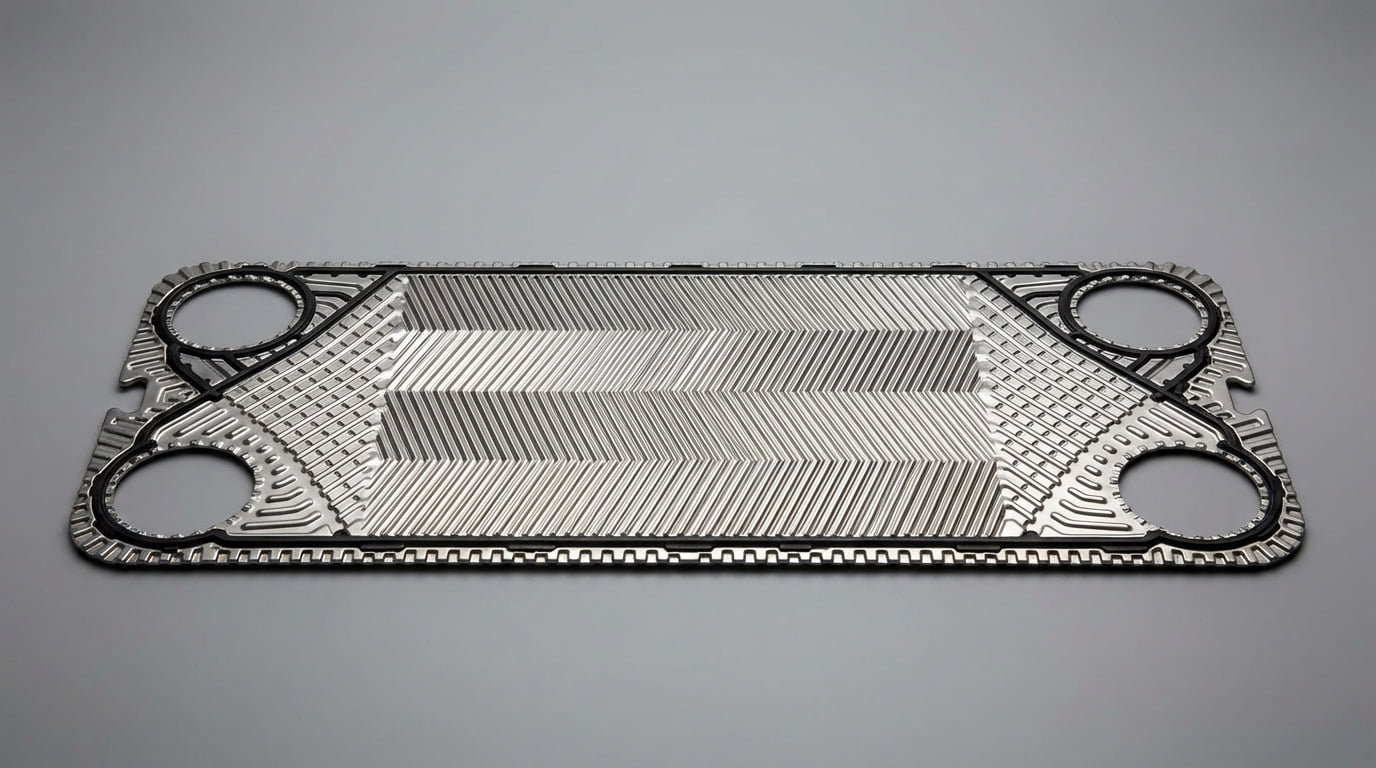
I remember a time when a client lost an entire plate pack due to unseen groove damage. You might think a simple gasket swap is enough, but what hides beneath the rubber will cost you thousands if you stop reading here.
Why Does the Compact Groove of Sondex S14A Trap Chloride Ions?
The S14A groove is very tight. This tight space starves the metal of oxygen. Chloride ions rush in, and rapid corrosion ruins your expensive plates.
The compact design of the Sondex S14A sealing groove provides high pressure but creates an oxygen-depleted zone at the seal edge. Chloride ions enrich in this micro-environment. The pH level drops8 fast, and this causes severe local acid corrosion on the stainless steel plates.
I often see this issue when I visit power plants. The Sondex S14A plate has a very smart design. It uses a tight groove to give a strong seal. But this tight groove has a dark side. When the seal starts to fail just a little bit, water gets trapped. This trapped water cannot get fresh air. We call this an oxygen-depleted zone.
Stainless steel needs oxygen to keep its protective layer. Without oxygen, the protective layer dies. Then, chloride ions in the water start to gather in this tight space. They multiply quickly. As they gather, the water becomes very acidic. The pH drops. This creates a local acid bath right on your plate.
I tell my clients to test their water regularly. You must wash the plates properly during maintenance. If you leave dirt in the groove, the chloride ions will hide there.
How Chloride Ions Attack
| Condition | Reaction in Groove | Result on Plate |
|---|---|---|
| Fresh water flow | Oxygen reaches metal | Protective layer stays strong |
| Trapped water | Oxygen drops | Protective layer breaks |
| High Chloride | pH drops fast | Deep acid corrosion begins |
How Does a 0.1mm Deviation in Sonder Lock Gaskets Cause Stress Corrosion?
You buy a cheap replacement gasket. It looks like it fits. But a tiny size error creates huge stress. The plate cracks around the lock holes.
The S14A uses the Sonder Lock glue-free system. If a replacement gasket hook deviates by just 0.1mm from the original size, the clamping force creates massive residual stress around the lock holes. This stress quickly leads to mechanical failure9 and stress corrosion cracking.
Let me share a story from a palm oil refinery in Indonesia. The plant manager wanted to save money. He bought cheap aftermarket gaskets for his S14A units. The gaskets used the Sonder Lock design. To the naked eye, they looked perfect. But they were wrong.
The Sonder Lock system is very precise. It holds the gasket to the plate without glue. The hooks on the gasket must fit the holes on the plate exactly. The cheap gaskets had a tiny error. They were off by just 0.1mm. When the workers tightened the heat exchanger, the hooks pulled too hard on the holes.
This pulling created massive residual stress in the metal. Stainless steel hates localized stress. When you combine this stress with a warm, wet environment, you get stress corrosion cracking. The plates literally tore themselves apart at the lock holes.
Gasket Fit and Stress Impact
| Gasket Type | Hook Accuracy | Stress on Plate | Long-term Effect |
|---|---|---|---|
| TIVO Exact Match | 100% accurate | Evenly spread | Safe and stable |
| Cheap Copy | 0.1mm error | High local stress | Cracks and leaks |
Always buy parts from a supplier who understands the exact geometry of the original brand.
Can Cheap Sulfur-Cured Gaskets Create Sulfuric Acid in the Groove?
Bad rubber smells strange. That smell is sulfur. When sulfur gets hot, it mixes with water. Your gasket makes acid and eats your plate alive.
Cheap replacement gaskets often use sulfur curing to save money. At high temperatures, these gaskets release active sulfur. This sulfur mixes with trapped water in the S14A plate groove. This reaction creates a trace sulfuric acid environment, which rapidly destroys the metal plate.
A few years ago, a food processing client called me. His heat exchangers were leaking every three months. He showed me the plates. The grooves were black and pitted. I asked him where he bought his gaskets. He named a very cheap supplier.
Here is the secret about rubber. You must cure it to make it strong. Good manufacturers use peroxide curing10 for high-quality gaskets. Cheap factories use sulfur curing. Sulfur is cheap and fast. But it is very dangerous for heat exchangers.
When a sulfur-cured gasket gets hot during operation, it sweats. It releases active sulfur into the tight groove of the S14A plate. The groove always has a little bit of moisture in it. The sulfur and the water mix together. They create sulfuric acid. Even a tiny amount of sulfuric acid will eat through stainless steel and titanium.
Curing Methods Compared
| Curing Method | Cost | Chemical Reaction | Impact on Plate Groove |
|---|---|---|---|
| Peroxide Cure | Higher | Stable at high heat | No acid, safe metal |
| Sulfur Cure | Low | Releases active sulfur | Sulfuric acid corrosion |
Do not risk your expensive plates to save a few dollars on bad rubber.
Why Are Pinholes at the Bottom of the Sealing Groove So Hard to Find?
Your unit passes a quick visual check. You put it back online. It leaks again the next day. A tiny hole hides under the rubber.
Sondex S14A leakage often starts as microscopic pinholes11 at the very bottom of the sealing groove. These holes are extremely hard to detect because the thick gasket covers them completely. Standard visual inspections12 miss them, leading to unexpected failures after reassembly.
Finding a leak in a plate heat exchanger can drive you crazy. I once spent two days helping a marine engineer find a leak on a ship. We looked at every plate. They all looked fine. But the system still lost pressure.
The S14A plate has a deep groove. When corrosion starts, it does not always cover a large area. Sometimes, it just drills straight down. It creates a tiny hole. We call this a pinhole. These pinholes almost always form at the very bottom of the groove.
Why is this a big problem? Because the gasket sits right on top of the hole. When you take the plate out, you might not remove the gasket to check. Even if you remove the gasket, a pinhole looks like a tiny speck of dirt. You cannot see light through it easily.
How to Find Hidden Pinholes
| Inspection Method | Effectiveness | Time Required | Best Use |
|---|---|---|---|
| Visual Check | Very Low | Fast | General dirt check |
| Dye Penetrant | High | Medium | Finding surface cracks |
| Light Box Test | Very High | Slow | Finding tiny pinholes |
You must use a strong light box in a dark room to find these hidden killers.
What Does Frequent NBR Gasket Failure Mean in Chemical Processing?
You change your NBR gaskets13 every month. They keep getting hard and breaking. The rubber is not the only victim. Your plates are dying too.
In chemical or oil and gas processing, if standard NBR gaskets in your S14A fail frequently, it is a major warning sign. This frequent failure is almost always accompanied by severe chemical corrosion14 of the sealing groove. The fluid is attacking both the rubber and the metal.
Chemical plants are tough environments. A maintenance manager in a chemical plant once told me he bought buckets of NBR gaskets. He changed them all the time. He thought the hot oil was just baking the rubber. He was only half right.
Standard NBR rubber is good for many things. But it has limits. In harsh chemical or oil and gas duties, aggressive fluids attack the NBR. The rubber swells, gets hard, and cracks. When the rubber cracks, the seal breaks.
But the story does not end there. When the seal breaks, the aggressive chemicals leak into the S14A plate groove. They sit there. They concentrate. If a chemical is strong enough to destroy NBR rubber quickly, it is strong enough to attack the metal groove. Frequent gasket failure means your plates are under chemical attack.
Fluid Attack on S14A Components
| Component | Sign of Attack | Root Cause | Required Action |
|---|---|---|---|
| NBR Gasket | Hard and brittle | Chemical incompatibility | Upgrade to FKM/Viton |
| Plate Groove | Deep pits and rust | Concentrated chemicals | Change plate material |
If your gaskets die fast, stop and check the metal grooves before it is too late.
Conclusion
Proper S14A maintenance requires exact gaskets, clean grooves, and careful inspections. Stop chloride buildup and avoid cheap rubber to protect your plates and keep your heat exchangers running smoothly.
Explore this link to understand the common problems and solutions for Sondex S14A heat exchangers. ↩
Learn about the impact of chloride ions on heat exchangers and how to prevent damage. ↩
Discover why sulfur-cured gaskets can be detrimental to heat exchanger performance. ↩
Find out how exact-match Sonder Lock replacements can enhance heat exchanger reliability. ↩
Understand the factors leading to stress cracking and how to mitigate them. ↩
Explore the mechanisms of acid attacks and their effects on heat exchanger materials. ↩
Learn about the significance of oxygen-depleted zones and their impact on corrosion. ↩
Discover the relationship between pH levels and corrosion in metal components. ↩
Explore the common causes of mechanical failure and how to prevent them. ↩
Learn about the advantages of peroxide curing over sulfur curing for gaskets. ↩
Find effective methods for identifying hidden pinholes that can cause leaks. ↩
Discover the limitations of visual inspections and better detection methods. ↩
Understand the challenges of using NBR gaskets in harsh chemical environments. ↩
Explore the effects of chemical corrosion on heat exchanger components. ↩