Are your heat exchanger plates failing too fast? Dirty plates waste energy, but the wrong cleaning method destroys them. Let us find out how to clean safely.
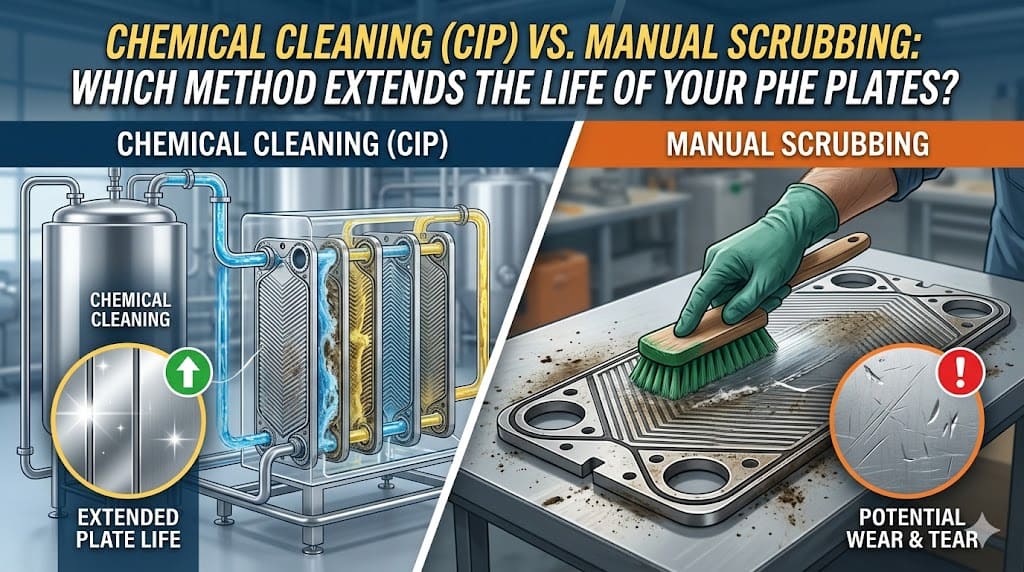
Chemical Cleaning (CIP)1 extends plate life better than manual scrubbing. CIP dissolves scale without physical force and protects the metal passivation layer. Manual scrubbing often causes micro-scratches. These scratches lead to pitting corrosion. However, CIP requires strict rinsing to prevent acid damage in gasket grooves2.
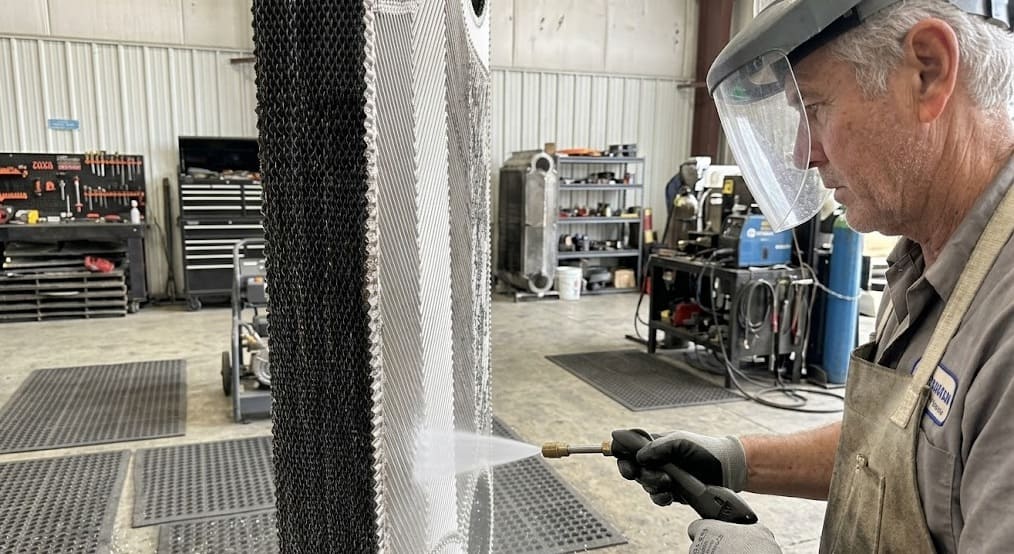
You might think a good hard scrub is the best way to clean dirty equipment. I used to think the exact same thing. Then I saw the hidden damage on hundreds of ruined plates. Let me show you what really happens inside your heat exchanger.
Does Manual Scrubbing Destroy Your Heat Exchanger Plates?
Hard scale makes heat exchangers stop working. You open the unit and grab a brush. But that simple brush might kill your expensive titanium or stainless steel plates.
Manual scrubbing with hard brushes creates micro-scratches on the plate surface. These tiny cuts destroy the protective passivation layer3. Chloride ions then attack these weak spots, causing severe pitting corrosion. CIP avoids this mechanical damage completely and helps repair the metal surface.
I visit many food processing plants and power stations. I often see maintenance teams scrubbing plates with metal brushes or rough pads. They want to remove the dirt quickly. But this is a huge mistake.
The Danger of Micro-Scratches
When you use hard tools, you leave tiny scratches on the metal. You cannot see them easily. But under a microscope, the smooth surface looks like rough mountains. Dirt and scale love to stick to these rough areas. Your plates will get dirty much faster next time.
Losing the Passivation Layer
Metals like 316L stainless steel and Titanium have a thin, invisible shield. We call this the passivation layer. Scrubbing breaks this shield. When salty water or fluids with chloride touch the bare metal, they eat a hole right through it. We call this pitting corrosion.
Why CIP is Safer for Metal
CIP uses chemicals to melt the scale away. There is no hard rubbing.
| Cleaning Method | Physical Damage | Scale Return Rate | Metal Shield Status |
|---|---|---|---|
| Manual Scrubbing | High (Scratches) | Very Fast | Broken |
| Chemical (CIP) | None | Slow | Protected and Repaired |
CIP actually helps fix the metal shield. The right chemicals add oxygen to the surface. This rebuilds the passivation layer3. Your plates stay smooth, safe, and clean for a longer time.
How Does Frequent Disassembly Affect Your Gaskets?
Leaking heat exchangers cause plant shutdowns. Every time you open the unit to clean it, you risk breaking the seals. Frequent opening makes your gaskets weak and loose.
Opening the heat exchanger for manual cleaning damages clip-on gaskets4. The plastic clips stretch and lose their shape. Over time, the gaskets cannot hold tightly to the plates. CIP keeps the unit closed. This protects the original compression state and keeps the seal geometry perfect.
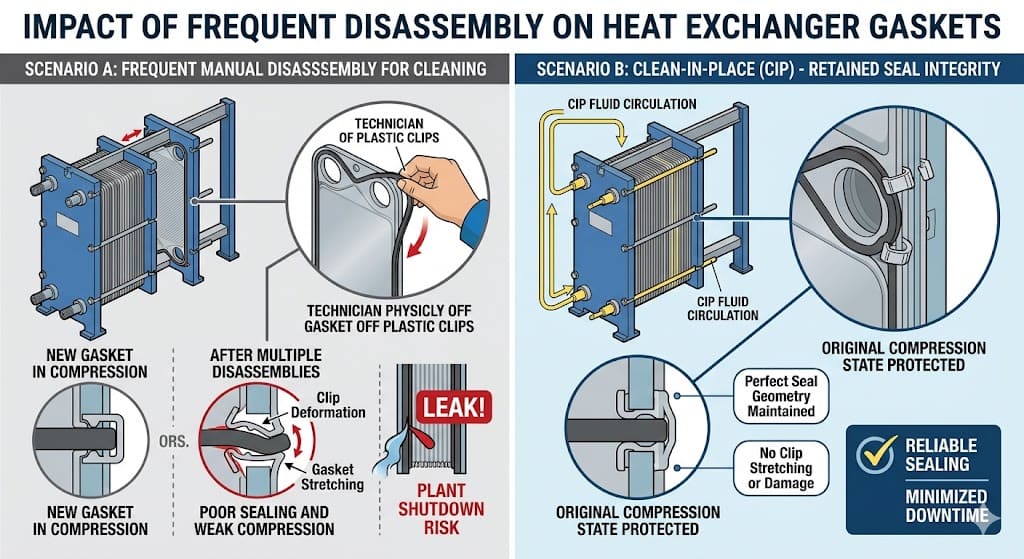
I remember a customer from a palm oil refinery. He bought new plates and gaskets5 from us. Six months later, he called me. His unit was leaking. I asked him how many times he opened it to clean. He said once a month. That was the exact problem.
The Problem with Clip-on Gaskets
Modern heat exchangers use glue-free gaskets. You might know them as Loc-In or Paraclip designs. They use small rubber prongs to lock into the plate holes. Every time you pull the plates apart, you pull on these clips.
Plastic Deformation Explained
Rubber and plastic can only stretch so many times. If you stretch them too much, they do not go back to their normal shape. We call this plastic deformation6. The holding force drops. The gasket slips out of the groove.
The Value of the Original Compression State
When we build a heat exchanger, we press it to a very specific size. The gasket fills the groove perfectly.
| Feature | Manual Cleaning | CIP Method |
|---|---|---|
| Unit Status | Opened and Closed | Stays Closed |
| Gasket Clips | Stretched and Worn | Safe and Untouched |
| Seal Shape | Changes Over Time | Stays Perfect |
CIP is great because you do not open the frame. You keep the original compression state. The rubber stays exactly where it should. This saves you from buying new gaskets too soon and prevents surprise leaks.
Can Poor CIP Practices Actually Cause Stress Corrosion Cracking?
CIP sounds perfect, right? But bad CIP is just as dangerous as hard scrubbing. If you leave cleaning chemicals inside, your plates will crack and break very quickly.
Poor CIP leaves acid residue7 in the gasket grooves. When the heat exchanger starts running and gets hot, this small amount of acid becomes very strong. This concentration effect causes severe stress corrosion cracking8. You must have high CIP flow9 and perform thorough neutralizing rinsing10.
CIP is safe for the metal surface, but only if you do it right. I have seen perfectly good plates ruined in just a few days after a bad CIP job. The damage always hides in the same place. It hides right under the gasket.
The Danger of Acid Residue
Cleaning chemicals use strong acids to dissolve scale. When you pump these acids through the unit, they do a great job. But the liquid moves slowly near the edges of the gasket grooves. If your pump flow is too low, the acid gets stuck there.
The Concentration Effect
You finish cleaning and turn the hot fluids back on. The heat exchanger gets very hot. The water in the trapped acid boils away. The acid left behind gets stronger and stronger. This is the concentration effect.
Stress Corrosion Cracking
The gasket groove is already under high physical stress because it is pressed tight. Strong acid plus high stress plus high heat equals disaster. The metal cracks like dry glass.
| CIP Step | Bad Practice | Good Practice | Result |
|---|---|---|---|
| Flow Rate | Low | High | Washes away all dirt |
| Rinsing | Quick flush | Deep neutral rinse | Removes all acid |
| Heating | Fast start | Slow start | Prevents acid boiling |
You must rinse the unit with a neutralizing liquid. You must flush it with clean water for a long time. Do not rush this step. Good rinsing stops stress corrosion cracking completely.
How Can You Prove Your Cleaning Method is Safe?
You cleaned your plates. They look shiny and new. But are they really safe? Hidden cracks and tiny holes can still destroy your process. You need to be sure.
You must periodically use Dye Penetrant Inspection (DPI)11 on your plates. DPI finds hidden damage from both manual scrubbing12 and CIP. It shows mechanical cracks from hard brushes. It also reveals chemical pitting from bad acid rinsing. This test proves if your cleaning method actually works.
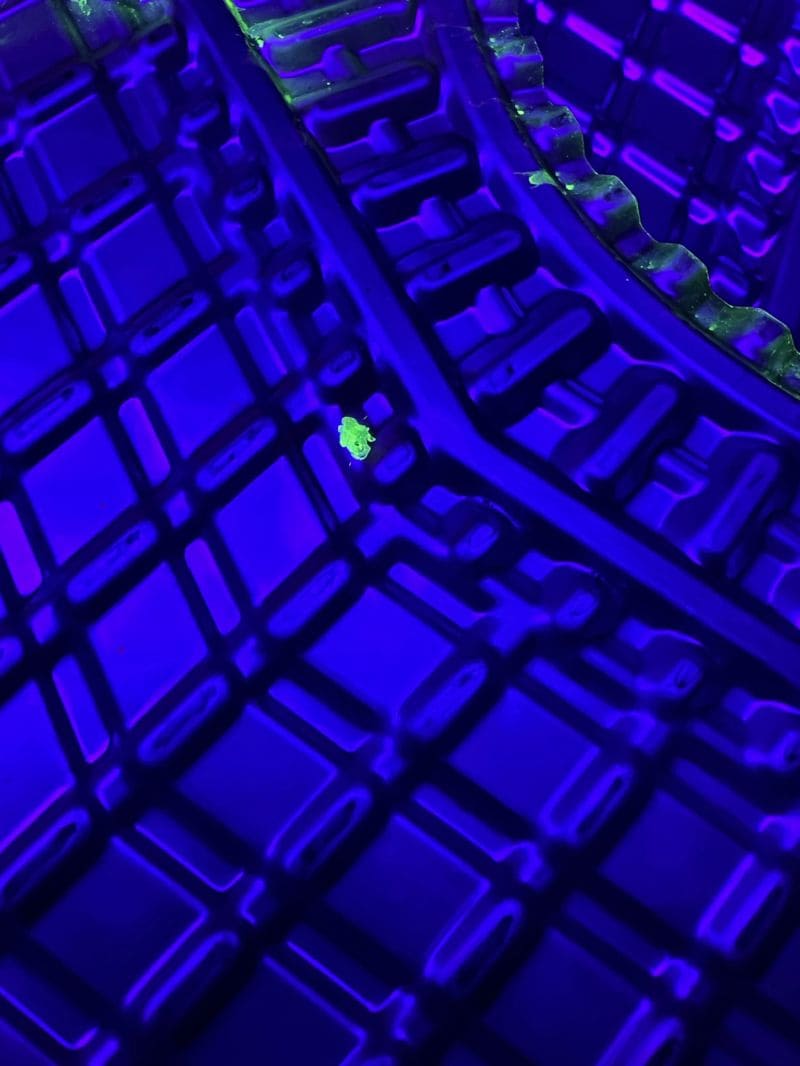
You cannot trust your eyes alone. A plate might look perfect on the outside but have a crack running all the way through it. I always tell plant managers to test their plates regularly. We use a simple but powerful test.
What is Dye Penetrant Inspection?
Dye Penetrant Inspection, or DPI, uses special colored liquids. First, you spray a bright red dye on the clean plate. The red liquid sinks into any tiny hole or crack. Then, you wipe the surface clean. Finally, you spray a white developer powder. If there is a crack, the red dye bleeds out into the white powder.
Finding the True Cause of Damage
DPI tells you exactly what went wrong.
Mechanical vs Chemical Damage
If you see long, straight red lines, you have mechanical cracks. This means your team scrubbed too hard or the pressure was too high. If you see tiny red dots, you have chemical pitting. This means your CIP acid was too strong, or you did not rinse it away.
| Defect Type | DPI Visual | Likely Cause | Solution |
|---|---|---|---|
| Long lines | Red streaks | Scrubbing tools | Stop manual brushing |
| Tiny dots | Red spots | Acid or Chloride | Better CIP rinsing |
You should pull a few random plates every year to do this test. It is the only way to know the truth. It catches small problems before they become massive leaks.
Conclusion
CIP protects plates and gaskets5 better than manual scrubbing. But you must rinse thoroughly to prevent acid cracks. Always test your plates with DPI to ensure they remain safe.
Explore how CIP can extend the life of your heat exchanger plates and improve efficiency. ↩
Explore the role of gasket grooves in maintaining heat exchanger efficiency. ↩
Find out how the passivation layer protects your metal surfaces from corrosion. ↩
Understand the design and function of clip-on gaskets in heat exchangers. ↩
Explore this resource to learn effective maintenance strategies that enhance the longevity and performance of your plates and gaskets. ↩
Learn about the effects of plastic deformation on gasket performance. ↩
Learn about the dangers of acid residue and its impact on metal surfaces. ↩
Understand the causes of stress corrosion cracking and how to avoid it. ↩
Learn about the importance of flow rate in the CIP cleaning process. ↩
Explore the significance of neutralizing rinsing in preventing corrosion. ↩
Discover how DPI can help identify hidden damage in heat exchanger plates. ↩
Learn about the risks of manual scrubbing and how it can damage your equipment. ↩