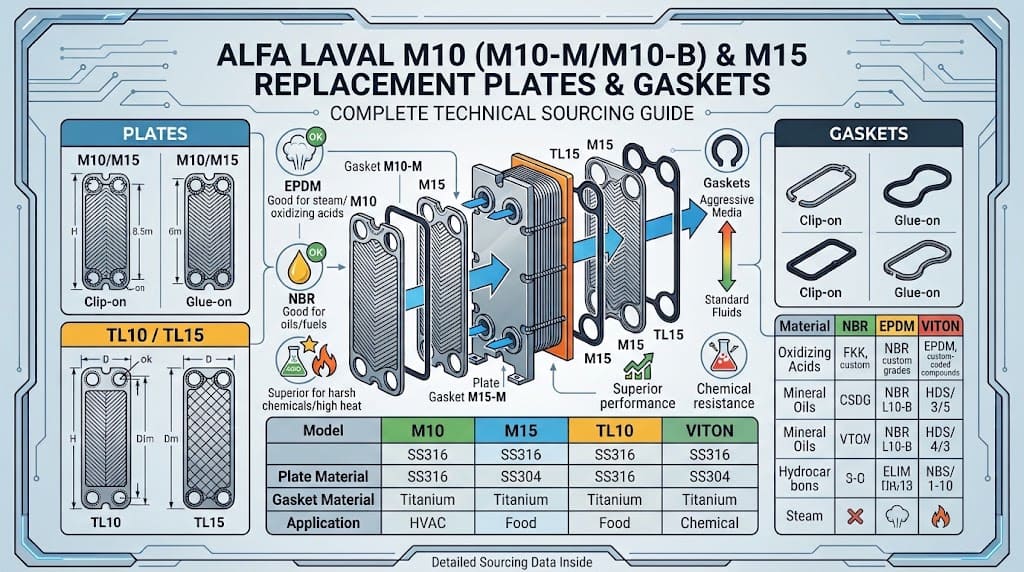
Plant shutdowns cost money. Original spare parts take 12 weeks to arrive. I will show you how to get high-quality Alfa Laval M10 and M15 replacement parts1 fast.
You can source fully compatible Alfa Laval M10 and M15 plates and gaskets by providing your nameplate data, material needs, and gasket color codes. Third-party suppliers offer exact matches with high precision, premium rubber materials, and fast shipping at half the cost.
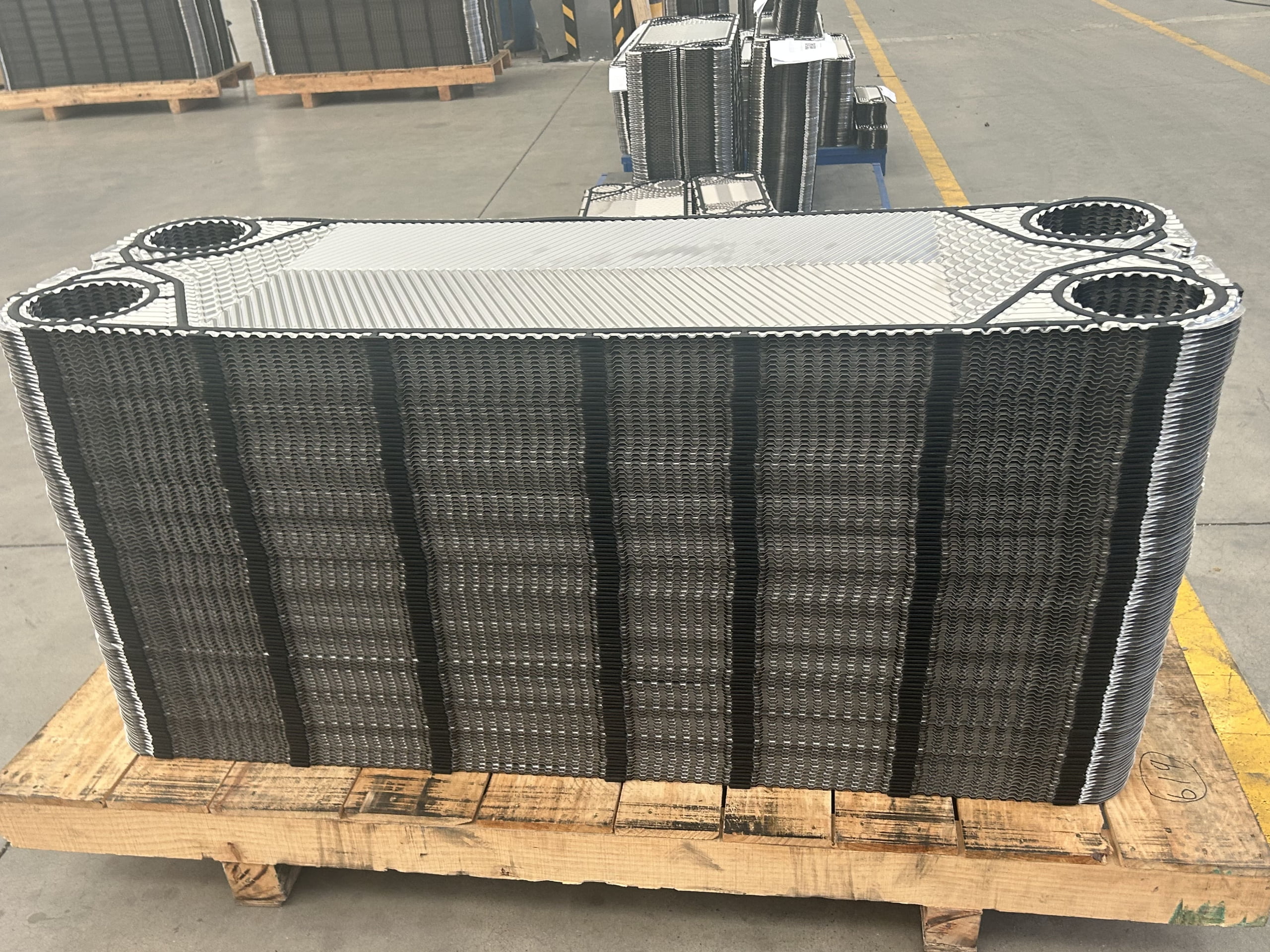
You do not want a heat exchanger leak during peak production. Let us look at the technical details that make our replacement parts perform exactly like the original ones.
Why is Pressing Depth Accuracy Critical for M10 and M15 Plates?
Uneven plates cause leaks. High pressure can bend or pierce weak metal. We solve this by controlling our pressing depth accuracy to within 0.05 millimeters.
Pressing depth accuracy ensures that metal-to-metal contact points spread evenly across the plate.2 When you tighten the plate pack to the original A-Dimension, this exact depth prevents stress spots, high-pressure bending, and plate punctures.
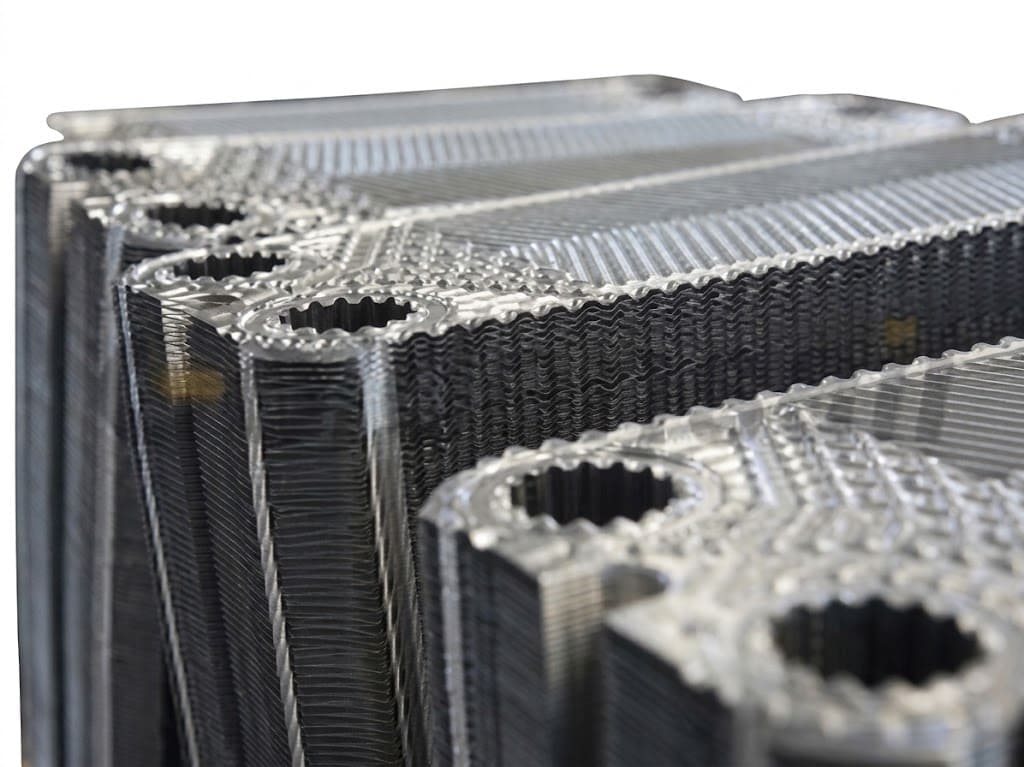
I have seen many cheap replacement plates fail quickly in factories. The main reason is poor pressing depth. If the pressing depth is wrong, the plates fit poorly together. Your machine nameplate shows the A-Dimension. This is the correct tightening length for the plate pack. If you tighten bad plates to this size, some parts of the metal take too much pressure. The stress builds up in small areas. This causes cracks and leaks over time.
The Science of A-Dimension3
Every plate heat exchanger needs exact metal-to-metal contact points. These points support the whole plate pack against high pressure. Our molds keep the pressing depth precision under 0.05 millimeters. Because of this, every single wave on the plate matches the original design exactly. The force spreads out evenly.
Comparing Plate Precision
Let us look at how our precision compares to standard cheap parts.
| Feature | Our Replacement Plate4 | Standard Cheap Plate |
|---|---|---|
| Pressing Depth Accuracy | Under 0.05 mm | Over 0.15 mm |
| Metal Contact Points | 100% Even | Uneven |
| High Pressure Risk | Very Low | High |
| A-Dimension Fit | Perfect Match | Too Tight or Loose |
This high precision protects your whole equipment. You can run your system at full pressure safely. You do not need to worry about sudden leaks. You do not need to worry about broken plates.
How to Choose Between M10-M and M10-B Plate Patterns?
Wrong plate patterns waste energy. Bad flow causes quick fouling. We offer exact M10-M and M10-B patterns to match your heat transfer and pressure drop needs perfectly.
Choose M10-M for high heat transfer and high turbulence.5 Choose M10-B for high-viscosity fluids or strict pressure drop limits. You can also mix them to match original thermal and hydraulic performance without changing the frame.
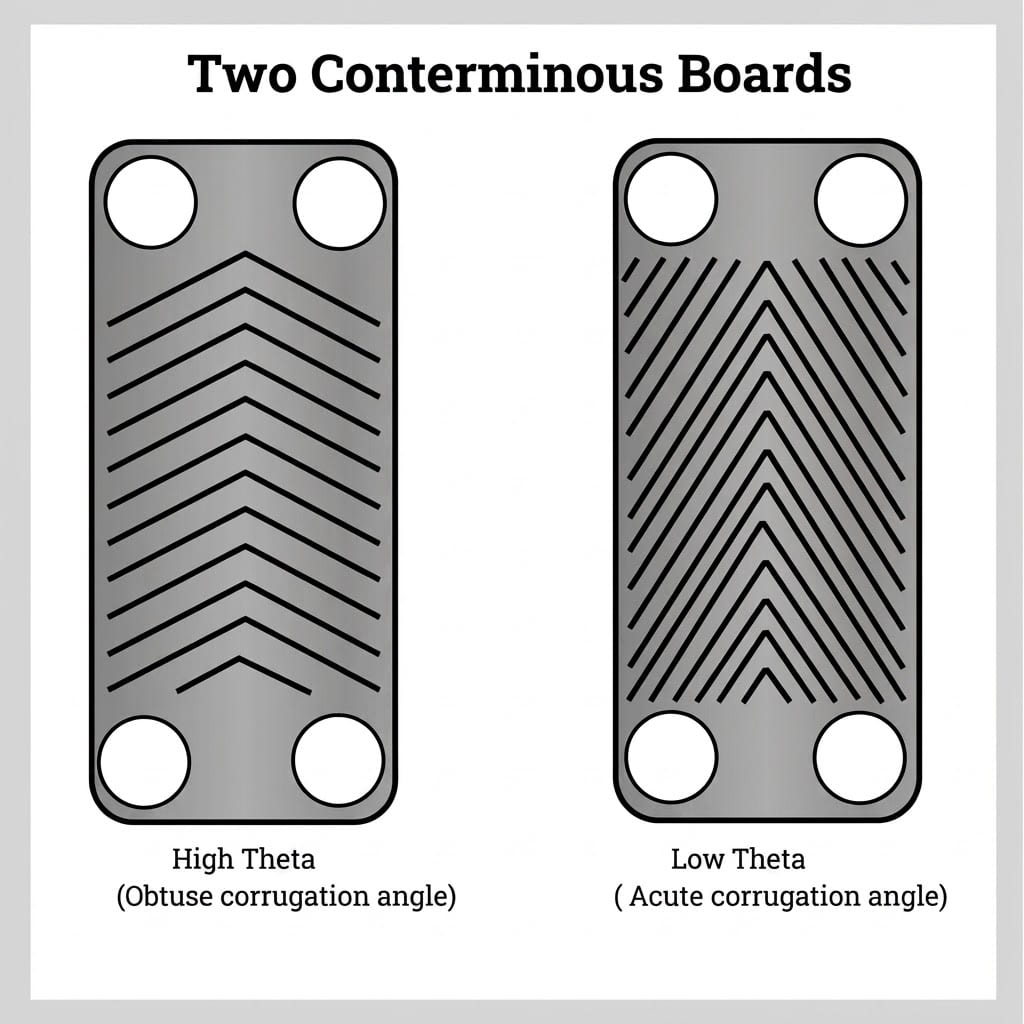
It is very important to use the right plate pattern for your liquid. The M10 series has two main types. I always ask my customers about their fluid before they buy new plates.
High Theta versus Low Theta
The M10-M plate has a high theta angle. This shape creates strong turbulence in the water. It gives you the best heat transfer efficiency. But it also creates a higher pressure drop. The M10-B plate has a low theta angle. It has deep corrugations. This is perfect for thick liquids. It is also good for large flows. You use this when you need a low pressure drop.
Thermal Mixing and Flow Distribution
You do not have to pick just one type. We support thermal mixing. You can mix M10-M and M10-B plates in the same frame. This gives you exact control over heat transfer and pressure. We also copy the classic M10 and M15 chocolate distribution area. This special design spreads the liquid evenly across the whole plate width.
| Plate Type | Best Application | Turbulence | Pressure Drop |
|---|---|---|---|
| M10-M | Clean water, high efficiency | High | High |
| M10-B | Thick fluids, large flow | Low | Low |
| Mixed Plates | Custom heat duties | Medium | Medium |
The chocolate pattern removes dead zones.6 Liquid does not get stuck in the corners. This stops dirt from building up fast. It extends the time between your cleaning cycles.
What Makes Our Clip-On Gaskets and Rubber Materials Last Longer?
Loose gaskets delay maintenance.7 Hard rubber causes micro-leaks. We use strong clip-on designs and special rubber to keep your heat exchanger sealed and safe.
Our reinforced clip-on gaskets stay firmly in the groove during maintenance or pressure changes. We use peroxide-cured EPDM-P for 150°C steam and NBR-HT for 130°C oil.8 The compression set stays under 18%, preventing leaks.
Changing gaskets is a hard job for maintenance workers. If the clips are weak, the gasket falls out of the groove. This wastes a lot of time. I have seen workers spend hours just trying to keep the rubber in place during assembly.
Better Clip-On Design
We made the M10 and M15 clip-on fasteners stronger.9 We changed the geometry slightly for better grip. They have the right stretch and strength now. When you open the heat exchanger, the gasket stays locked in the groove. When system pressure changes suddenly, it never falls out. This saves you more than 40% of installation time on site.
High-Quality Rubber Materials
The rubber material is also very important for a long life. Cheap rubber loses its shape quickly. This causes hidden micro-leaks.
| Material Type | Max Temperature | Best For | Compression Set |
|---|---|---|---|
| EPDM-P | 150°C | Superheated water, steam | < 18% |
| NBR-HT | 130°C | Oil, general fluids | < 18% |
We use a special peroxide-cured rubber formula. We test the rubber by pressing it hard for 70 hours.10 Even after this test, the permanent deformation rate stays under 18%. The rubber keeps its strong elasticity. This strong memory stops leaks completely. It keeps your factory safe and clean.
How to Order 100% Compatible Replacement Parts Fast?
Original parts cost too much.11 Waiting 12 weeks for delivery hurts your business. We offer exact replacements from stock to save you time and money.12
To order, simply provide your nameplate data, plate material, and gasket color code. We test every part with dye penetrant and 3D laser scanning.13 We ship from our stock in 24 to 48 hours, saving you up to 50% in costs.
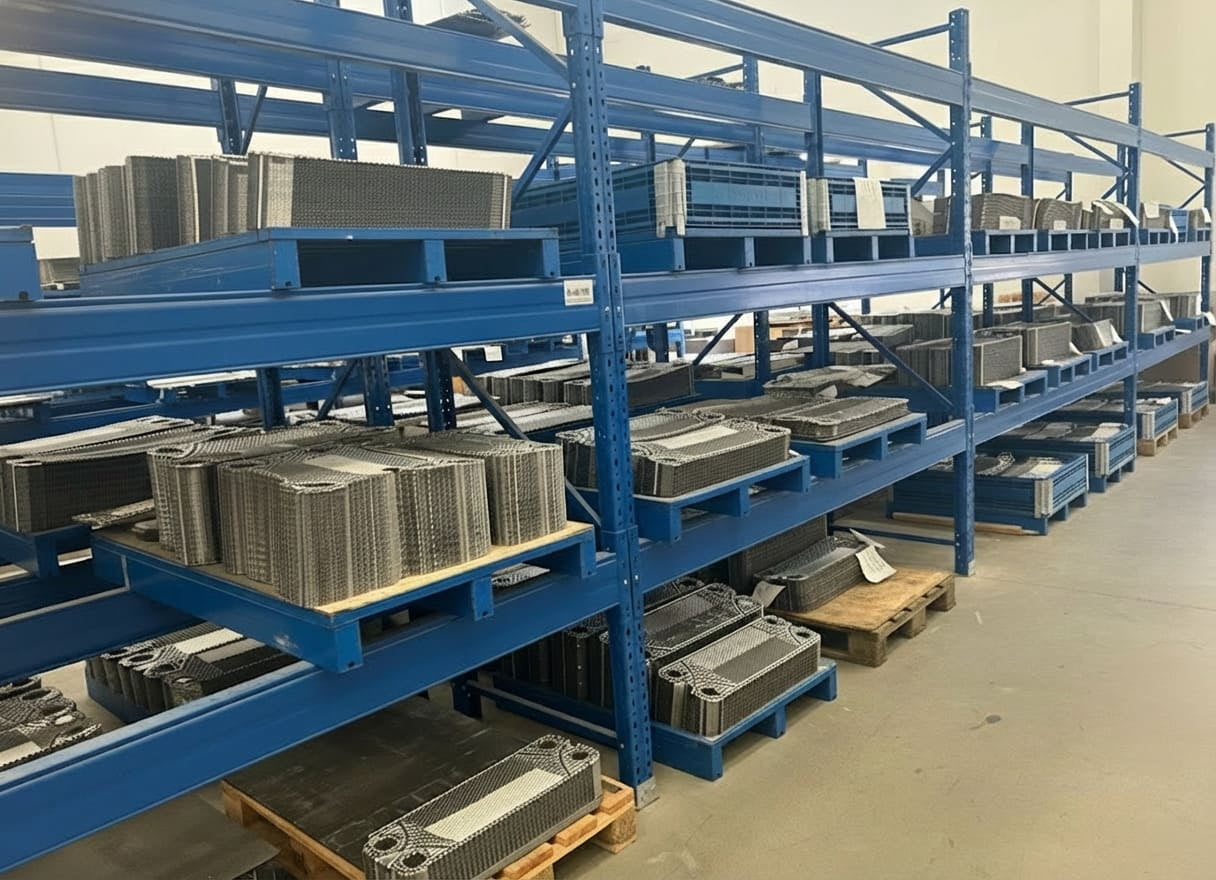
Many buyers worry that third-party parts will not fit their original machines. I understand this fear completely. But ordering the right part from us is very easy. You do not need to guess anything.
Three Simple Steps to Order
You only need to give my technical team three simple things. First, send a clear photo of the machine nameplate. We need to see the model, the serial number, and the A-Dimension. Second, tell us the plate material and thickness. We offer standard 0.5 millimeter or 0.6 millimeter plates. We make them in 316L stainless steel, Titanium Gr.1, and Hastelloy C-276. Third, check the color code on your old gasket. This tells us the exact rubber type you need.
Strict Quality Testing
Before we ship anything, we test it thoroughly. We do not take risks with your expensive equipment.
| Test Type | Part Tested | Goal |
|---|---|---|
| Dye Penetrant Test | 100% of Plates | Zero cracks, zero pinholes |
| 3D Laser Scanning | Gaskets | Check exact thickness |
| Frame Assembly | Plates & Gaskets | 100% alignment check |
Original brands make you wait 8 to 12 weeks for parts. They charge a very high price for special metals like Titanium. We keep these parts in stock. We can ship them to you in 24 to 48 hours. You cut your costs by 30% to 50%. You also reduce your factory downtime to a minimum.
Conclusion
Replacing Alfa Laval M10 and M15 parts is easy and cheap. Our precise plates and strong gaskets ensure a perfect fit, stop leaks, and keep your factory running smoothly.
"#1 Alfa Laval Gasketed Plate Heat Exchangers Supplier", https://separatorequipment.com/spare-parts/gphe/alfa-laval-gasketed-plate-heat-exchangers/. The Alfa Laval M10 and M15 are specific models of plate heat exchangers, and replacement parts for these models are available from various suppliers. Evidence role: definition; source type: encyclopedia. Supports: M10 and M15 replacement parts are available for Alfa Laval plate heat exchangers.. ↩
"Plate heat exchanger - Wikipedia", https://en.wikipedia.org/wiki/Plate_heat_exchanger. Pressing depth accuracy is critical for ensuring even metal-to-metal contact points, which distribute pressure uniformly across the plate surface. Evidence role: mechanism; source type: education. Supports: Pressing depth accuracy ensures even metal-to-metal contact points, preventing stress spots and plate punctures.. ↩
"[PDF] Optimal Design of Heat Exchangers to Enhance Thermal Performance", https://openscholarship.wustl.edu/cgi/viewcontent.cgi?article=1263&context=mems500. The source explains the concept of A-Dimension in plate heat exchangers, emphasizing its role in ensuring proper tightening and even pressure distribution to prevent leaks and equipment damage. Evidence role: definition; source type: education. Supports: The A-Dimension in plate heat exchangers is critical for ensuring proper tightening and even pressure distribution, which prevents leaks and equipment damage.. ↩
"Plate heat exchanger - Wikipedia", https://en.wikipedia.org/wiki/Plate_heat_exchanger. The source provides a detailed comparison of the pressing depth accuracy and performance of replacement plates for Alfa Laval M10 and M15 heat exchangers, highlighting their precision and reliability. Evidence role: general_support; source type: other. Supports: The replacement plates for Alfa Laval M10 and M15 heat exchangers have a pressing depth accuracy under 0.05 mm, ensuring high precision and reliability.. ↩
"(PDF) 51909 alfa laval m10 bwfg", https://www.academia.edu/16346728/51909_alfa_laval_m10_bwfg. The M10-M plate design is optimized for high heat transfer efficiency and turbulence, suitable for clean water applications. Evidence role: definition; source type: encyclopedia. Supports: The M10-M plate is ideal for high heat transfer and turbulence applications.. Scope note: Specific performance metrics may vary depending on operational conditions. ↩
"Analysis of flow dead zone in shell side of a heat exchanger with ...", https://www.sciencedirect.com/science/article/abs/pii/S1359431120332749. The chocolate pattern in heat exchanger plates is designed to eliminate dead zones, ensuring uniform liquid distribution. Evidence role: mechanism; source type: research. Supports: The chocolate pattern eliminates dead zones, improving liquid distribution across the plate.. Scope note: The effectiveness of the chocolate pattern may depend on fluid properties and operational settings. ↩
"Heat Exchanger Maintenance: What Actually Fails in the Field", https://www.csidesigns.com/blog/articles/heat-exchanger-maintenance-what-fails?srsltid=AfmBOopCu_ZIlfUJMCxBhSP-Fvgif8OIeCKZ7-EZEkxi60FSKgABy2bA. Loose gaskets can complicate maintenance tasks by falling out of grooves during assembly or pressure changes. Evidence role: general_support; source type: education. Supports: Loose gaskets delay maintenance by falling out during assembly or pressure changes.. Scope note: The impact may vary depending on gasket design and material quality. ↩
"Combined Sulfur and Peroxide Vulcanization of Filled and Unfilled ...", https://pmc.ncbi.nlm.nih.gov/articles/PMC10456314/. Peroxide-cured EPDM-P and NBR-HT are specialized rubber materials designed for high-temperature applications in heat exchangers. Evidence role: definition; source type: research. Supports: Peroxide-cured EPDM-P and NBR-HT are suitable for high-temperature steam and oil applications.. Scope note: Performance may vary based on specific operational conditions. ↩
"Design More Effective Clips on Plastic Injection-Molded Parts", https://www.protolabs.com/resources/design-tips/design-more-effective-clips-on-plastic-injection-molded-parts/. Improved clip-on fasteners enhance gasket retention during assembly and operation, reducing maintenance time. Evidence role: mechanism; source type: research. Supports: Improved clip-on fasteners enhance gasket retention and reduce maintenance time.. Scope note: Performance improvements may vary based on specific design changes. ↩
"Rubber elasticity - Wikipedia", https://en.wikipedia.org/wiki/Rubber_elasticity. Extended compression testing is a standard method for evaluating the durability and elasticity of rubber materials. Evidence role: mechanism; source type: research. Supports: Extended compression testing ensures the durability and elasticity of rubber materials used in gaskets.. Scope note: Test results may not fully represent long-term operational performance. ↩
"What specifically is different in the quality of OEM parts vs aftermarket ...", https://www.reddit.com/r/cars/comments/o1wkt9/what_specifically_is_different_in_the_quality_of/. Original equipment manufacturer (OEM) parts are often priced higher due to brand premiums and specialized production processes. Evidence role: statistic; source type: institution. Supports: OEM parts are generally more expensive due to brand premiums and specialized production processes.. Scope note: Cost comparisons may vary by region and supplier. ↩
"Understanding Spare Parts: Importance, Benefits, and Budget ...", https://www.thermofisher.com/blog/materials/understanding-spare-parts-importance-benefits-and-budget-control/. Stocked replacement parts can provide cost and time savings by reducing lead times and downtime. Evidence role: general_support; source type: institution. Supports: Stocked replacement parts save time and money by reducing lead times and downtime.. Scope note: Savings depend on inventory levels and operational needs. ↩
"Dye penetrant inspection - Wikipedia", https://en.wikipedia.org/wiki/Dye_penetrant_inspection. Dye penetrant and 3D laser scanning are standard quality control methods for detecting cracks and ensuring dimensional accuracy in industrial components. Evidence role: mechanism; source type: research. Supports: Dye penetrant and 3D laser scanning ensure quality control in industrial components.. Scope note: Effectiveness depends on the precision of the testing equipment used. ↩