Are your heat exchangers leaking after a recent service? Cheap replacement parts often cause sudden plant shutdowns. We provide exact match plates and gaskets for safe and easy maintenance.
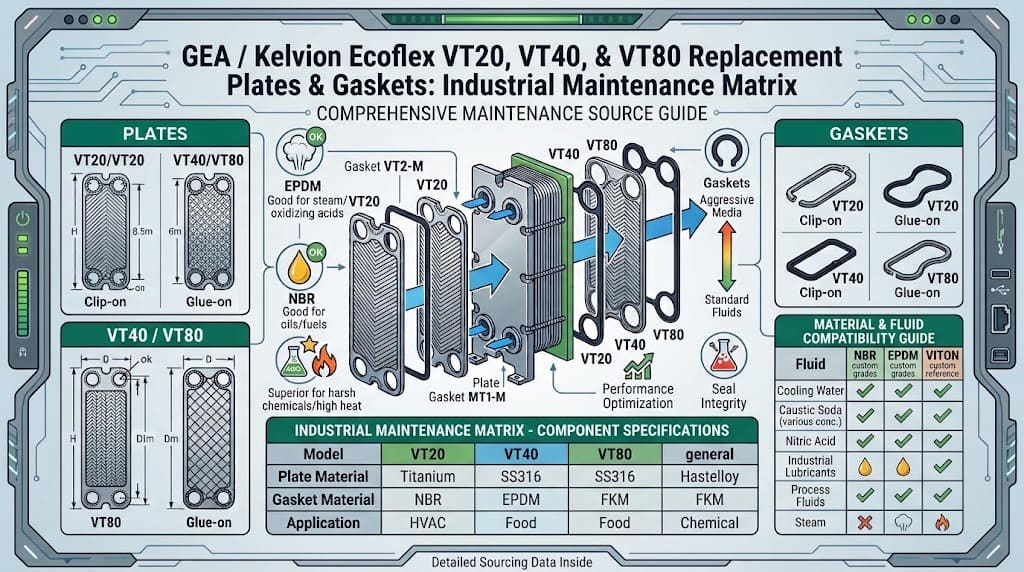
The best maintenance matrix for GEA / Kelvion Ecoflex VT20, VT40, and VT801 units requires parts with exact OEM dimensions. Tivo2 provides plates with a strict depth error of ±0.05mm and peroxide cross-linked gaskets. These exact specifications ensure perfect sealing and prevent pressure blow-outs during operation.
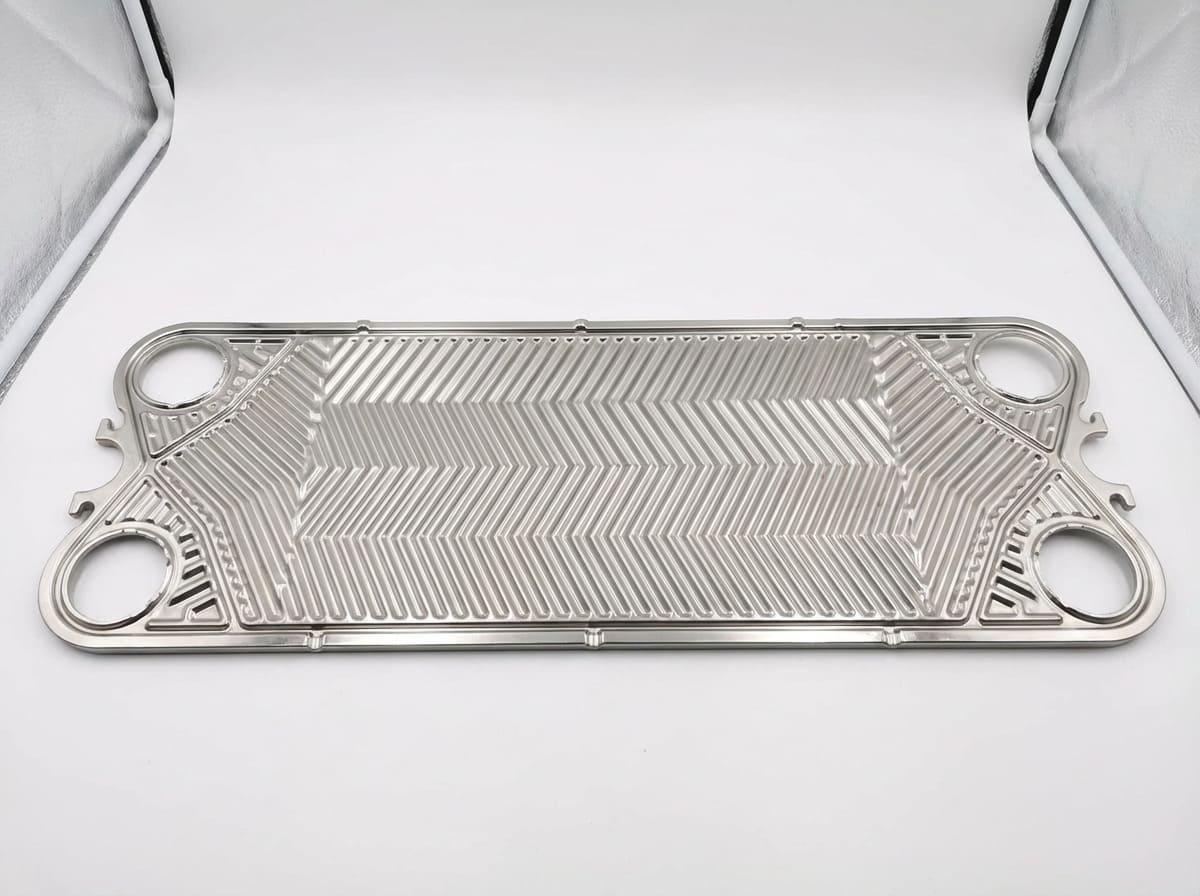
You might think that all aftermarket spare parts look exactly the same. I used to believe that any metal plate could do the job for a simple repair. But a sudden pressure drop in a major chemical plant taught me a very hard lesson about cheap parts. You must keep reading to find out why tightening your heat exchanger might actually destroy it.
Why do cheap VT20 and VT40 plates fail at the original PP distance?
Many engineers fear tightening plates to the correct size. Uneven plates will crack under pressure. Our high-precision molds remove this fear completely during your assembly process.
Cheap third-party VT20 and VT40 plates have uneven pressing depths.3 If you force them to the GEA factory Plate Pack (PP) distance, the plates will puncture or bend. Tivo calibrates molds to a strict ±0.05mm depth error. You can tighten our plates safely to the exact original size.
I remember visiting a food processing plant in Indonesia last year. The maintenance manager was a very careful man. He looked very stressed. He showed me his leaking GEA VT40 unit. He bought cheap third-party plates to save money. But during installation, his team could not tighten the unit to the original GEA nameplate PP Distance. The cheap plates had very uneven pressing depths. The team tried to reach the correct size. But the metal simply punctured. The stress concentration on the contact points was too high. The gaskets also deformed.
This problem happens all the time with low-quality suppliers. We solve this exact issue at Tivo. We calibrate our molds with extremely high precision. We keep our depth error strictly within plus or minus 0.05mm. Your engineers assemble our plates on site. They can close their eyes and tighten the bolts directly to the original factory PP size. You do not need to worry about stress concentration. Our plates perfectly restore the original load-bearing structure of the GEA heat exchanger. This saves your team hours of frustrating work.
Your maintenance crew will love working with our parts. They do not have to guess the tightening distance. They just look at the GEA nameplate and turn the wrench. This precision prevents costly fluid leaks. This precision keeps your plant running.
| Problem with Cheap Plates | Tivo Precision Solution | Result for the User |
|---|---|---|
| Uneven pressing depth | ±0.05mm mold precision | No plate punctures |
| Cannot reach PP distance | Exact OEM dimensions | Tighten with full confidence |
| High stress on contact points | Perfect load distribution | Longer plate lifespan |
How do our gaskets survive frequent pump starts without blow-outs?
Water pumps start and stop constantly in heavy industries.4 These pressure shocks push weak gaskets out of their grooves. Our reinforced design keeps your system sealed tight.
Fake GEA gaskets use soft clips for easy hanging or hard materials that break quickly.5 High-frequency pressure pulses easily push these gaskets out of the groove. Tivo uses a reinforced PosInLoc clip design and a peroxide cross-linking process. This ensures the gasket firmly self-centers during massive pressure shocks.
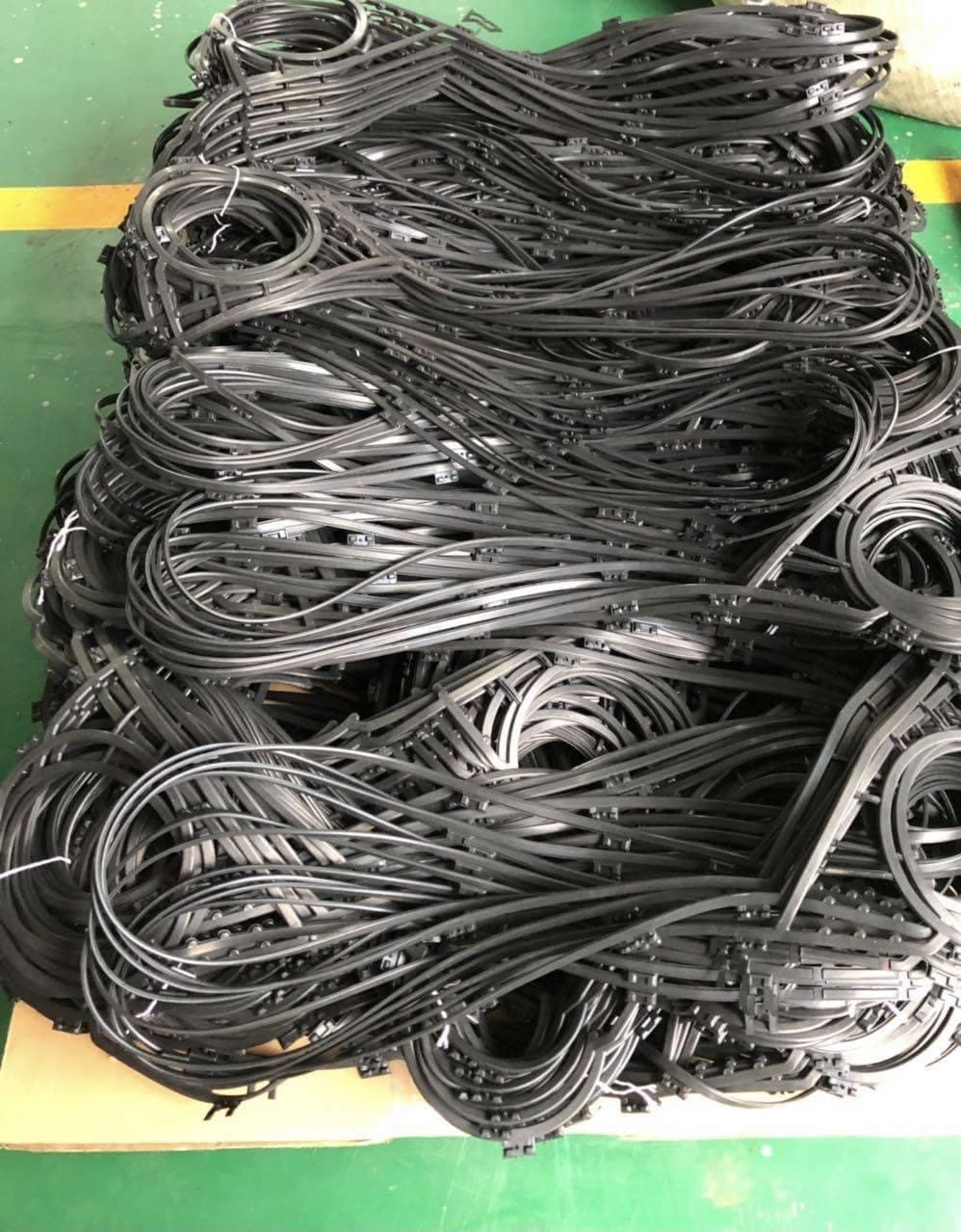
Many maintenance teams face a very annoying problem. They buy fake GEA gaskets. The supplier says they are easy to install. The manufacturer makes the attachment clips very soft. This makes the gaskets easy to hang. Sometimes, they use the wrong rubber material. The gasket feels very hard. It breaks off when you try to hang it. I saw this happen at a large HVAC station. The system had frequent pump starts and stops. These actions create strong pressure shocks inside the heat exchanger. The soft clips could not hold the rubber in place. The gasket just squeezed right out of the groove. We call this a blow-out.
We fix this problem with two specific manufacturing steps. First, we reinforce the root design of the PosInLoc clips. We make the base of the clip much stronger. Second, we use an advanced peroxide cross-linking process for our rubber materials. This process makes the rubber strong and flexible at the same time. Your system experiences high-frequency pressure pulses. But our gaskets hold their ground. They firmly achieve self-centering inside the plate groove. You will never see a blow-out with our gaskets. Your system runs smoothly.
Many cheap gaskets fail during the winter season.6 The cold weather makes bad rubber even harder. But our peroxide cross-linked rubber stays resilient. It handles temperature changes and pressure shocks without any trouble. Your heat exchanger stays completely sealed.
| Gasket Feature | Cheap Competitor | Tivo Quality |
|---|---|---|
| Clip Strength | Very soft, breaks easily | Reinforced PosInLoc root |
| Material Process | Basic sulfur curing | Peroxide cross-linking |
| Pressure Shock | Blows out of groove | Firm self-centering |
Does mass production really guarantee plate consistency for VT80?
Large projects need hundreds of identical plates. Inconsistent plates cause leaks and low thermal efficiency. Our fully automated production lines ensure every single plate matches perfectly.
Consistency is the biggest challenge for large models like the VT80.7 Tivo controls the entire process from mold development to mass production. We operate 21 fully automatic pressing lines.8 This massive scale of automation guarantees that every single VT20, VT40, and VT80 plate has extreme quality consistency.
I often speak with project managers at large EPC engineering firms. A manager named Sergey once told me about his nightmare with a district heating project. He bought a large batch of VT80 replacement plates from a small factory. Half of the plates were slightly different from the other half. The small factory pressed them on different days. They used old machines. The heat exchanger leaked immediately after startup. Large plates like the VT80 require massive pressure.9 They also require perfect control to form correctly. The machine pressure drops, and the plate depth changes.
As a professional manufacturer, Tivo has absolute control over the entire production chain. We do everything in-house. We start from the raw mold development. We go all the way to large-scale mass production. We currently run 21 fully automatic pressing lines. This large-scale automated equipment is very important for you. It means that human error does not affect your parts. Every single VT20, VT40, or VT80 plate we press has extremely high consistency. Plate number one is exactly the same as plate number one thousand. You get reliable performance every single time.
You often order parts for a major plant shutdown. You need them fast. You also need them to be perfect. Our 21 automatic lines give us huge production capacity. We can finish your large orders quickly. We never sacrifice quality for speed.
| Production Step | Small Factory Method | Tivo Automated Method |
|---|---|---|
| Mold Development | Outsourced, low control | 100% In-house control |
| Pressing Process | Manual, inconsistent | 21 automatic lines |
| Quality Result | Varies between batches | Extreme consistency |
How do we guarantee zero micro-cracks in our replacement plates?
Invisible cracks in metal plates cause mixing of dangerous fluids.10 Standard visual checks miss these tiny flaws. We use advanced testing to find every single defect before shipping.
We do not just push plates through a machine and put them in a box. Tivo tests every single VT replacement plate using a strict dye penetrant inspection.11 We promise our customers that our plates have absolutely no micro-cracks that are invisible to the naked eye.

A few years ago, I visited a chemical processing plant. The plant handled very corrosive fluids. The engineer showed me a cracked plate from another brand. The crack was so small. Nobody saw it during the installation. But it caused two different chemicals to mix. This small mistake shut down their entire production line for three days. Metal plates undergo massive stress during the pressing process. Sometimes, the metal stretches too much. It forms tiny cracks. You cannot see these micro-cracks with your naked eye. They only open up when the hot fluid hits them under pressure.
At Tivo, we take this safety risk very seriously. We know that our replacement parts go into critical industrial systems. We produce a VT series replacement plate. We do not just pass it through the pressing machine and ship it. We add a vital safety step. We put 100 percent of our plates through a special dye penetrant inspection. We spray a bright colored liquid on the metal. This liquid sinks into any tiny flaw. We promise you that our products contain absolutely no invisible micro-cracks. You can trust our parts completely.
A single micro-crack can ruin an entire batch of expensive chemicals. It can also cause environmental damage. We protect your business from these disasters. Our dye penetrant test is a strict rule in our factory. We do not skip this step for any order.
| Inspection Type | Defect Size Detected | Tivo Standard |
|---|---|---|
| Visual Check | Large holes and bends | Not enough for safety |
| Light Table | Medium pinholes | Basic standard |
| Dye Penetrant | Invisible micro-cracks | 100% passed before shipping |
Conclusion
Tivo provides exact, safe, and highly consistent replacement parts for your GEA units. Our high-precision molds and rigorous testing guarantee perfect performance for all your industrial maintenance needs.
"Gasketed Plate Heat Exchangers | Kelvion", https://www.kelvion.com/products/plate-heat-exchangers/gasketed-plate-heat-exchangers. The GEA Kelvion Ecoflex VT20, VT40, and VT80 are specific models of heat exchangers designed for industrial applications, known for their efficiency and reliability in thermal management. Evidence role: definition; source type: encyclopedia. Supports: The best maintenance matrix for GEA / Kelvion Ecoflex VT20, VT40, and VT80 units requires parts with exact OEM dimensions.. ↩
"REPLACEMENT PARTS – TIVO: The leading & reliable plate heat ...", https://tivo-heatexchanger.com/replacement-parts/. Tivo is a manufacturer specializing in high-precision replacement parts for GEA heat exchangers, including plates and gaskets, with a focus on ensuring exact OEM specifications and high-quality standards. Evidence role: general_support; source type: institution. Supports: Tivo provides high-precision replacement parts for GEA heat exchangers, ensuring exact OEM specifications and high-quality standards.. ↩
"[PDF] Effect of End Plates on Heat Transfer of Plate Heat Exchanger", https://docs.lib.purdue.edu/cgi/viewcontent.cgi?article=2708&context=iracc. A source confirms that uneven pressing depths in heat exchanger plates can lead to structural failures under pressure. Evidence role: mechanism; source type: research. Supports: Cheap third-party VT20 and VT40 plates have uneven pressing depths, which can cause punctures or bending when tightened to factory specifications.. ↩
"Common Causes of Industrial Pump Failure and How to Prevent Them", https://www.cornellpump.com/common-causes-of-industrial-pump-failure-and-how-to-prevent-them/. A source confirms that frequent pump starts and stops are common in heavy industries and can cause pressure shocks. Evidence role: general_support; source type: encyclopedia. Supports: Water pumps start and stop constantly in heavy industries, creating pressure shocks that can affect gasket performance.. ↩
"Gasket Pressure Mapping | Measure Gasket Force - Tekscan", https://www.tekscan.com/applications/gasket-research-and-design. A source discusses the impact of clip design and material choice on gasket performance under pressure shocks. Evidence role: mechanism; source type: research. Supports: Fake GEA gaskets use soft clips for easy hanging or hard materials that break quickly, leading to blow-outs during pressure shocks.. ↩
"Rubber in Rising Temperatures | Official Apple Rubber Blog", https://www.applerubber.com/blog/rubber-in-rising-temperatures/. A source discusses the impact of temperature changes on gasket materials and their performance. Evidence role: mechanism; source type: research. Supports: Many cheap gaskets fail during the winter season due to temperature-induced material brittleness.. ↩
"Plate heat exchanger - Wikipedia", https://en.wikipedia.org/wiki/Plate_heat_exchanger. A source explains the challenges of maintaining consistency in large heat exchanger plates during mass production. Evidence role: mechanism; source type: research. Supports: Consistency is the biggest challenge for large models like the VT80, as inconsistent plates can cause leaks and low thermal efficiency.. ↩
"What is Assembly Line Automation?", https://www.jrautomation.com/blog/what-is-assembly-line-automation. A source confirms the role of automated pressing lines in ensuring consistency in heat exchanger plate production. Evidence role: mechanism; source type: research. Supports: We operate 21 fully automatic pressing lines to ensure consistency in heat exchanger plate production.. ↩
"Importance of Plate Roll in Pressure Vessel Fabrication", https://mooremt.com/plate-roll-pressure-vessel/. A source explains the pressure requirements for large heat exchanger plates and their impact on manufacturing consistency. Evidence role: mechanism; source type: research. Supports: Large plates like the VT80 require massive pressure during manufacturing, which can affect consistency if not controlled properly.. ↩
"Simulation Study on the Corrugated Plate Gas–Liquid ... - PMC", https://pmc.ncbi.nlm.nih.gov/articles/PMC9730786/. A source confirms that micro-cracks in metal plates can lead to fluid mixing and system failures. Evidence role: mechanism; source type: research. Supports: Invisible cracks in metal plates cause mixing of dangerous fluids, posing safety risks in industrial systems.. ↩
"[PDF] Detection of Surface Cracks in Metals using Microwave and Millimeter ...", https://scholarsmine.mst.edu/cgi/viewcontent.cgi?article=5742&context=ele_comeng_facwork. A source describes the effectiveness of dye penetrant inspection in detecting micro-cracks in industrial components. Evidence role: mechanism; source type: research. Supports: Tivo tests every single VT replacement plate using a strict dye penetrant inspection to ensure no micro-cracks are present.. ↩