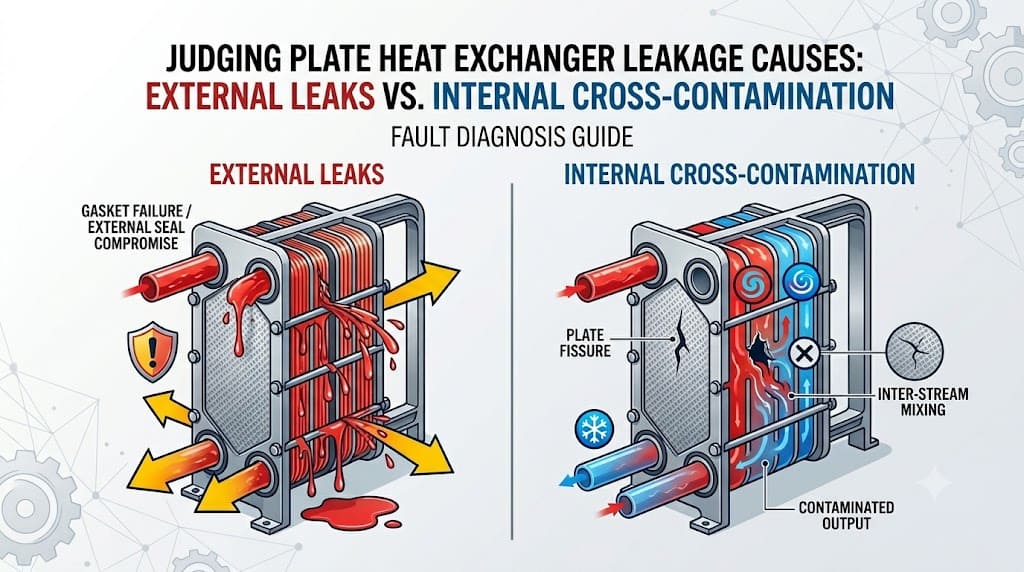
Do you see water pooling under your plate heat exchanger? Equipment leaks cause downtime and safety risks. I will show you how to find the real problem quickly.
External leaks usually come from gasket failure, cold starts, or uneven tightening.1 Internal cross-contamination happens when inner seals break. You must check the signal holes and tightening dimensions to judge the exact cause. Proper diagnosis stops irreversible damage and keeps your system safe.
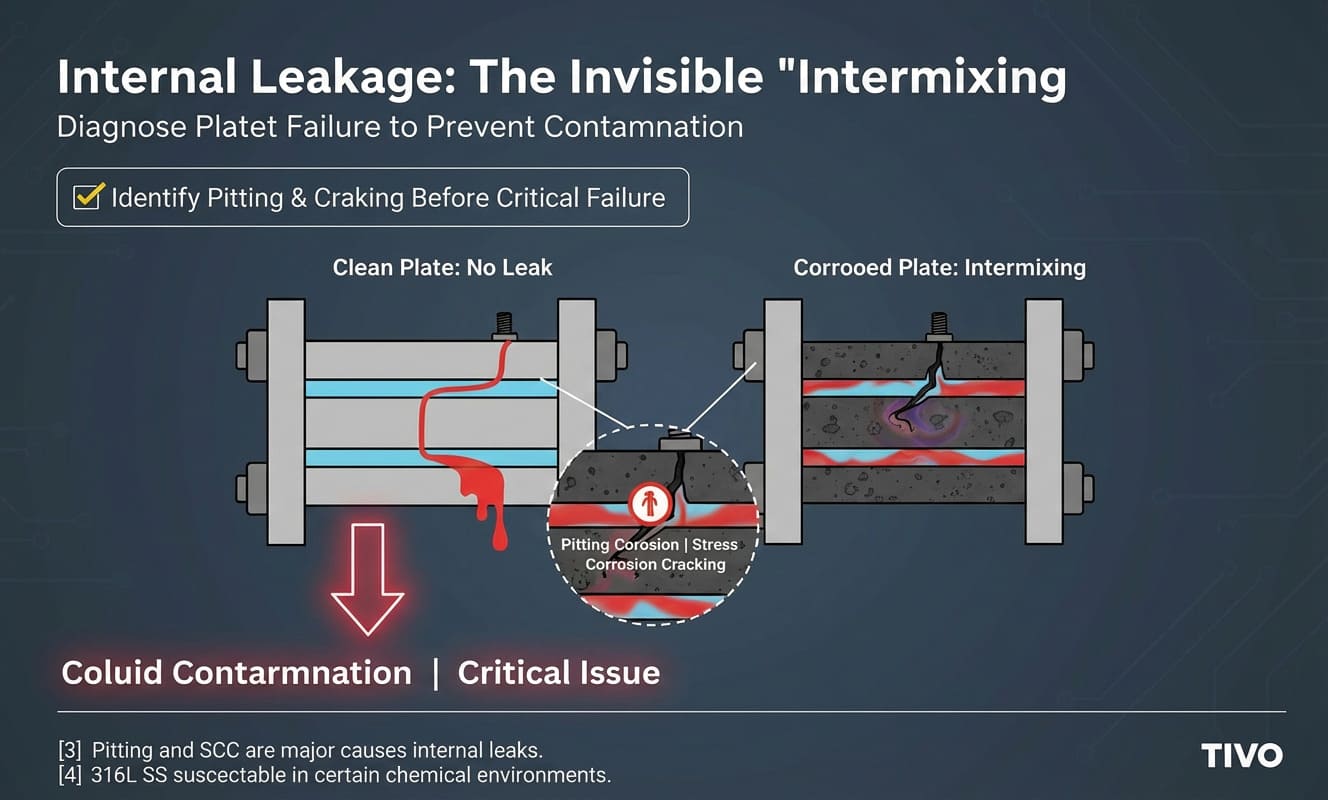
When I walk into a plant, a leaking heat exchanger always makes the maintenance team panic. But you do not need to worry if you know what to look for. I will break down the most common leakage issues we see at TIVO. You will learn how to fix them before they ruin your production line.
Why do cold start leaks stop when the system gets hot?
Have you ever noticed a small leak during winter startups that magically stops later? You might ignore it, but this hidden danger can cause sudden gasket failure soon.
Cold temperatures make the rubber gaskets shrink.2 The compression set drops, causing temporary leaks. When the system heats up, the rubber expands and seals the gap again. You should never over-tighten the plates when the unit is hot to fix this cold leak.
I work with operations managers like Ahmad. Ahmad runs a large food processing plant. When a cold start leak happens, his first reaction is to grab a wrench. His workers try to tighten the bolts right away. This is a big mistake.
If you over-tighten the plate pack while it is hot, you will crush the plates. The metal will bend. It will suffer permanent deformation. Once the plates bend, they will never seal correctly again. You will destroy the entire heat exchanger.
Instead of random tightening, you must look at the gasket life. Rubber loses its elasticity over time.3 We call this the compression set. When winter comes, the cold air makes the old rubber hard. It shrinks. The gap opens and fluid drips out.
How to Fix Cold Start Leaks
You must wait until the system is completely cold.4 Then, you check the tightening dimension. We call this the Amin value. You need a tape measure to check the distance between the two thick frame plates.
| Action | Correct Method | Wrong Method |
|---|---|---|
| Timing | Adjust when the system is cold | Adjust when the system is hot |
| Measurement | Strict check of the Amin dimension | Guessing the tightness |
| Result | Plates stay flat, gasket seals well | Plates bend, permanent damage |
At TIVO, we always tell our customers to measure first. If the dimension is correct but the cold leak still happens, your gaskets are too old. They have lost their bounce. You simply need to buy new replacement parts. We make 100% compatible gaskets for global brands like Alfa Laval, GEA, and APV. You can swap them out quickly. This saves your plant from long shutdowns and keeps your maintenance costs very low.
What does it mean when the signal hole drips water?
Do you see drops of water coming from the tiny holes on the side of your plates? Many engineers panic, thinking the two fluids are mixing inside.
A dripping signal hole means the first gasket seal has broken.5 The smart double-seal design pushes the leaking fluid out of the machine through this hole. This successfully prevents the two different fluids from mixing inside. Your system is safe from internal cross-contamination.
Many site operators do not understand the purpose of the signal hole. They see a leak and think the whole machine is destroyed. I will explain the clever structure of a plate heat exchanger gasket.
Standard gaskets have a double-seal design.6 There is an inner seal and an outer seal. There is a small gap between these two seals. This gap connects to the outside air. We call this the leakage groove or signal hole.
The Safety Defense Line
If the inner seal breaks, the fluid does not go into the other fluid channel. Instead, it enters the leakage groove. Then, it flows out of the signal hole. This is a very clear visual warning for you.
I remember visiting a chemical plant. A project manager named Sergey managed the plant. His workers saw water dripping from the side of a large gasketed unit. They wanted to shut down the whole plant immediately. I showed them the signal hole. I explained that the dripping meant the system was actually working perfectly to protect them.
| Seal Status | Fluid Path | Result |
|---|---|---|
| Normal | Stays in main channel | No leaks |
| First Seal Broken | Enters leakage groove | Drips outside (Warning) |
| No Double Seal | Pushes into other fluid | Fatal cross-contamination |
At TIVO, we design our products with this strong safety defense line. If you are cooling hot oil with cold water, you do not want water inside your oil system. Cross-contamination causes huge machine failures in power plants and marine ships.7 It can ruin your entire batch of products. The dripping hole tells you it is time to schedule maintenance. It gives you time to order spare parts before a real disaster happens. You stay in control of your production schedule.
Why is uneven tightening worse than wrong dimensions?
Are your workers tightening bolts in a random order? Bad assembly habits destroy heat exchangers faster than high pressure. Let us look at the real cause of sliding plates.
Competitors say the unevenness must be under 3mm, but they do not explain why. Without diagonal alternating tightening, lateral shear misalignment happens. The gasket slips completely out of the gasket groove.8 This mechanical damage is irreversible, and the unit will leak even if dimensions are correct later.
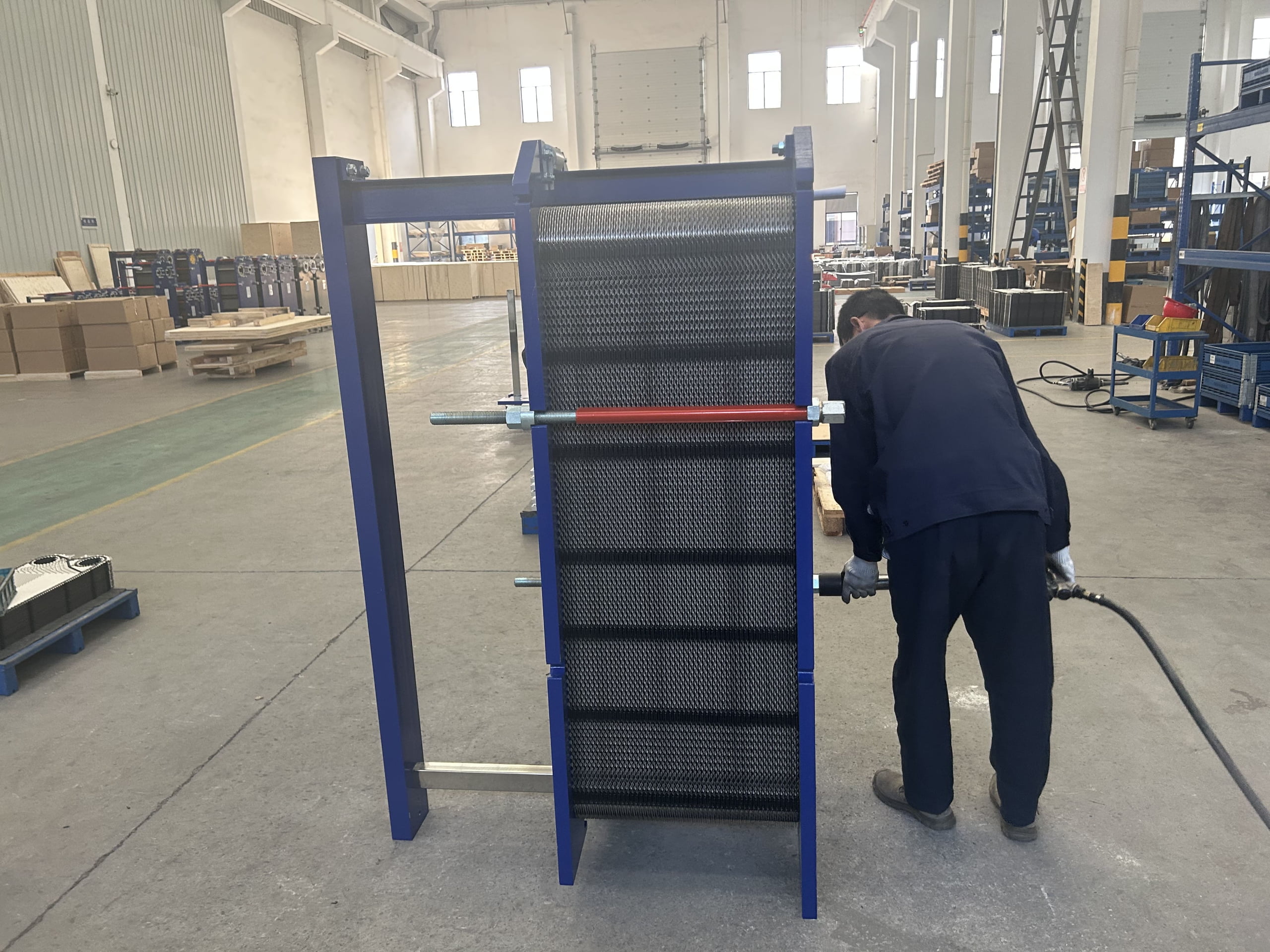
In my 15 years in this industry, I have seen many ruined plate packs. Many competitor manuals talk about tightening deviation. They say the deviation should not be more than 3mm. But numbers mean nothing if the assembly process is wrong. They just give you a rule without explaining the reason.
When you tighten bolts on one side too much, you create a heavy side load. The plates experience a strong lateral shear force.9 They start to slide sideways. We call this misalignment.
The Danger of Misalignment
When the plates slide, the gasket cannot stay in its place. It pops out of the gasket groove. The rubber is squeezed outside the groove under high pressure. Then, it gets crushed. The sharp metal edges of the plates cut the rubber.
| Assembly Method | Force Distribution | Final Outcome |
|---|---|---|
| Diagonal Alternating | Even pressure everywhere | Perfect seal, long life |
| One Side First | Lateral shear force | Gasket slips, plates misalign |
| Random Order | Unpredictable stress | Irreversible mechanical damage |
This damage is permanent. You can try to loosen the bolts. You can measure the exact Amin dimension again. But it will not help. The gasket is already broken. The plates might be bent. The entire pack is ruined.
This is why TIVO focuses so much on the correct assembly process. Standard procedures are more important than just checking numbers. You must tighten the bolts using a diagonal alternating method.10 You tighten one corner a little bit. Then you tighten the opposite corner. You go around the unit slowly. This keeps the pressure perfectly even. If your team follows the diagonal alternating rule, your heat exchanger will run safely for years without unexpected leaks.
Conclusion
Finding the true cause of a leak saves time and money.11 You must check cold start temperatures, watch the signal holes, and always tighten bolts evenly to keep your system safe.
"Plate Heat Exchanger Check: A Guide to Preventing Leaks - Viravix", https://viravix.com/a-guide-to-preventing-leaks/. This source explains common causes of external leaks in plate heat exchangers, including gasket failure, cold starts, and uneven tightening. Evidence role: general_support; source type: education. Supports: External leaks in plate heat exchangers are often caused by gasket failure, cold starts, or uneven tightening.. ↩
"Thermal expansion - Wikipedia", https://en.wikipedia.org/wiki/Thermal_expansion. This source discusses how cold temperatures affect the elasticity and dimensions of rubber gaskets, leading to potential leaks. Evidence role: mechanism; source type: research. Supports: Cold temperatures cause rubber gaskets to shrink, which can lead to temporary leaks in plate heat exchangers.. ↩
"Rubber elasticity - Wikipedia", https://en.wikipedia.org/wiki/Rubber_elasticity. This source explains the aging process of rubber materials and how it leads to a loss of elasticity over time. Evidence role: mechanism; source type: research. Supports: Rubber gaskets lose their elasticity over time, which can contribute to leaks in plate heat exchangers.. ↩
"Heat exchanger - Wikipedia", https://en.wikipedia.org/wiki/Heat_exchanger. This source advises on the importance of waiting for a system to cool before making adjustments to avoid damaging components. Evidence role: expert_consensus; source type: education. Supports: Waiting until the system is completely cold is necessary before making adjustments to avoid damaging the heat exchanger.. ↩
"Distributed Optical Measurement System for Plate Fin Heat Exchanger", https://pmc.ncbi.nlm.nih.gov/articles/PMC10051864/. This source explains the function of signal holes in plate heat exchangers and how they indicate a broken first gasket seal. Evidence role: mechanism; source type: education. Supports: A dripping signal hole in a plate heat exchanger indicates that the first gasket seal has broken.. ↩
"Gasketed plate-and-frame heat exchangers - Alfa Laval", https://www.alfalaval.us/products/heat-transfer/plate-heat-exchangers/gasketed-plate-and-frame-heat-exchangers/. This source describes the double-seal design of standard gaskets in plate heat exchangers and its role in preventing cross-contamination. Evidence role: definition; source type: education. Supports: Standard gaskets in plate heat exchangers are designed with a double-seal structure to prevent cross-contamination.. ↩
"Food Safety Education Month: Preventing Cross-Contamination", http://www.fsis.usda.gov/news-events/events-meetings/food-safety-education-month-preventing-cross-contamination. This source discusses the risks of cross-contamination in industrial systems, including its impact on power plants and marine ships. Evidence role: case_reference; source type: research. Supports: Cross-contamination in plate heat exchangers can lead to significant machine failures in power plants and marine ships.. Scope note: The source may not provide specific examples of cross-contamination incidents but discusses general risks. ↩
"Troubleshooting for plate heat exchangers - Alfa Laval", https://www.alfalaval.com/service-and-support/product-services/plate-heat-exchanger-services/troubleshooting-for-plate-heat-exchangers/. This source describes how improper tightening can cause gaskets to slip out of their grooves in plate heat exchangers. Evidence role: mechanism; source type: research. Supports: Improper tightening of bolts can cause gaskets to slip out of their grooves in plate heat exchangers.. ↩
"Plate heat exchangers: A deeper look into thermal design", https://heat-exchanger-world.com/plate-heat-exchangers-a-deeper-look-into-thermal-design/. This source explains how uneven tightening creates lateral shear forces in plate heat exchangers, leading to misalignment and damage. Evidence role: mechanism; source type: research. Supports: Uneven tightening of bolts in plate heat exchangers creates lateral shear forces, causing misalignment and damage.. ↩
"[PDF] Approved Methods of Tensioning High- Strength Bolted Connections", https://dot.ca.gov/-/media/dot-media/programs/engineering/documents/structureconstruction/bcrp-vol2/bcm55103att03a11y.pdf. This source outlines the diagonal alternating method for tightening bolts in plate heat exchangers to ensure even pressure distribution. Evidence role: expert_consensus; source type: education. Supports: The diagonal alternating method is essential for tightening bolts in plate heat exchangers to ensure even pressure distribution.. ↩
"Top Benefits of Hiring Leak Detection Services", https://rakcorp.com/top-benefits-of-hiring-leak-detection-services/. This source discusses how accurate diagnosis of leaks in industrial systems can reduce downtime and maintenance costs. Evidence role: general_support; source type: research. Supports: Accurately diagnosing the cause of a leak in plate heat exchangers saves time and money by reducing downtime and maintenance costs.. Scope note: The source may focus on general industrial systems rather than plate heat exchangers specifically. ↩