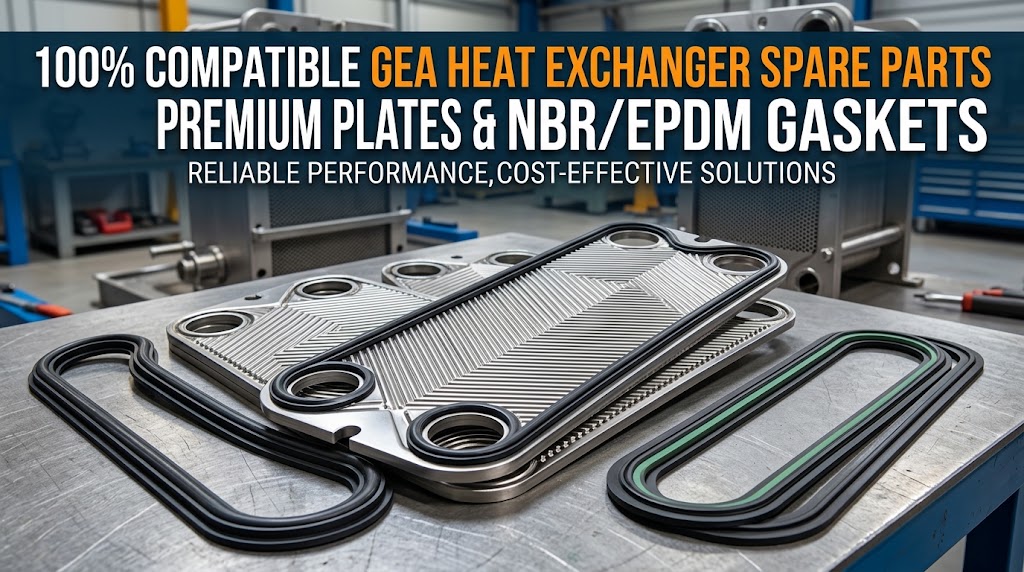
Is your GEA heat exchanger leaking? High original part costs and long waits hurt your business. We provide fast, affordable, and fully compatible spare parts to fix this fast.
You can replace GEA heat exchanger parts with 100% compatible aftermarket plates and NBR/EPDM gaskets. These premium parts fit perfectly, especially for the popular NT and VT series. They offer the exact same performance as original parts1 but save you money and reduce downtime.
If you stop reading now, you might buy the wrong parts for your system. This mistake will cause big leaks and keep your plant shut down for weeks.
Why Do NT and VT Series Dominate the GEA Spare Parts Market?
Are you confused by too many GEA models? Buying parts for rare models takes forever. Focus on the NT and VT series to get fast and reliable replacements.
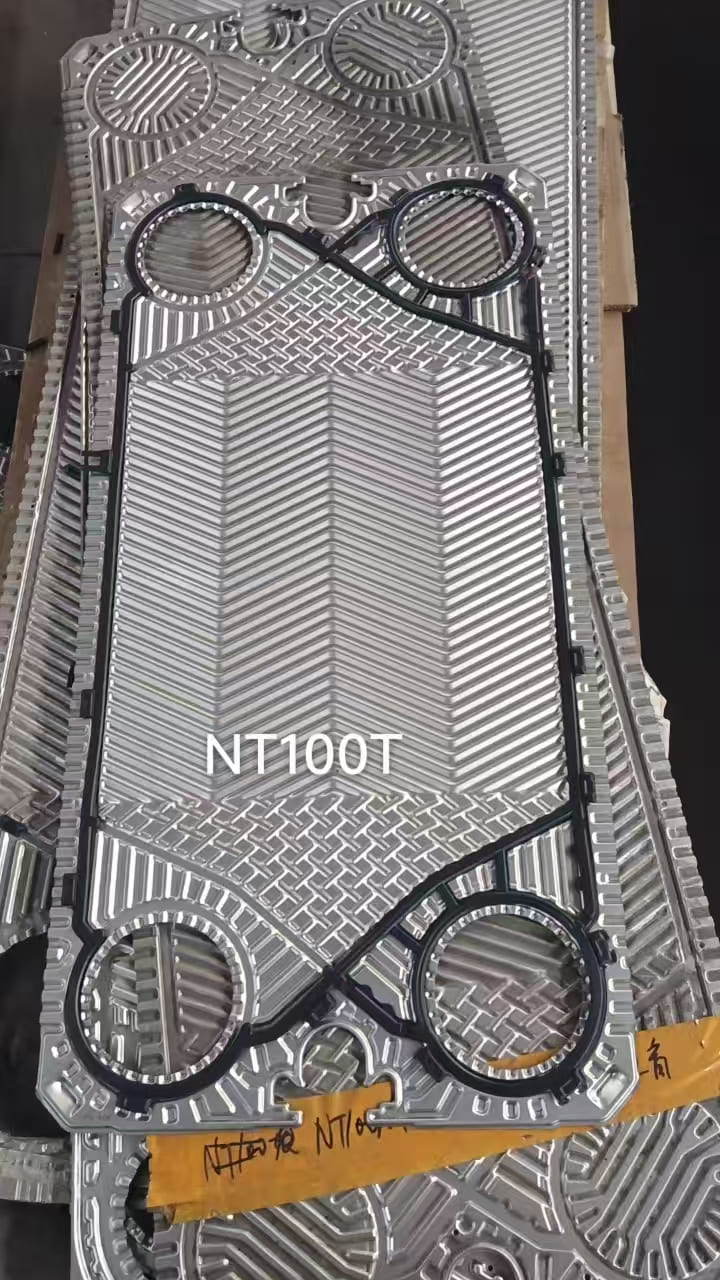
The NT and VT series make up over 90% of the GEA spare parts market. These models are heavily used in food processing, HVAC, and chemical industries2 because they handle different temperatures and pressures very well. Finding parts for these series is fast and easy.
GEA is the second largest brand in the market right after Alfa Laval. I see this every day when I talk to customers. Because of this huge market size, the demand for GEA parts is very big. Most of this demand comes from two main product lines. These are the NT series and the VT series.
Why are they so popular? The answer is simple. They work well in many places. You will see them in huge food plants. You will see them in heating and cooling systems. You will also see them in chemical factories.
Let us look at a quick breakdown of where these series are used:
| Industry | Common Application | Series Used |
|---|---|---|
| Food Processing | Milk pasteurization | NT Series |
| HVAC | Building cooling | VT Series |
| Chemical | Acid cooling | NT & VT Series |
Because these two series are everywhere, we get calls about them all the time. A customer once told me he waited three months for a rare part. That is why we focus so much on the NT and VT series. We want to make sure you never have to wait that long. We keep these parts ready so your machines can start running again quickly.
How Do We Ensure 1:1 Exact Match for GEA Replacement Parts?
Do aftermarket parts fit badly? Bad fits cause leaks and ruin your equipment. We make 1:1 replica molds so every plate and gasket fits perfectly every single time.
We ensure a 1:1 exact match by making brand new molds based exactly on the original GEA sizes3. This strict process guarantees 100% compatibility for all NT and VT series parts. You can install our plates and gaskets easily without any size problems.
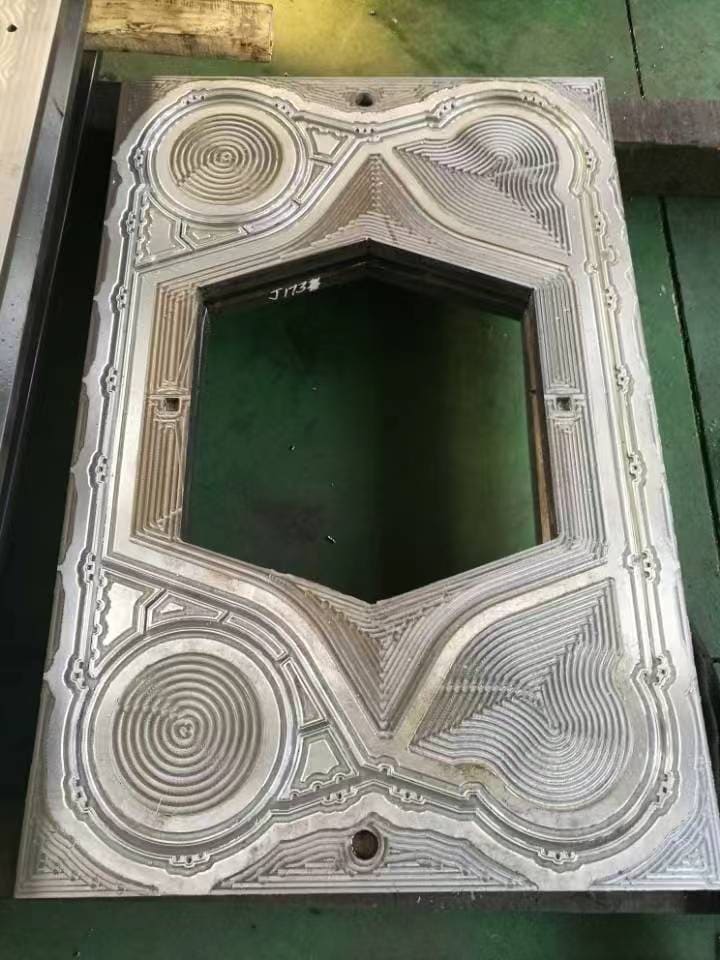
Many buyers worry that aftermarket parts will not fit right. I understand this fear. I once visited a plant where a cheap part caused a massive leak. The whole floor was covered in water. To prevent this, we took a very serious step. We opened a huge number of our own molds specifically for GEA models.
We do not just guess the sizes. We copy the original parts using a 1:1 ratio. This means our molds are exactly the same as the original factory molds. When we press a new plate or inject a new rubber gasket, the dimensions match perfectly.
Here is how our matching process works:
| Step | Action Taken | Result |
|---|---|---|
| 1 | Scan original part | Get exact 3D data |
| 2 | Create 1:1 mold | Perfect shape |
| 3 | Test fit in frame | Ensure no leaks |
| 4 | Mass production | 100% compatibility |
This strict process gives you peace of mind. You can take out an old GEA plate and put our plate right in its place. The holes line up. The patterns match. The gaskets sit tight. This level of detail keeps your operations safe and stops bad surprises during installation.
Why Is Choosing the Right Gasket Material So Important?
Do your gaskets fail too soon? Using the wrong material destroys your heat exchanger. You must pick the correct rubber for your specific temperature and fluid to stop leaks.
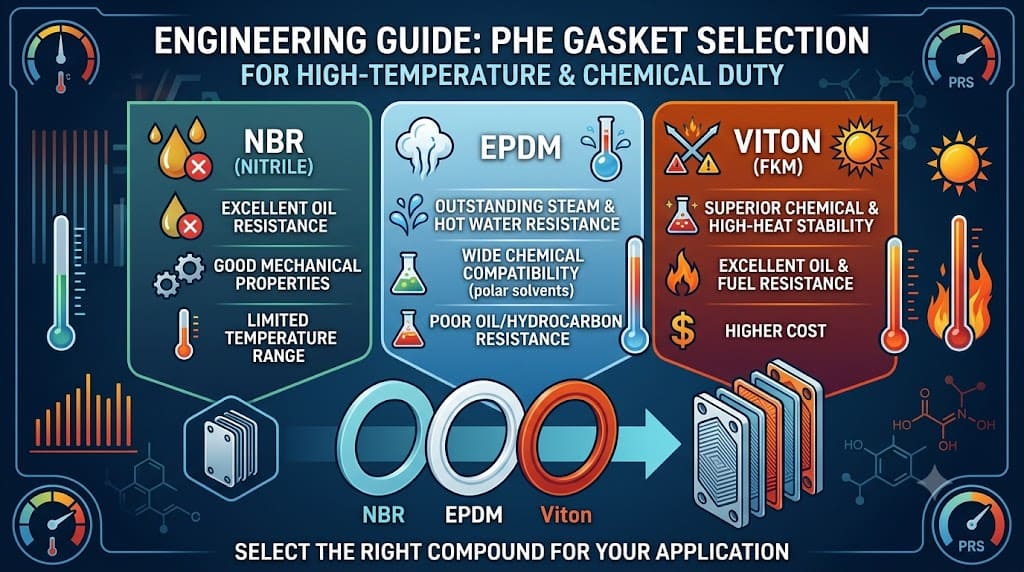
Choosing the right gasket material is important because different fluids and temperatures require different rubber types. NBR is great for oil and water at lower temperatures. EPDM is best for steam and hot water.4 The correct choice prevents fast wear and stops dangerous leaks.5
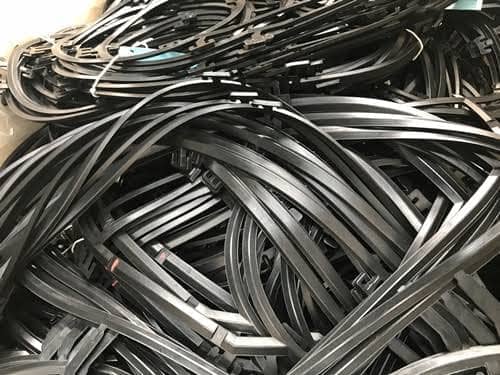
A big mistake many buyers make is ignoring the actual application. They just ask for a gasket without telling us what it will do. We always ask our customers about their working conditions. We need to know the temperature. We need to know the fluid passing through the plates.
I remember a customer who bought cheap NBR gaskets for a high-temperature steam system. The gaskets melted in two days. This is why we ask questions. We want to give you the most professional advice.
Here is a simple guide we use to help you choose:
| Gasket Material | Best Fluid | Max Temperature |
|---|---|---|
| Standard NBR | Water, Oil | Up to 110°C |
| High-Temp NBR | Hot Oil | Up to 130°C |
| Standard EPDM | Steam, Hot Water | Up to 150°C |
| High-Temp EPDM | Superheated Steam | Up to 160°C |
Is there a better choice for your system? Maybe. If you pump aggressive chemicals, you might even need Viton. By taking the time to understand your exact needs, we help you pick the perfect material. This extends the life of your heat exchanger and saves you a lot of money on future repairs.
Flow Plate vs. End Plate: What Are You Actually Buying?
Are you buying the wrong plates? Mixing up flow plates and end plates ruins your assembly. You must know the difference to avoid long delays and machine downtime.
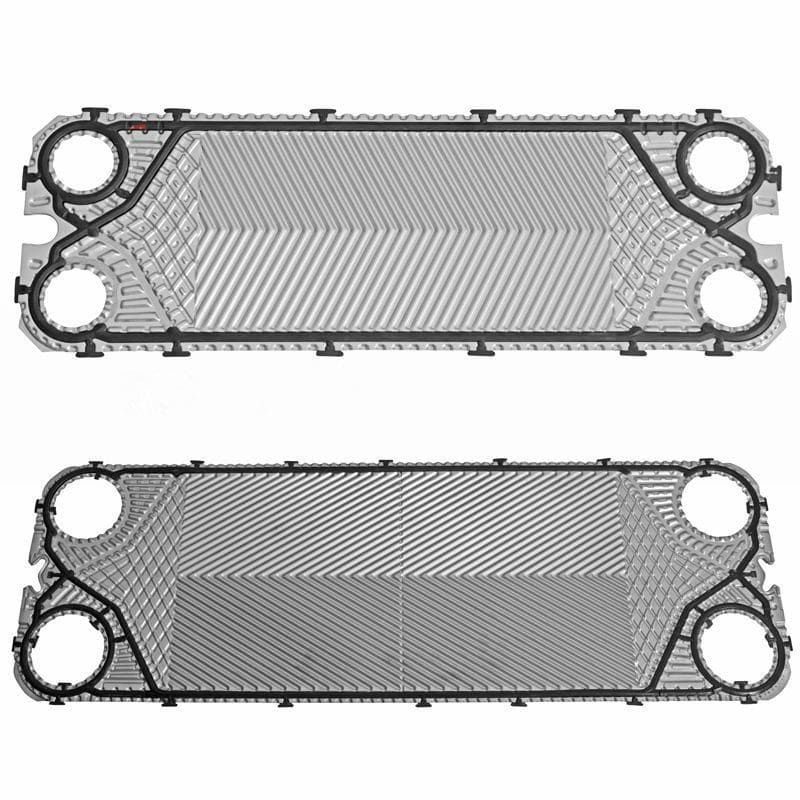
A flow plate has four open holes to let fluids pass through. An end plate is usually a blind plate with no holes, used to stop the fluid at the back. You must confirm the exact hole setup to ensure your heat exchanger can be put together correctly.
This is a very common problem in the spare parts market. Many customers do not explain clearly what kind of plate they need. They naturally think all plates are the same. This is a huge trap.
By default, when you say "plate," we think you mean a flow plate. A flow plate always has four holes open. It allows the hot and cold liquids to move freely. But an end plate is very different. Normally, an end plate is a blind plate. This means it has zero holes. It sits at the very end of the plate pack to seal the unit.
Look at this comparison to see why it matters:
| Plate Type | Number of Holes | Purpose |
|---|---|---|
| Flow Plate | 4 Holes | Heat transfer |
| Standard End Plate | 0 Holes (Blind) | Seal the back |
| Special End Plate | 2 Holes | Specific pipe setups |
Why must we confirm this with you? Because sometimes a customer needs an end plate with exactly two holes. If we send a blind plate, they cannot connect their pipes. I had a client in Brazil who faced this exact issue. His plant was down for an extra week because he ordered the wrong end plate. We always double-check with you to prevent this kind of disaster.
Conclusion
Buying 100% compatible GEA spare parts6 saves you time and money. Always choose the right gasket material and confirm your plate types to keep your systems running perfectly.
"(PDF) Design, optimization and performance of plate heat ...", https://www.academia.edu/49000862/Design_optimization_and_performance_of_plate_heat_exchanger. Evidence should come from neutral engineering sources showing that equivalent plate geometry, material specification, and gasket properties can yield comparable thermal and pressure performance in plate heat exchangers; absent model-specific testing, the support would remain inferential rather than a direct proof of parity with original parts. Evidence role: mechanism; source type: paper. Supports: They offer the exact same performance as original parts but save you money and reduce downtime.. Scope note: General engineering literature can explain performance determinants, but exact equivalence to original branded parts normally requires certified comparative testing. ↩
"Plate heat exchanger - Wikipedia", https://en.wikipedia.org/wiki/Plate_heat_exchanger. Manufacturer-independent technical overviews of plate heat exchanger applications can support that gasketed plate heat exchangers are widely used in food processing, HVAC, and chemical service because of their heat-transfer efficiency and service flexibility; however, such sources may support the application classes more directly than the specific NT and VT series naming. Evidence role: general_support; source type: education. Supports: These models are heavily used in food processing, HVAC, and chemical industries because they handle different temperatures and pressures very well.. Scope note: Application-level sources may confirm industry usage of this heat exchanger type without proving the prevalence of these exact proprietary series. ↩
"Surface Treatment and Analysis of 3D-Printed Plastic Molds ...", https://pmc.ncbi.nlm.nih.gov/articles/PMC12656251/. Metrology and reverse-engineering literature can support that 3D scanning and precision tooling are standard methods for reproducing component geometry to tight tolerances; however, this would support the manufacturing approach rather than independently proving an exact match for each cited part. Evidence role: mechanism; source type: paper. Supports: We ensure a 1:1 exact match by making brand new molds based exactly on the original GEA sizes.. Scope note: General manufacturing evidence can explain how exact replication is attempted, but not certify the accuracy of a specific supplier’s molds without inspection data. ↩
"Chemical-Compatibility.pdf", https://rubber-group.com/wp-content/uploads/2018/01/Chemical-Compatibility.pdf. Standard elastomer compatibility charts and engineering references can support that NBR is commonly selected for oils and many water services, while EPDM is commonly preferred for hot water and steam applications because of its temperature and chemical resistance profile. Evidence role: general_support; source type: education. Supports: NBR is great for oil and water at lower temperatures. EPDM is best for steam and hot water.. Scope note: Exact suitability depends on fluid composition, concentration, pressure, and temperature, so broad material guidance should not replace application-specific compatibility review. ↩
"The Influence of Oil and Thermal Aging on the Sealing ... - PMC", https://pmc.ncbi.nlm.nih.gov/articles/PMC11397856/. Materials engineering sources can support that selecting gasket elastomers compatible with service temperature and media reduces degradation mechanisms such as swelling, hardening, and loss of sealing force, thereby lowering leak risk; however, leakage outcomes also depend on installation, compression, and operating conditions. Evidence role: mechanism; source type: paper. Supports: The correct choice prevents fast wear and stops dangerous leaks.. Scope note: The evidence would show a causal mechanism and risk reduction, not guarantee leak prevention in every installation. ↩
"Heat exchanger - Wikipedia", https://en.wikipedia.org/wiki/Heat_exchanger. General technical references on plate heat exchangers can support the background claim that replacement plates and elastomer gaskets must match the original unit’s dimensions, plate pattern, and material compatibility to function properly and avoid leakage; however, they would not independently verify this specific supplier’s advertised “100% compatible” product performance. Evidence role: general_support; source type: education. Supports: You can replace GEA heat exchanger parts with 100% compatible aftermarket plates and NBR/EPDM gaskets.. Scope note: Neutral sources can support compatibility requirements and the role of matching plate/gasket specifications, but not the vendor-specific absolute claim unless validated by independent testing or certification. ↩