Are you struggling with the high costs and long wait times for original GEA spare parts1 for your factory? I know how frustrating it is when a simple gasket failure causes expensive downtime for your entire production line.
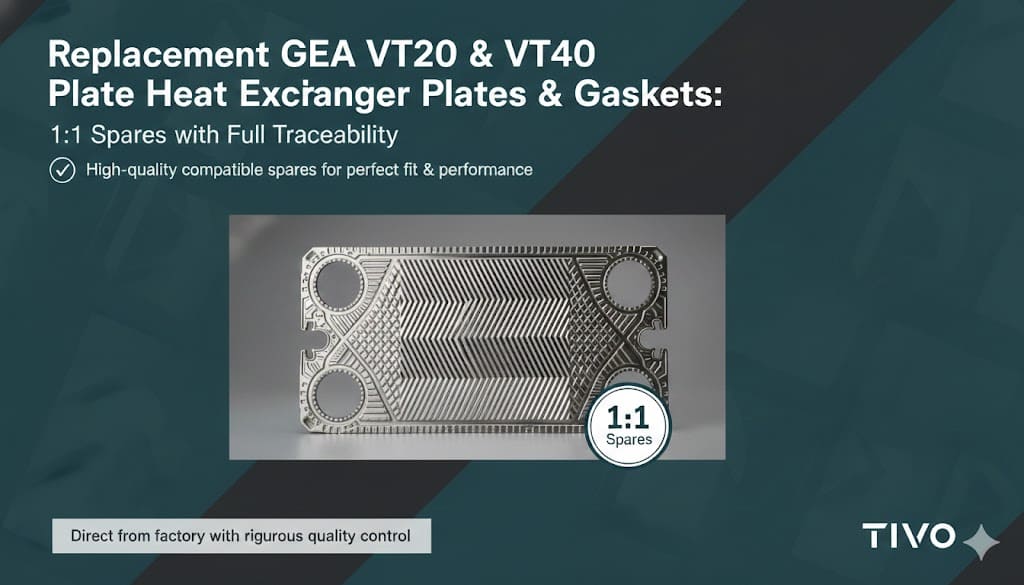
I provide exact 1:1 replacement plates2 and gaskets for GEA VT20 and VT40 models3 that match the original specifications perfectly. We use imported raw materials and precise molds to ensure your system runs efficiently, saving you money on maintenance without sacrificing quality or safety.
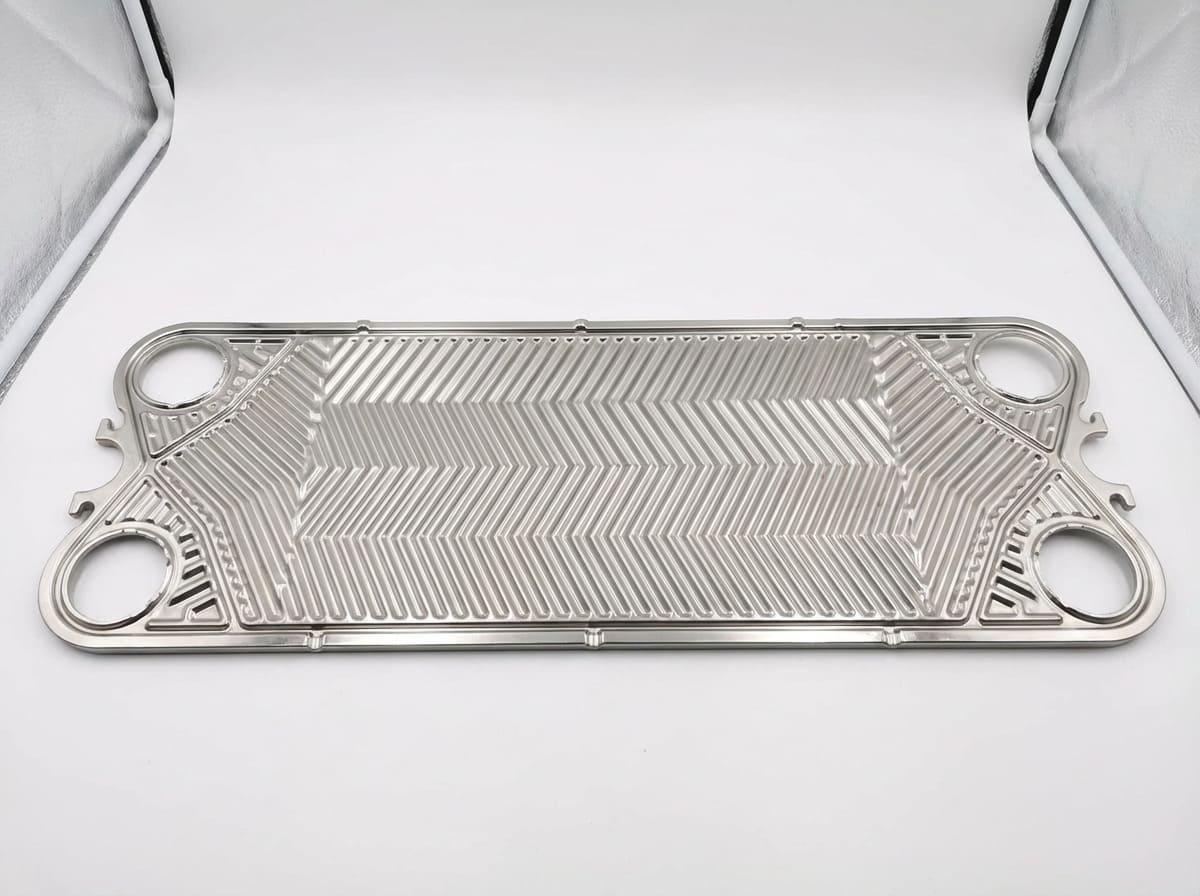
Many purchasing managers contact me looking for "VT20" plates. However, they often do not realize that there is more to the story than just the model name. If you buy the wrong plate type, your system might suffer from poor heat transfer or high pressure drops. I want to help you avoid these mistakes. In this article, I will explain the technical details of our replacements. I will show you why our materials matter. I will also explain how we ensure every part fits your machine perfectly.
Why is understanding the specific corrugation angle like VT20-P or VT20-M crucial?
You might think you just need a standard replacement plate, but picking the wrong pattern can ruin your heat transfer efficiency. If you do not match the corrugation to your fluid type, your energy bills will go up.
The GEA VT series comes in different designs, such as the high-theta VT20-P for maximum heat transfer or the low-theta VT20-M for lower pressure drop4. I help you identify exactly which version you need to keep your system balanced.
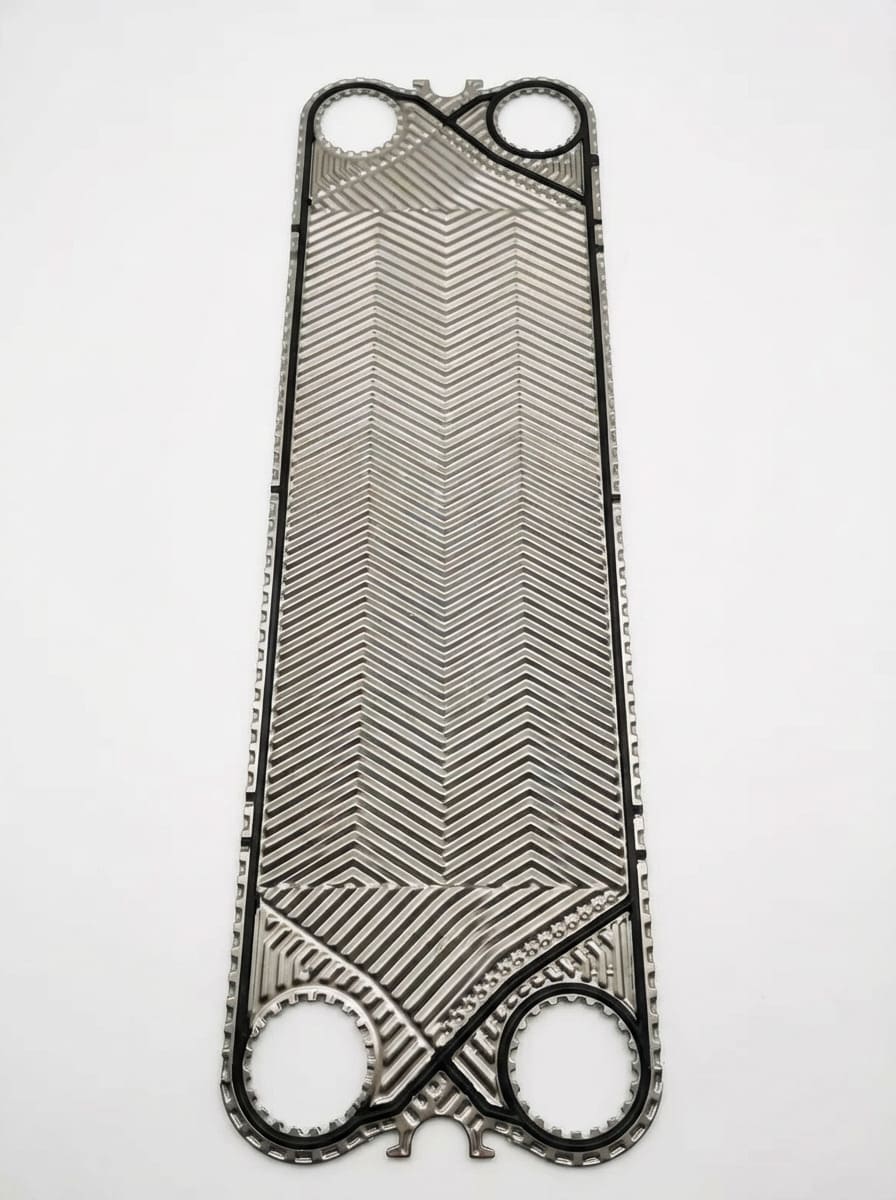
I see this situation happen all the time with my clients. A procurement manager sends me a request for a "VT40 plate." I always ask them to pause and check the drawing or the old plate. GEA designs these plates with different "thermal lengths5." This is a technical term, but it is very important for your daily operations. The corrugation angle6 on the plate determines how the fluid moves and how much heat it transfers.
If you choose the VT20-P (High Theta), the chevron pattern is obtuse. This creates high turbulence. This is great for heat transfer, but it creates a lot of resistance. We call this a "hard" plate. It is perfect if you have clean fluids and need to exchange a lot of heat in a small space. However, if your pump is weak, this plate will cause problems.
On the other hand, the VT20-M (Low Theta) has an acute angle. We call this a "soft" plate. The fluid flows through it easily. The pressure drop is low. This is the right choice if your fluids are slightly viscous or if you have limited pump capacity.
At TIVO, we do not just sell parts; we check your requirements. I make sure we supply the exact match. Mixing these plates in one pack is also possible to create a "medium" thermal length. Here is a simple breakdown to help you understand:
| Feature | VT20-P (High Theta) | VT20-M (Low Theta) |
|---|---|---|
| Corrugation Angle | Obtuse (Wide) | Acute (Narrow) |
| Turbulence | High | Low |
| Heat Transfer Efficiency | Very High | Moderate |
| Pressure Drop | High | Low |
| Typical Use | Water-to-Water, Clean Fluids | Viscous Fluids, Low Pressure Systems |
I use critical thinking to look at your current system data. If you tell me your pressure drop4 is too high currently, I might even suggest switching some P-plates to M-plates. This flexibility is why understanding these codes is so vital.
How does the quality of raw materials affect the lifespan of your heat exchanger gaskets?
Cheap gaskets made from recycled rubber might look fine when they are new, but they will fail quickly under heat and pressure. You cannot afford to shut down your plant every few months just to replace a leaking seal.
I only use imported raw materials from top international brands to manufacture our gaskets and plates. This commitment guarantees that our VT20 and VT40 spares have the same elasticity and chemical resistance as the original parts.
Let me share a story about quality. I once had a client who bought very cheap gaskets from a local trader. After three weeks, the gaskets became hard and brittle. They cracked, and the heat exchanger started leaking hot fluid. The client had to stop production for two days. The money he saved on the cheap gaskets was nothing compared to the money he lost in production.
At TIVO, I take a different approach. I believe that the raw material is the foundation of quality. For our gaskets, we do not use recycled rubber. We import our raw gum base from global suppliers who certify the material properties. Whether you need NBR for oil applications7 or EPDM for high-temperature8 water and steam, I ensure the chemical composition is correct.
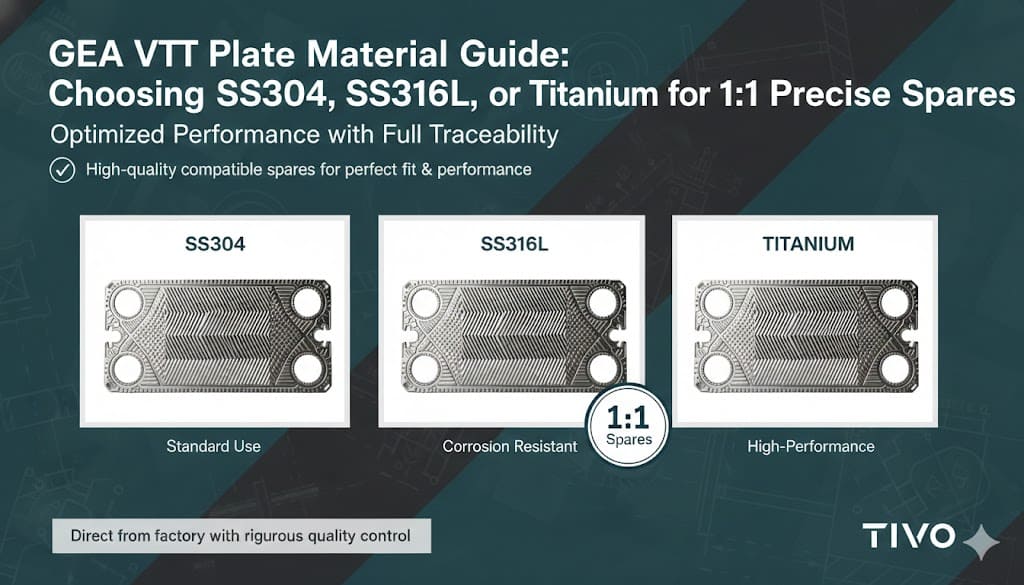
We also perform strict testing on our metal plates. We use 304 and 316L stainless steel, as well as Titanium for corrosive environments. Before we even start pressing the plates, we perform a spectral analysis. This test checks the metal to make sure it has the right amount of nickel, chromium, and molybdenum.
For the VT20 and VT40 series, the thickness of the plate is usually 0.5mm or 0.6mm. If the material is poor quality, it might crack during the pressing process because it cannot handle the stress. Our materials are ductile and strong.
Here is how I classify our material standards for your peace of mind:
- Traceability: Every batch of material has a certificate. I can trace your gasket back to the specific batch of rubber compound.
- Compression Set: Our gaskets recover their shape after you open the unit. Cheap gaskets stay flat and leak when you tighten the unit again.
- Corrosion Resistance: Our Titanium plates are tested to ensure they can withstand seawater or aggressive chemicals without pitting.
Can aftermarket plates really match the performance of original GEA parts?
You might worry that buying non-original parts means the holes will not align or the pack will leak. This is a valid concern because precision is everything in plate heat exchangers.
I use a 1:1 mold replication9 process that guarantees our plates are physically identical to the GEA factory standards. Our replacements fit perfectly into your existing frame, sealing tightly without any modifications.
I know that "compatibility" is a scary word for engineers. You are afraid that the new plates will not sit correctly on the carrying bar. Or perhaps you worry that the gasket groove is slightly off-center. If the dimensions are wrong by even one millimeter, the plate pack will not tighten to the correct dimension (the A-dimension). This leads to leaks.
To solve this, I invested heavily in our mold capabilities. We do not guess the dimensions. We take an original GEA VT20 or VT40 plate and use 3D scanning technology to map every curve and distribution area. Then, we create a mold that is a 1:1 copy.
When we press the plates, we check the "pressing depth." This is the depth of the pattern. It must be exact. If it is too shallow, the plate is weak. If it is too deep, the material thins out and breaks. I ensure that our plates stack perfectly with your existing original plates. You can mix our TIVO plates with your old GEA plates in the same unit. They will nest together without gaps.
We also focus on the "chocolate distribution area." This is the part of the plate where the fluid enters from the port. It is the most critical area for flow efficiency. Our molds replicate this design exactly to ensure there are no dead spots where dirt can accumulate.
I also apply this precision to the gaskets. Our gaskets are not glued in randomly. For the VT series, we often use the "Loc-In" or clip-on system. The tabs on our gaskets are designed to snap firmly into the holes on the plate. This makes maintenance easy for you. You do not need glue, and the gaskets stay aligned during assembly.
- Hydraulic Testing: I test our production batches to ensure no micro-cracks exist.
- Dimensional Check: We measure the port distance and stack height.
- Visual Inspection: Every plate is checked for surface scratches or defects.
What happens when you need emergency replacements for a plant shutdown?
Waiting 12 weeks for original parts to arrive from Europe is not an option when your factory is at a standstill. Every hour of delay hurts your profit margins and upsets your customers.
I maintain a large stock of standard VT20 and VT40 plates and gaskets to ensure fast delivery within 7 to 15 days. I can ship via air freight to get your system back online immediately.
I understand the pressure you face. If you are a maintenance manager like Ahmad, and your palm oil refinery stops because of a blown gasket, you cannot wait for sea freight. The original manufacturers often have very long lead times because they prioritize selling new units over spare parts. They also have complex internal bureaucracies.
I run a more agile operation. Because we manufacture in-house with our own molds and rubber injection machines, I control the schedule. For popular models like the GEA VT20, VT40, VT80, and others, I keep semi-finished goods in stock.
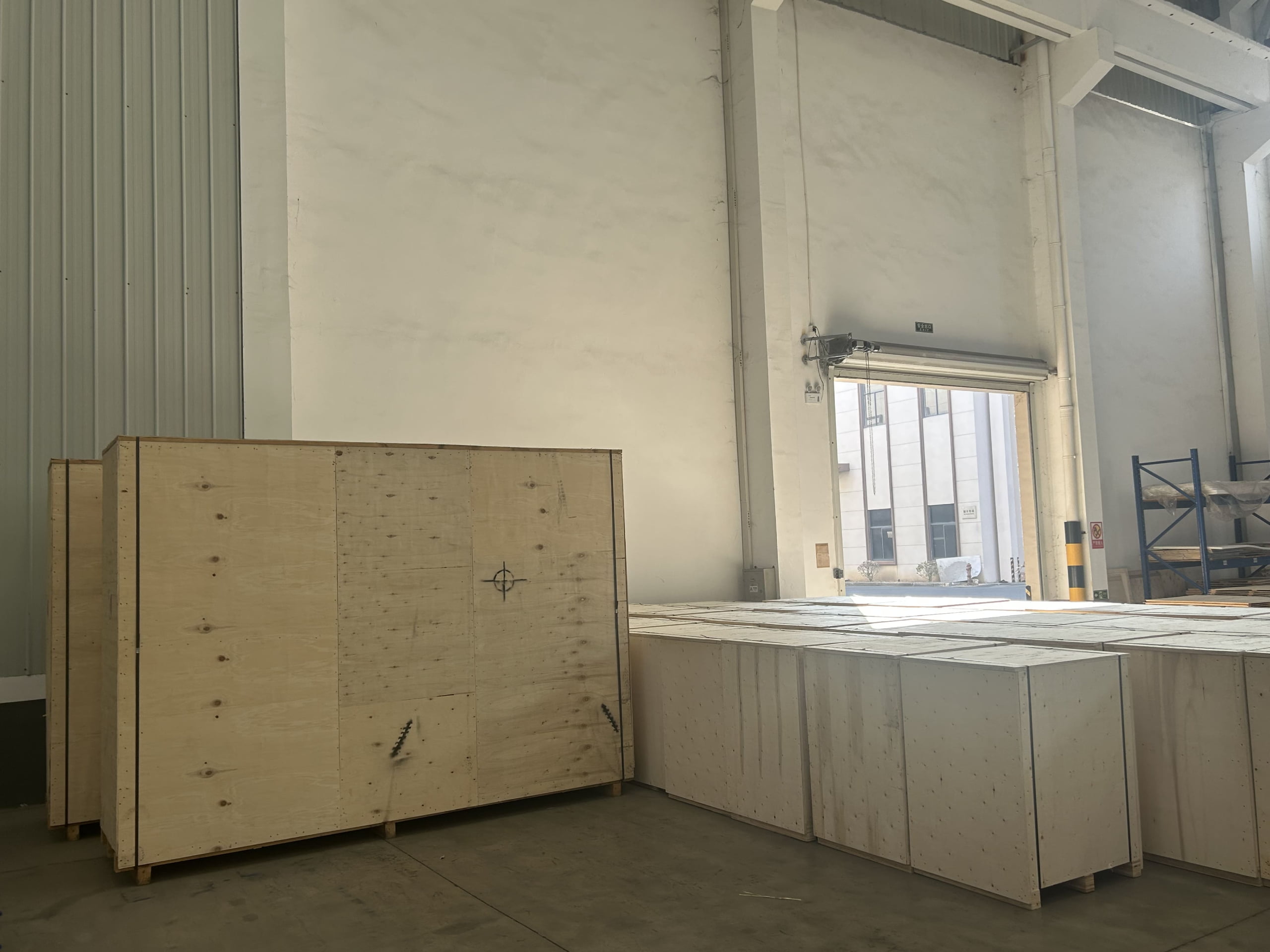
If you need 316L stainless steel plates with NBR gaskets, I can often assemble and pack them in less than a week. For urgent orders, I have a dedicated team that handles air shipments. We pack the plates in reinforced plywood cases so they do not get bent during the flight.
I also help you plan ahead. I encourage my customers to keep a "service kit" on their shelf. This kit includes a full set of gaskets and a few spare plates. However, if you do not have stock, my rapid response is your safety net.
We ship globally. Whether you are in Brazil, Saudi Arabia, or Indonesia, our logistics team knows how to handle the paperwork. We provide the Certificate of Origin, packing lists, and commercial invoices quickly so customs clearance does not delay you.
Here is why my service helps you reduce Operational Expenditure (OpEx):
- Lower Unit Cost: My parts are significantly cheaper than the OEM, but the quality is the same.
- Reduced Downtime: Faster delivery means your factory runs more days per year.
- Inventory Costs: You do not need to hoard massive stock because you know I can deliver quickly.
I treat your emergency as my emergency. That is the difference between buying from a catalog and buying from a partner.
Conclusion
Choosing the right replacement parts for your GEA VT20 and VT40 heat exchangers is about more than just price. It requires understanding corrugation angles, ensuring material traceability, and demanding 1:1 mold precision. I offer you a solution that combines the quality of imported materials with the speed of agile manufacturing. By partnering with me, you protect your equipment and your production schedule.
TIVO: Your Integrated Thermal Solution Partner (Product Loop)
TIVO is a full-scale manufacturer of advanced heat transfer technology. Explore our core product lines:
- Gasketed Plate Heat Exchangers: Complete units for high-duty industrial service.
- Brazed Plate Heat Exchangers: Compact solutions including our specialized High-Pressure CO2 R744 units.
- Fusion Bonded Heat Exchangers: 100% stainless steel construction for high-purity applications.
TIVO 1:1 Precise Spares for 10+ Global Brands
Running a multi-brand facility? TIVO provides factory-direct, 1:1 compatible spares with full batch traceability for:
- Alfa Laval Spares | GEA / Kelvion Spares
- APV / SPX Spares | Sondex / Danfoss Spares
- Tranter Spares | Hisaka Spares
- Vicarb Spares | Funke Spares
- API Schmidt-Bretten Spares | Thermowave / Fischer Spares
Browse the Full TIVO Replacement Parts →
Explore how TIVO's precision-engineered parts ensure reliability and efficiency in your heat exchanger systems. ↩
Explore this resource to find high-quality, compatible replacement parts that ensure optimal performance and reliability for your GEA systems. ↩
Explore this resource to understand the GEA VT series' specifications and applications, ensuring you choose the right parts for your needs. ↩
Explore this link to find top-rated options that ensure efficiency and reliability for your systems. ↩
Explore how heat exchangers ensure safety and efficiency in food processing and beverage production. ↩
Stay updated on innovations that can optimize your HVAC and power systems for better performance. ↩
Understanding MTCs can help you ensure the quality and compliance of materials used in your projects. ↩
Learn about PMI spectral testing to ensure the integrity and quality of your materials. ↩
Understand the process of 1:1 mold replication and its importance in producing precise parts. ↩