Are bulky heat exchangers eating up your system space? Old designs slow down production and increase costs. You need a compact, efficient solution for modern HVAC demands.
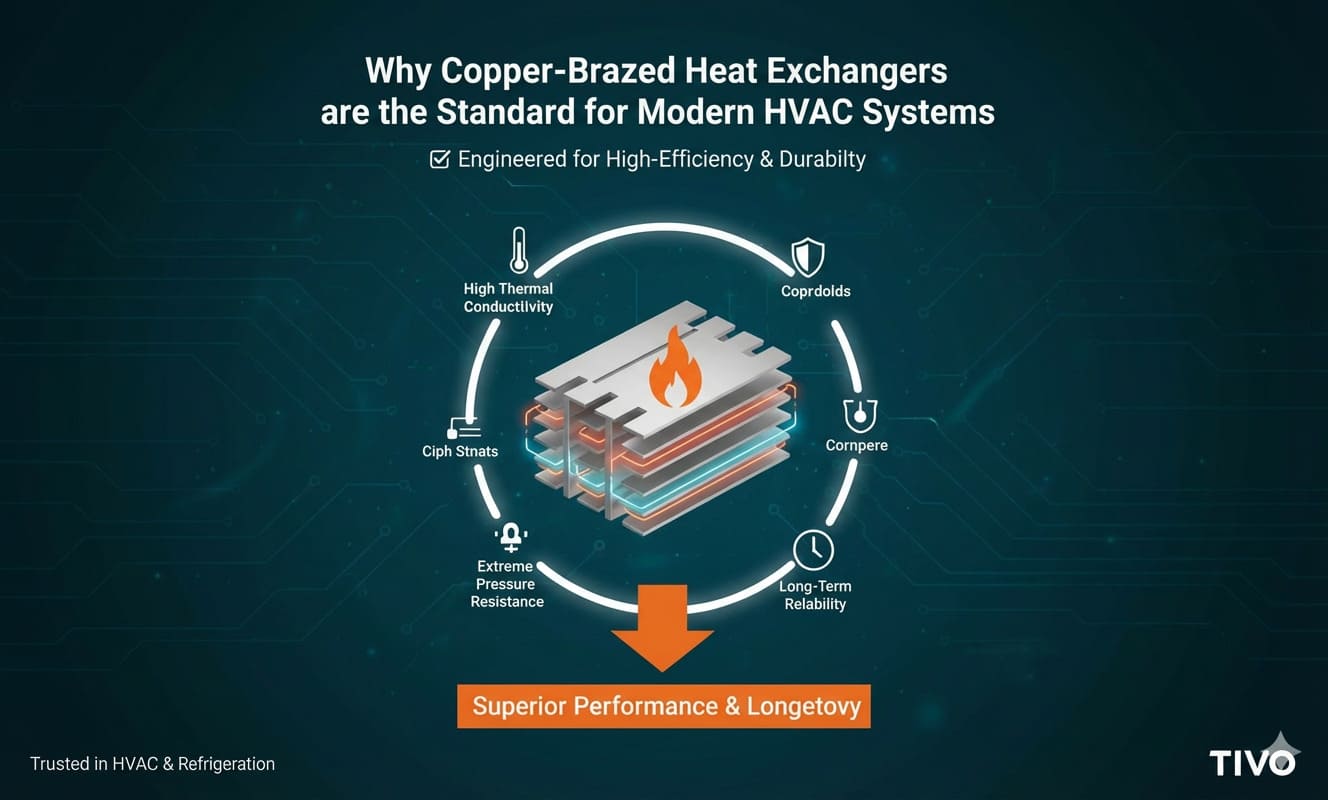
Copper-brazed heat exchangers1 (BPHE) use vacuum brazing technology to eliminate gaskets and frames. This creates a compact, permanently sealed unit that offers superior thermal efficiency and high pressure resistance, making them ideal for chillers, heat pumps, and district heating systems.
In this post, I will explain why leading manufacturers are switching to this technology. I will cover the design benefits, cost savings, and durability that make BPHEs the top choice today.
How Does the Brazing Process Save Space in Your Equipment?
You struggle to fit components into tight machine cabinets. Every millimeter counts in modern design. Large frames ruin your compact system layout.
The brazing process melts copper filler between stainless steel plates, bonding them at every contact point. This eliminates the need for heavy frames and tightening bolts, reducing the unit's size by up to 80% compared to traditional designs.
The Engineering Behind Compactness
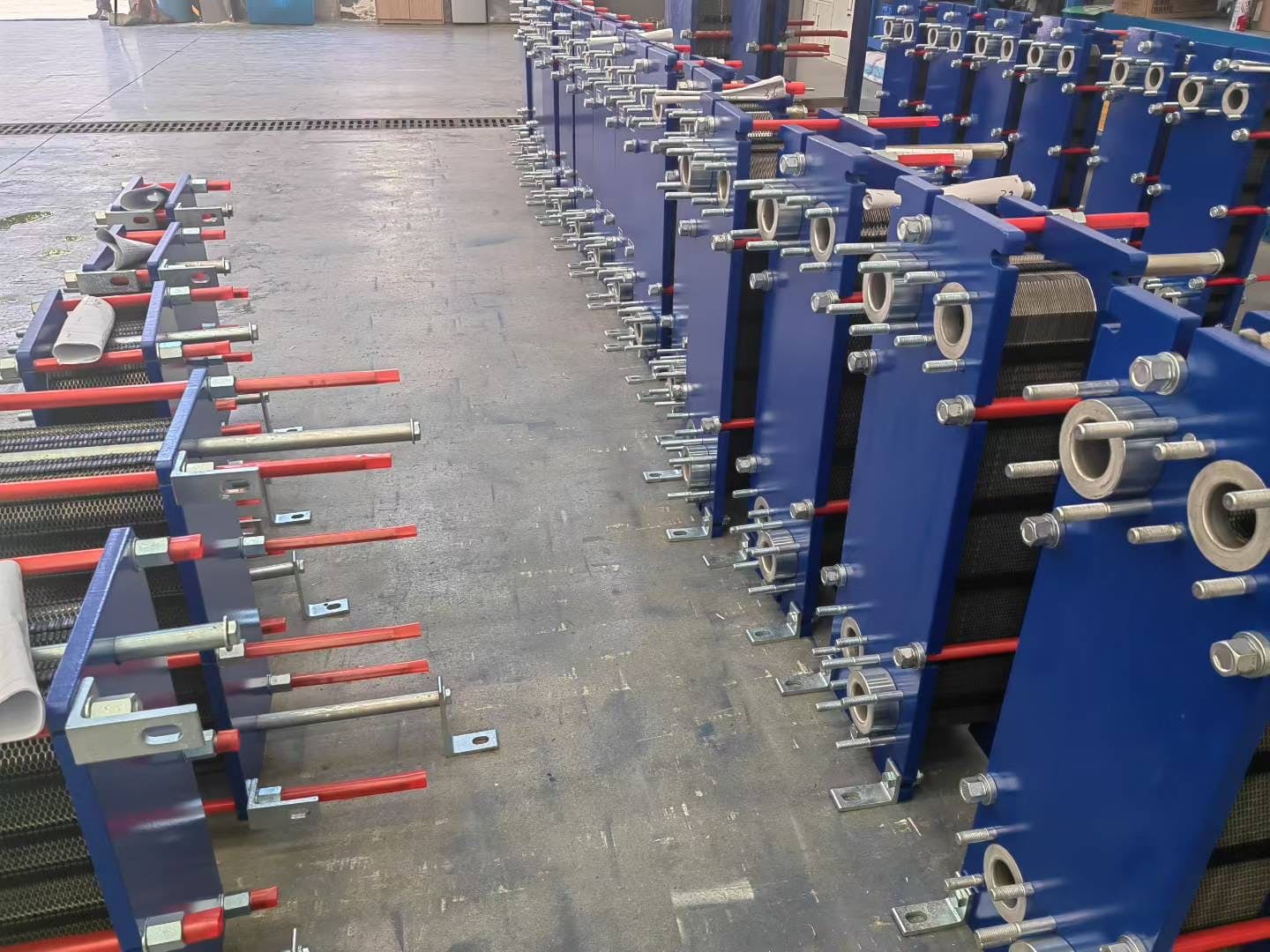
At Tivo2, I often talk to engineers who are designing small air conditioning units or data center cooling racks. Their biggest headache is always space. Traditional gasketed plate heat exchangers3 (GPHE) rely on thick carbon steel frames and long tightening bolts to hold the plate pack together. While this is great for giant industrial plants, it is terrible for a compact heat pump.
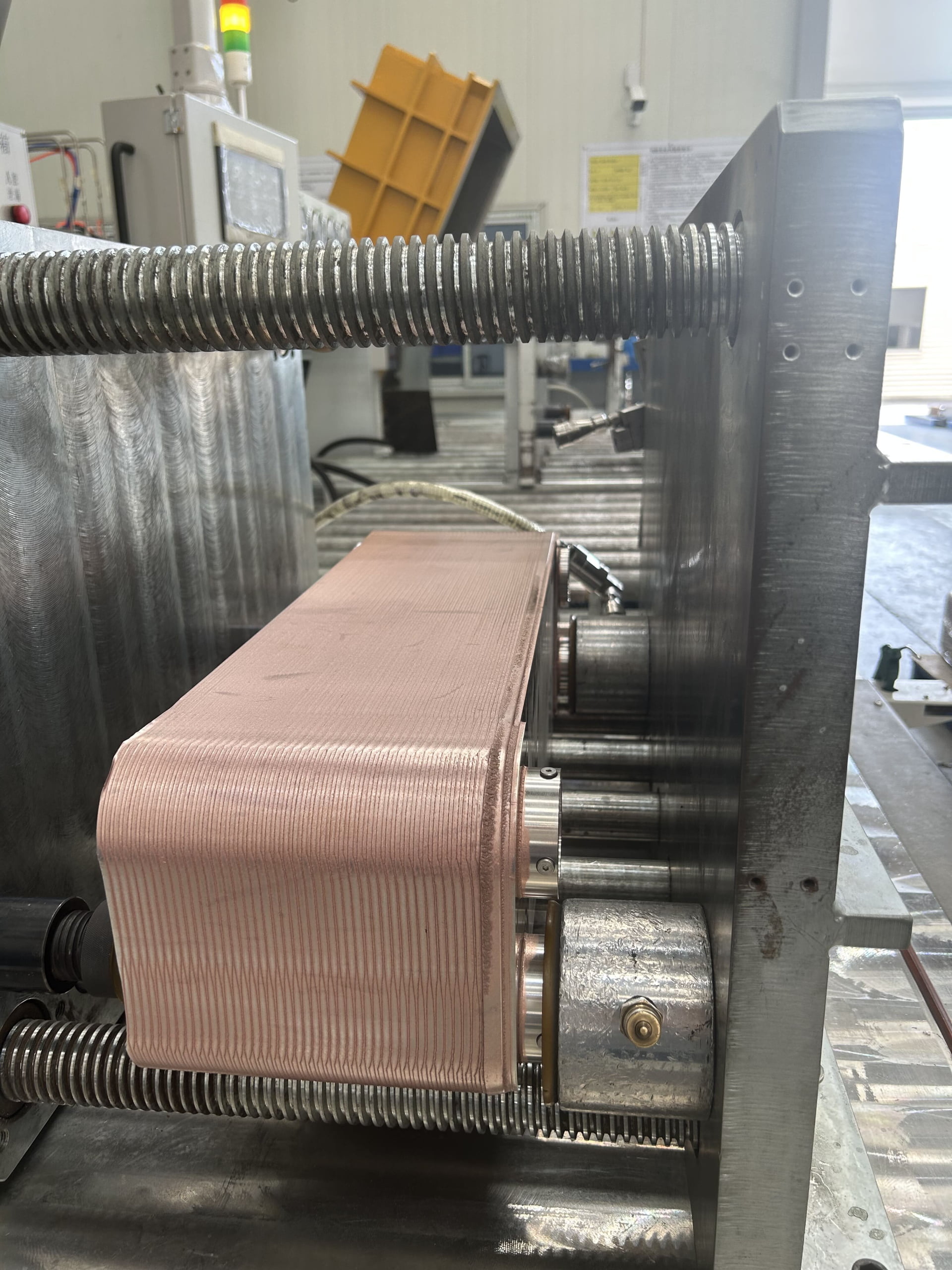
The brazing process changes everything. We place stainless steel plates and thin copper foil into a vacuum furnace4. Under high heat, the copper melts and seals every contact point between the plates. This means the plates hold themselves together. We remove the frame entirely. We remove the bolts entirely. What you are left with is a heat exchanger that is almost 100% active heat transfer area.
Why Volume Matters for Installation
This reduction in volume is not just about aesthetics. It directly impacts your logistics and installation. A smaller unit means a lighter unit. You do not need heavy lifting equipment to install a brazed unit into a chiller assembly line. For my customers like David Thompson, who value lean inventory and fast assembly, this is crucial. You can fit more capacity into the same footprint, or you can make your final product smaller and more competitive in the market.
Structural Comparison
| Feature | Gasketed Plate Heat Exchanger (GPHE) | Copper-Brazed Heat Exchanger (BPHE) |
|---|---|---|
| Structure | Plates + Gaskets5 + Heavy Frame + Bolts | Plates + Copper Filler (Integral Unit) |
| Weight | Heavy (due to carbon steel frame) | Light (mostly stainless steel) |
| Footprint | Large, requires maintenance space | Compact, requires minimal space |
| Dead Zones | Frame and pressure plate areas | None, nearly 100% active area |
Is the Initial Purchase Cost Lower Than Traditional Models?
High material costs eat into your manufacturing profit margins. You need to lower expenses without sacrificing quality. Overpaying for steel frames is unnecessary.
Yes, for small to medium-sized units, brazed exchangers are significantly cheaper. Because they use less material—no heavy carbon steel frames or complex rubber gaskets—the manufacturing cost is lower, allowing us to pass those savings directly to you.
Analyzing the Cost Structure
When I analyze the bill of materials for my clients, the difference is clear. In a traditional gasketed unit, you are paying for three main things: the stainless steel plates, the rubber gaskets, and the heavy carbon steel frame. The frame and the gaskets represent a large portion of the cost. Rubber gaskets are also consumable items that require expensive molds to produce.
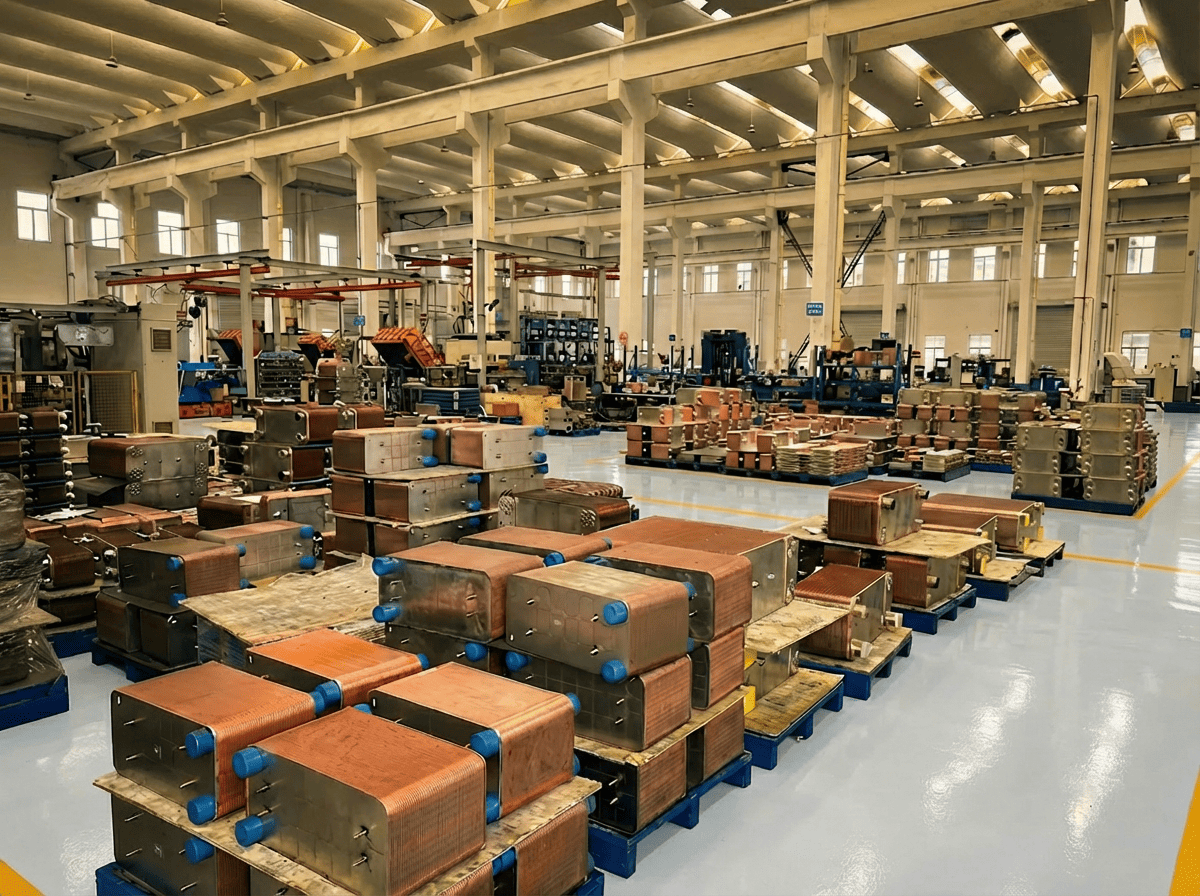
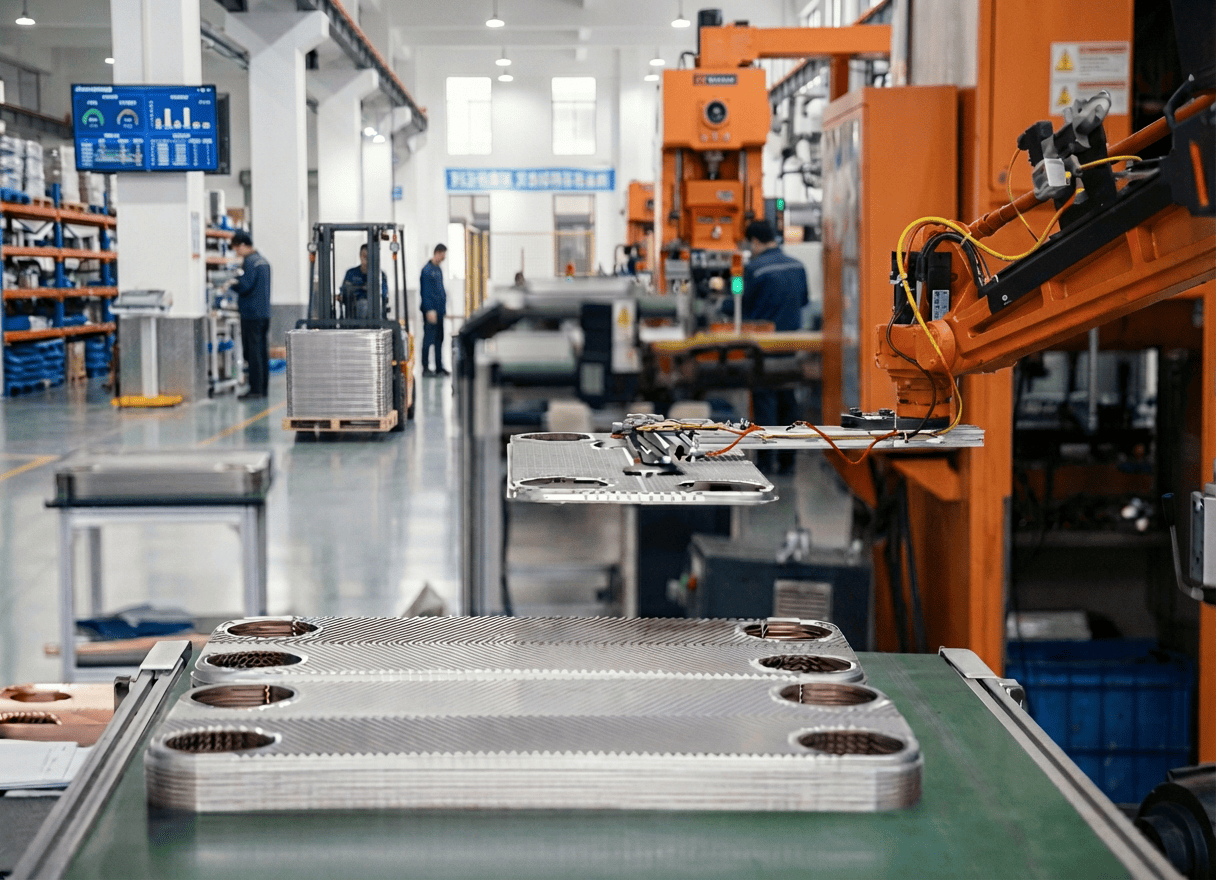
With a brazed heat exchanger, we strip away the non-essential costs. You are paying primarily for the stainless steel plates and the copper filler. The vacuum brazing process is highly automated at our factory. We operate complete production lines where automatic pressing and stacking reduce labor costs significantly. This efficiency allows us to offer a much lower price point for units with the same thermal capacity as a gasketed equivalent.
Maintenance and Lifecycle Costs
The savings continue after the purchase. Since there are no gaskets to leak or degrade over time, you do not need to buy spare parts. For a procurement manager, this simplifies the supply chain. You do not need to stock replacement gasket sets. The unit is maintenance-free. If you are building thousands of heat pumps a year, saving even 20% on the heat exchanger cost adds up to massive profit increases at the end of the fiscal year.
Cost Breakdown Analysis
| Cost Factor | Traditional Design | Brazed Design |
|---|---|---|
| Material Usage | High (Steel, Rubber, Stainless) | Low (Stainless, Copper) |
| Assembly Labor | High (Manual stacking and tightening) | Low (Automated vacuum furnace) |
| Spare Parts | Gaskets needed regularly | None required |
| Shipping Cost | High (Heavy weight) | Low (Lightweight) |
Can These Units Handle Extreme Pressure Without Leaking?
Leaks in high-pressure systems cause dangerous downtime. You worry about safety and reliability. Weak seals are a risk you cannot afford to take.
Absolutely. The integral brazed structure creates a solid metal body capable of withstanding pressures up to 45 bar for standard units and 140 bar for specialized CO2 models. This ensures stability even under extreme operating conditions.
The Science of Integral Welding
Many people assume that because brazed units are small, they are weak. This is a misconception. The brazing process creates a metallurgical bond at thousands of contact points across the plate pack. It essentially turns a stack of thin plates into a single, solid block of metal. This structure is incredibly rigid.
In the HVAC industry, we are seeing a shift toward high-pressure refrigerants. For example, R410A is common, but R744 (CO2) is the future for eco-friendly systems. CO2 systems operate at transcritical pressures that would blow a rubber gasket out of a traditional frame instantly. At Tivo, we have developed Ultra-High Pressure units specifically for this. We design them to handle operating pressures up to 140 bar.
Rigorous Testing Protocols
To ensure this stability, we do not guess. We test. Every single unit that leaves our factory undergoes strict hydraulic pressure testing. For high-pressure applications, we use helium leak detection. Helium atoms are very small and can find microscopic leaks that water cannot. If a unit passes our helium test, I know it will not leak in your chiller, even under high vibration or pressure spikes. This reliability is why engineers like Elena Rossi trust brazed technology for critical applications.
Pressure Capabilities by Type
| Application | Typical Pressure | Recommended Tivo Unit |
|---|---|---|
| Standard HVAC | 30 bar | Standard BPHE (Copper Brazed) |
| High Pressure HVAC | 45 bar | Reinforced BPHE |
| Transcritical CO2 | 140 bar | Ultra-High Pressure R744 Unit |
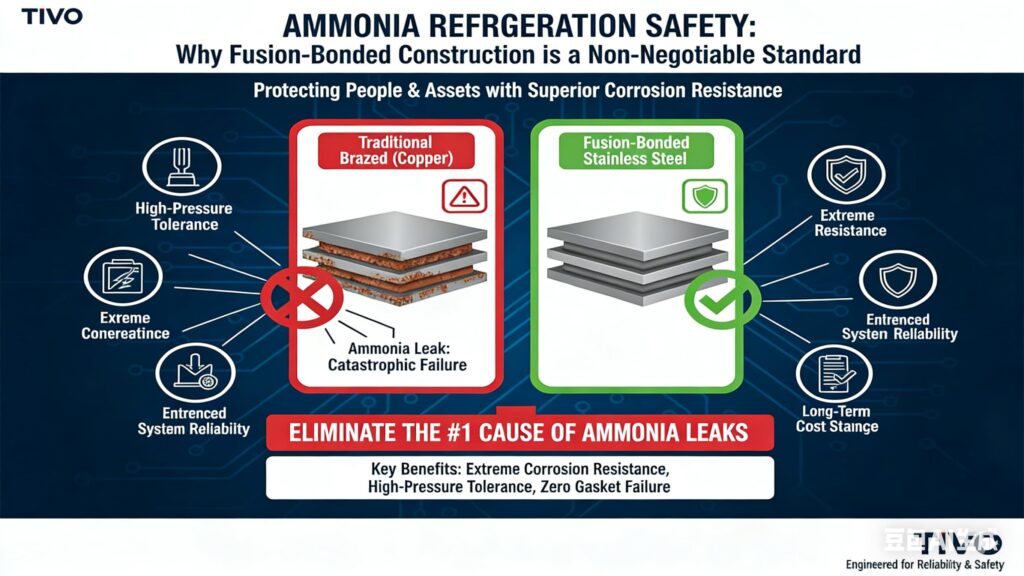
| Ammonia (NH3) | 25-40 bar | Stainless Steel Fusion Bonded (No Copper)6 |
Do They Offer Better Thermal Transfer Efficiency?
High energy bills frustrate your end-users. Inefficient heat transfer wastes power. You need a system that maximizes every kilowatt of energy used.
Brazed plate heat exchangers feature highly turbulent flow7 patterns due to their corrugated plate design. This turbulence scrubs the plate surface, preventing fouling and ensuring maximum heat transfer efficiency even with low fluid velocities and small temperature differences.
Understanding Turbulent Flow
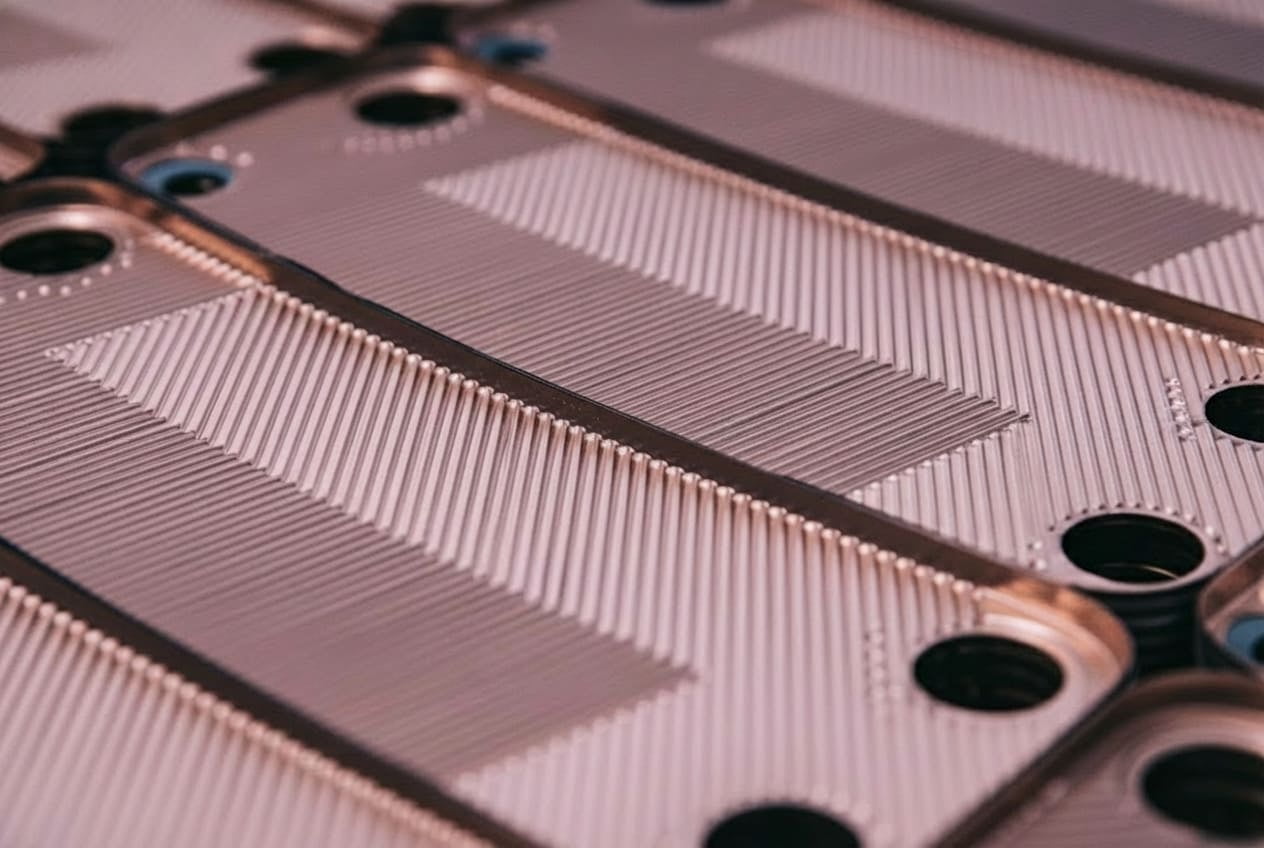
The secret to the efficiency of a brazed heat exchanger lies in the corrugation of the plates. When we stack the plates, the herringbone patterns cross each other. This creates a complex channel for the fluid to move through. Instead of flowing in a straight, smooth line (laminar flow), the fluid is forced to swirl and mix constantly (turbulent flow).
Why is this good? Turbulence does two things. First, it ensures that all the liquid touches the metal plate, transferring heat very quickly. This allows us to achieve very close temperature approaches. For example, we can cool a liquid to within 1°C of the cooling medium's temperature. Second, the turbulence creates a self-cleaning effect. The swirling water scrubs the walls of the channel, making it hard for scale or dirt to stick.
Energy Consumption and System Design
For an HVAC system, high efficiency means you can use a smaller compressor and smaller pumps. This lowers the total energy consumption of the system. Also, because the internal volume of a brazed unit is small, you need less refrigerant to fill the system. With the rising cost of refrigerants and strict environmental regulations, reducing the charge volume is a major financial and compliance benefit. Whether you are designing for a supermarket refrigeration system or a residential heat pump, the thermal performance of a BPHE is unmatched.
Efficiency Factors
| Parameter | Shell & Tube | Brazed Plate Heat Exchanger |
|---|---|---|
| Flow Type | Laminar (mostly) | Highly Turbulent |
| Temperature Approach | > 5°C | < 1°C |
| Refrigerant Charge | High Volume | Low Volume |
| Size for Same Duty | Very Large | Very Small |
Conclusion
Copper-brazed heat exchangers provide the perfect balance of size, strength, and cost. At Tivo, we ensure every unit meets global standards to keep your HVAC systems running smoothly.
Explore the advantages of Copper-brazed heat exchangers for efficient HVAC solutions. ↩
Explore Tivo's innovative solutions in HVAC technology, including their advanced brazed heat exchangers that enhance efficiency and reduce costs. ↩
Understand the limitations of traditional gasketed plate heat exchangers. ↩
Explore this resource to understand how vacuum furnaces enhance brazing processes, ensuring superior quality and efficiency in heat exchangers. ↩
Explore this resource to understand how plates and gaskets impact heat exchanger efficiency and design. ↩
Explore this resource to understand how Stainless Steel Fusion Bonded designs enhance durability and efficiency in HVAC systems. ↩
Learn how turbulent flow enhances heat transfer in heat exchangers. ↩