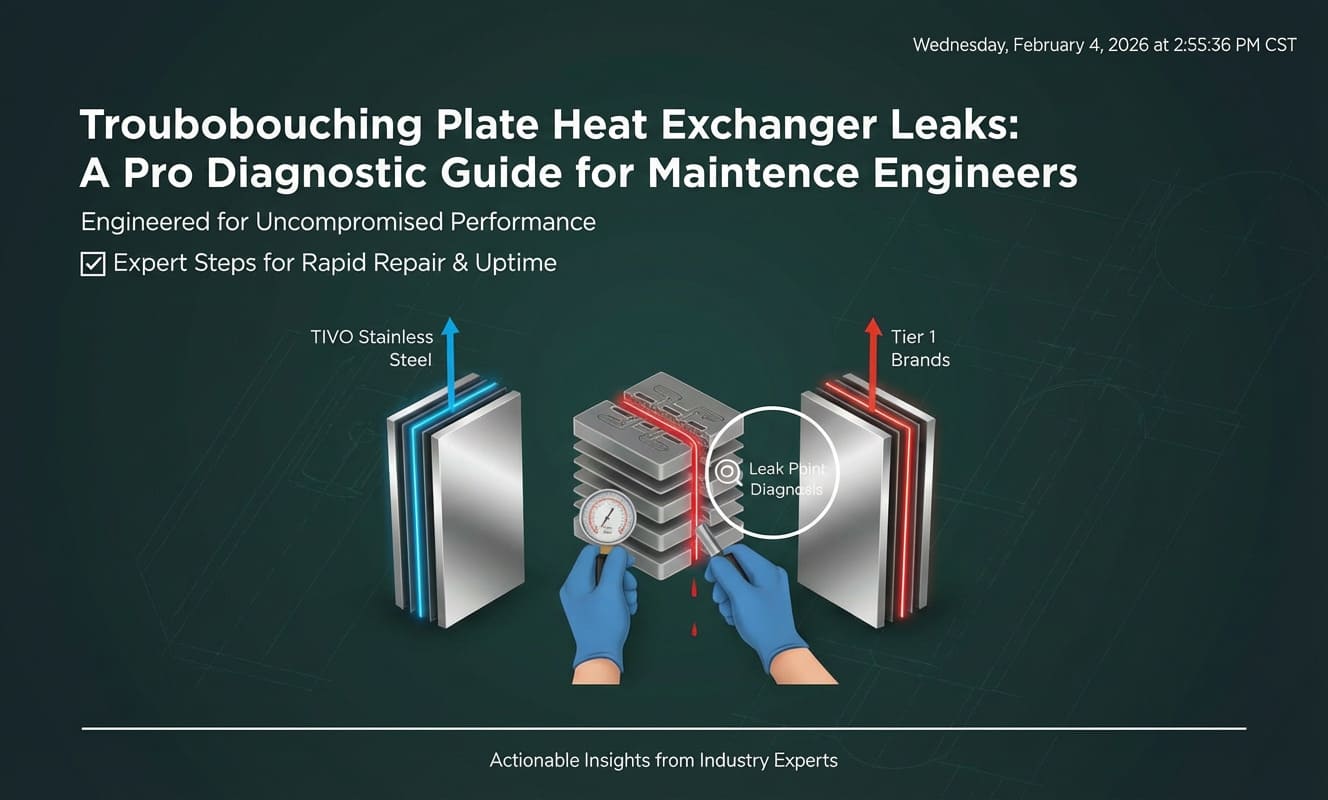
Seeing a pool of process fluid forming beneath your heat exchanger causes immediate stress for any plant operator. A sudden leak is not just a mess; it is a sign that your system has a fundamental failure that needs attention now.
To troubleshoot a plate heat exchanger1 leak effectively, you must first identify if the issue is external or internal. Check the A-measure (closing dimension) against the manual to rule out gasket compression2 issues. If the dimensions are correct, inspect the plates for pitting corrosion or stress cracks to determine if replacement parts3 are necessary.
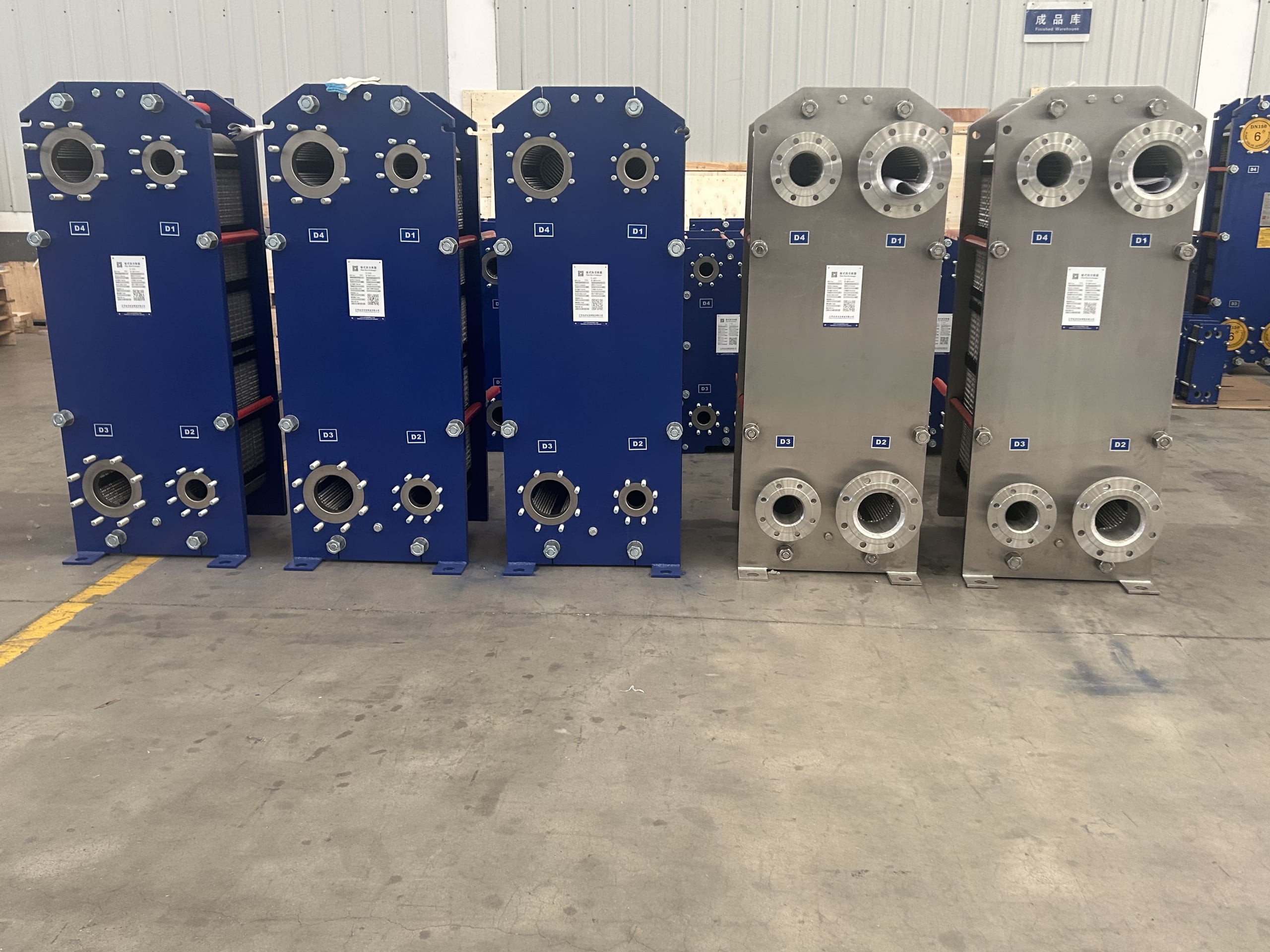
Many engineers panic when they see a leak. They grab a wrench and start tightening bolts blindly. This is a mistake. It often deforms the plates and makes the problem worse. You need a calm, logical approach to find the real root cause.
LOOP START
Is the External Leakage Caused by the A-Measure or Gasket Fatigue?
External drips are the most common issue and are often visible between the plate pack. Before you attempt any repairs, you must understand why the fluid is escaping the seal.
The first step in diagnosing external leakage is checking the Closing Dimensions, also known as the A-measure. This is the total thickness of the plate pack. If this measurement is outside the manufacturer's tolerance, the seal will fail. If the dimension is correct, the gaskets have likely lost their elasticity.
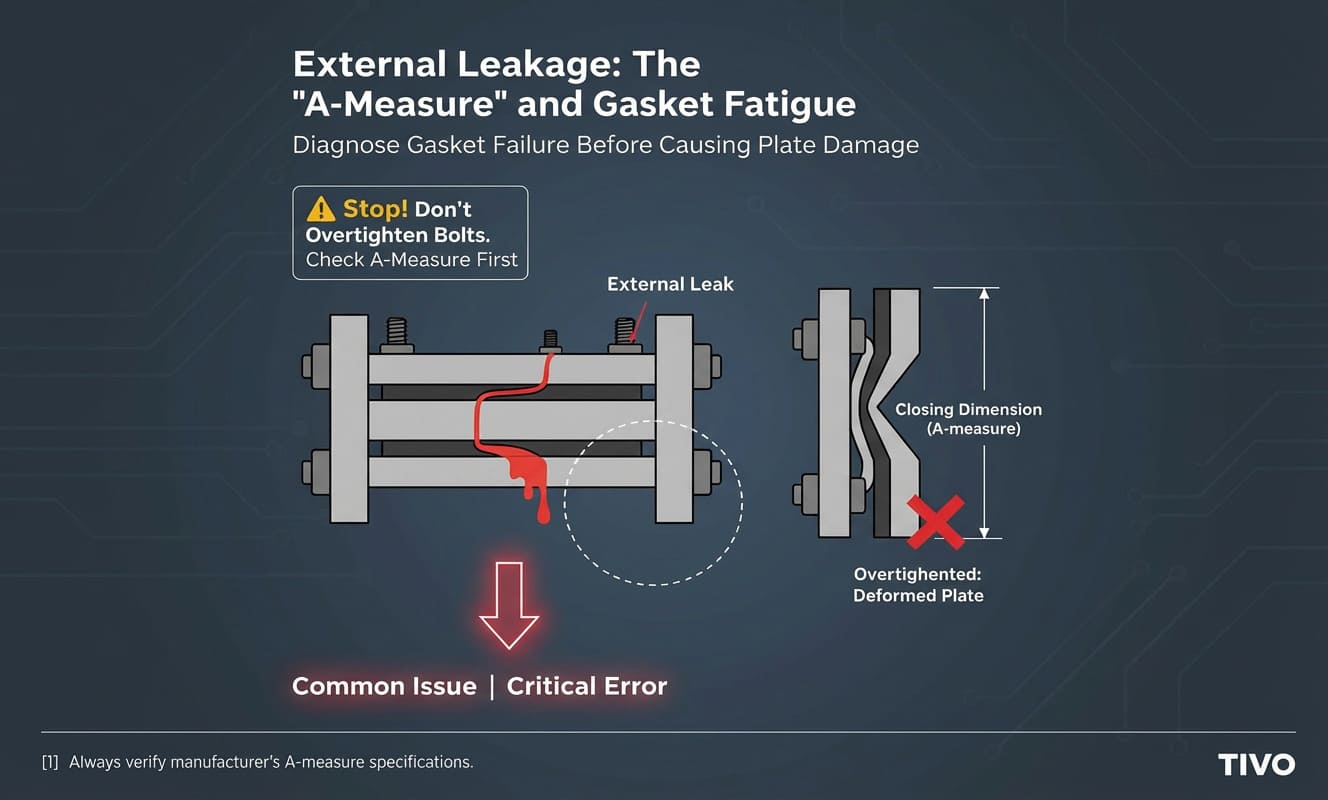
I have spent years on factory floors, and I see the same mistake happen constantly. An operator sees a drip. They tighten the frame bolts to stop it. The leak stops for an hour, then it comes back worse. Why does this happen? Because they crushed the plate corrugations.
You must look at the Closing Dimensions (A-measure). This is the distance between the fixed frame plate and the movable pressure plate. Every heat exchanger has a specific range for this. It is usually on the nameplate or in the manual. If your unit is loose, tighten it to the correct number. But if it is already at the minimum dimension, do not tighten it further.
If the dimension is correct, your gaskets are the problem. Gaskets do not last forever. They suffer from "compression set." This means they get squashed flat and cannot bounce back. They lose their ability to seal against the plate.
You also need to check if your gasket material matches your fluid. I once visited a palm oil refinery where they used EPDM gaskets for oil. The gaskets swelled up like balloons. They needed NBR gaskets. Here is a simple guide I use to check compatibility:
| Gasket Material | Common Media | Typical Failure Sign | Resistance |
|---|---|---|---|
| NBR | Water, Oil, Fats | Hardening / Cracking | ⭐⭐⭐ |
| EPDM | Steam, Hot Water, Acids | Swelling / Softening | ⭐⭐⭐⭐ |
| FKM (Viton) | Chemicals, High Temp | Loss of Elasticity | ⭐⭐⭐⭐⭐ |
| AG-EPDM | Amines, Aggressive Media | High Compression Set | ⭐⭐⭐⭐⭐+ |
If your gaskets are hard, cracked, or swollen, you need to replace them. At JIANGYIN TIVO, we produce 100% compatible replacements for brands like Alfa Laval and GEA. We help you fix this without waiting weeks for parts.
LOOP END
LOOP START
Could Internal Corrosion Be Causing Invisible Contamination?
Internal leakage is dangerous because you cannot see it happening on the factory floor. The fluids mix inside the unit, which destroys your product quality and ruins your system efficiency.
Internal leakage, or intermixing, is usually caused by plate failure such as pitting or stress corrosion cracking (SCC). You should monitor your system for cross-contamination4 or unexplained pressure changes5. The only way to fix this is to disassemble the unit and perform dye penetrant testing to find the cracks.
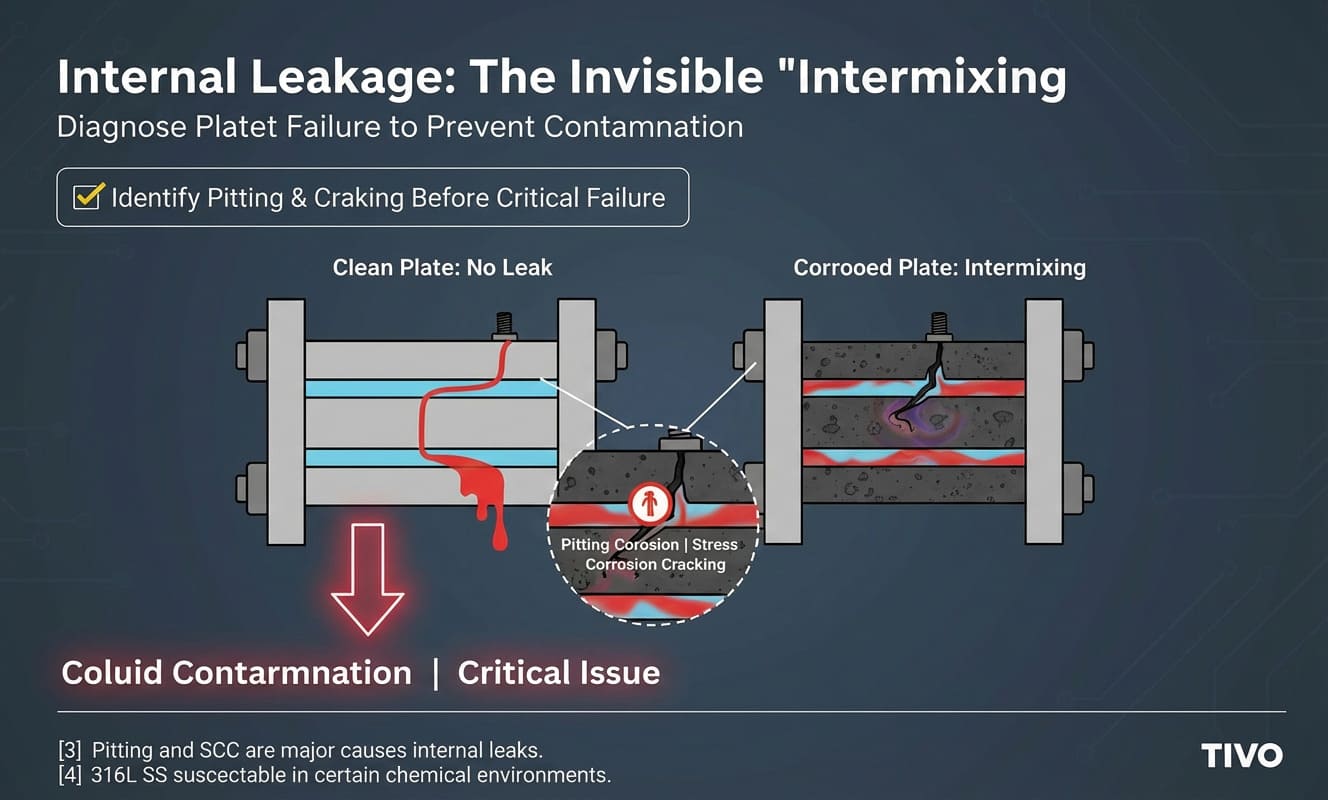
Internal leaks are a nightmare for quality control. I worked with a food processor once who found water in their pasteurized milk. They thought it was a valve issue. It was not. It was a tiny hole in a heat exchanger plate.
This happens because of Pitting Corrosion or Stress Corrosion Cracking (SCC). Even high-quality metal has limits. Standard 304 or 316L stainless steel is strong. But it cannot handle everything. If your water has high chloride levels, it eats into the metal. It creates microscopic pits. These pits grow until they become holes.
Pressure plays a role too. We see this in high-pressure systems like CO2 refrigeration. The stress on the plates is huge. If there is a weak spot, the pressure will find it. This causes the fluids to mix.
To find these leaks, you cannot just look with your eyes. The cracks are too small. You need to take the plate pack apart. You must clean the plates thoroughly. Then, you use a Dye Penetrant Test6. You spray a red dye on one side and a developer on the other. If the red dye comes through, the plate is dead.
Here is a logic matrix to help you decide what to do:
| Symptom | Probable Root Cause | Recommended Action |
|---|---|---|
| Fluid on Floor | Gasket Aging / Incorrect A-Measure | Check A-Measure / Replace Gaskets |
| Cross-Contamination | Plate Pitting / Micro-cracks | Dye Penetrant Test / Replace Plates |
| Sudden Pressure Drop | Connection Failure / Port Erosion | Inspect Nozzle Linings |
| Leaking after CIP | Chemical Incompatibility | Review Cleaning Concentration |
If you find corrosion, you might need better material. We often suggest upgrading to Titanium or Hastelloy for aggressive fluids. We verify all our materials with spectral testing. This ensures safety for high-pressure units up to 140 bar.
LOOP END
LOOP START
Are Your Cleaning Procedures Damaging the Heat Exchanger?
Sometimes we create the leaks ourselves through improper maintenance or aggressive cleaning habits. Using the wrong chemicals or tightening bolts incorrectly can destroy a perfectly good unit.
Improper Cleaning-In-Place (CIP)7 procedures often damage gaskets through chemical incompatibility. Additionally, failing to follow a diagonal tightening sequence can tilt the frame. Always verify chemical concentration and torque bolts evenly to prevent uneven pressure and subsequent leaks.
Maintenance is supposed to extend the life of your equipment. But I often see it end the life of the equipment instead.
Let’s talk about Cleaning-In-Place (CIP). You want to clean the plates without opening the unit. That makes sense. But you must be careful with the chemicals. If the concentration of acid or caustic soda is too high, it attacks the gaskets. It eats them from the inside out. I have seen gaskets turn into a sticky goo because the cleaning solution was too strong. You must check the pH levels and the temperature limits of your gaskets.
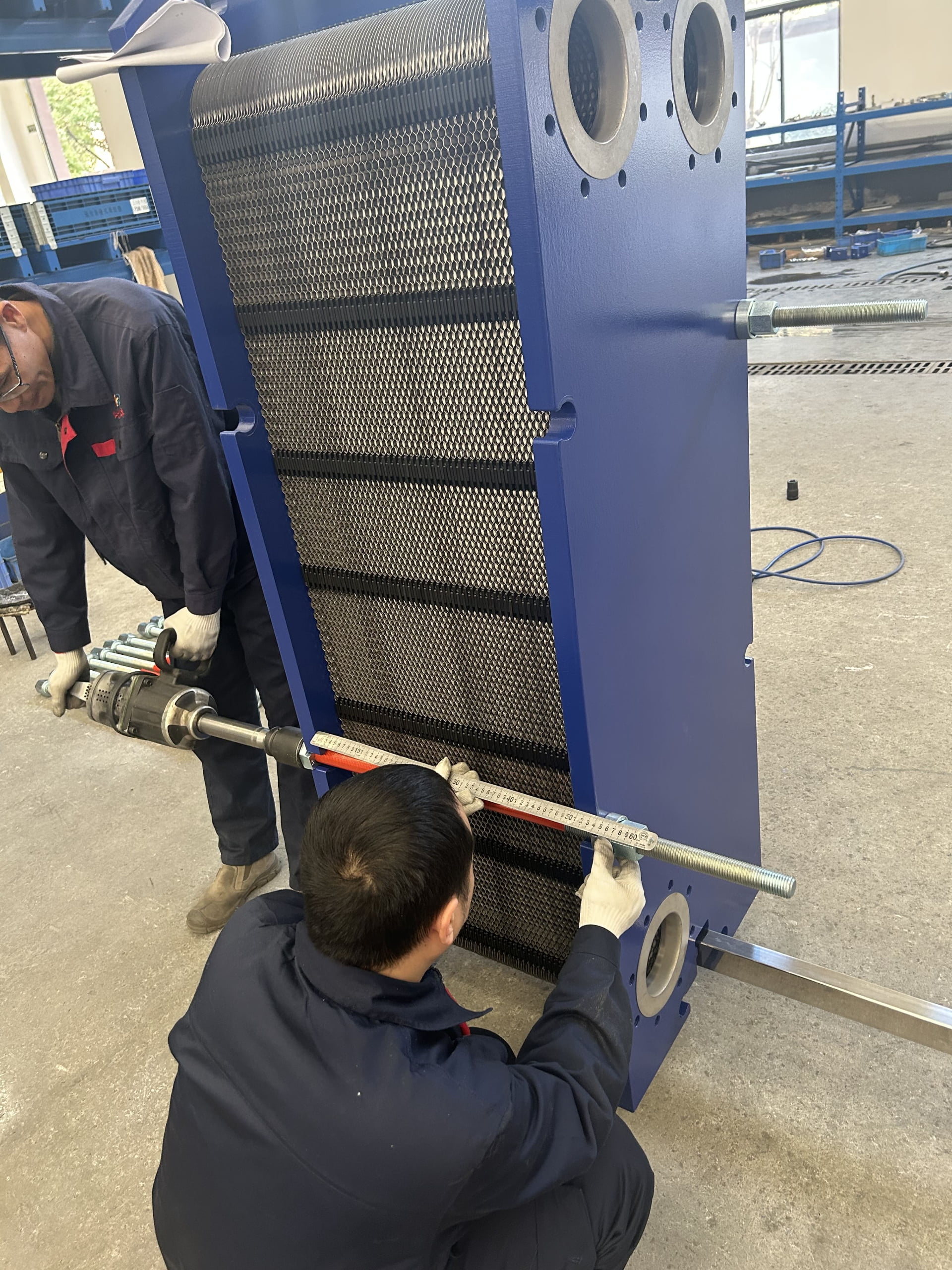
The second big issue is how you put the unit back together. You took it apart to clean it. Now you need to tighten it. You cannot just tighten one bolt all the way down. The pressure plate must stay parallel to the frame plate. If you tighten the top left bolt too much, the plate tilts. This twists the plate pack.
When the pack twists, the gaskets do not line up. They get pinched. When you turn the pump on, it leaks immediately. You must use a diagonal tightening sequence. Tighten the top left and bottom right a little bit. Then the top right and bottom left. Keep going in a circle. Check the A-measure constantly at all corners.
If you do damage a plate or gasket, time is money. You cannot wait 20 weeks for an OEM part. This is why TIVO stocks over 500,000 spare parts. We can get a replacement to you in 7 to 15 days. We use a comprehensive model matrix to match your old unit perfectly. Whether it is a simple gasket or a complex plate, we ensure it fits. This turns an emergency repair into a quick fix.
LOOP END
Conclusion
Leaks are symptoms of deeper issues like gasket fatigue, corrosion, or bad maintenance. Diagnose the root cause first, check your dimensions, and replace damaged parts immediately to avoid costly shutdowns.
Understanding common issues can help you prevent leaks and maintain efficiency. ↩
Learn how gasket compression impacts your system's reliability and performance. ↩
Finding reliable sources for replacement parts can minimize downtime and repair costs. ↩
Preventing cross-contamination is vital for maintaining product quality and safety. ↩
Identifying pressure changes can help you diagnose potential issues before they escalate. ↩
Learn about this essential testing method for detecting cracks in heat exchangers. ↩
Proper CIP procedures can extend the life of your heat exchanger and prevent leaks. ↩