Are ammonia leaks1 threatening your cold storage? Corroded copper parts cause costly shutdowns and safety risks. Discover how our all-stainless steel heat exchangers2 solve this problem for good.
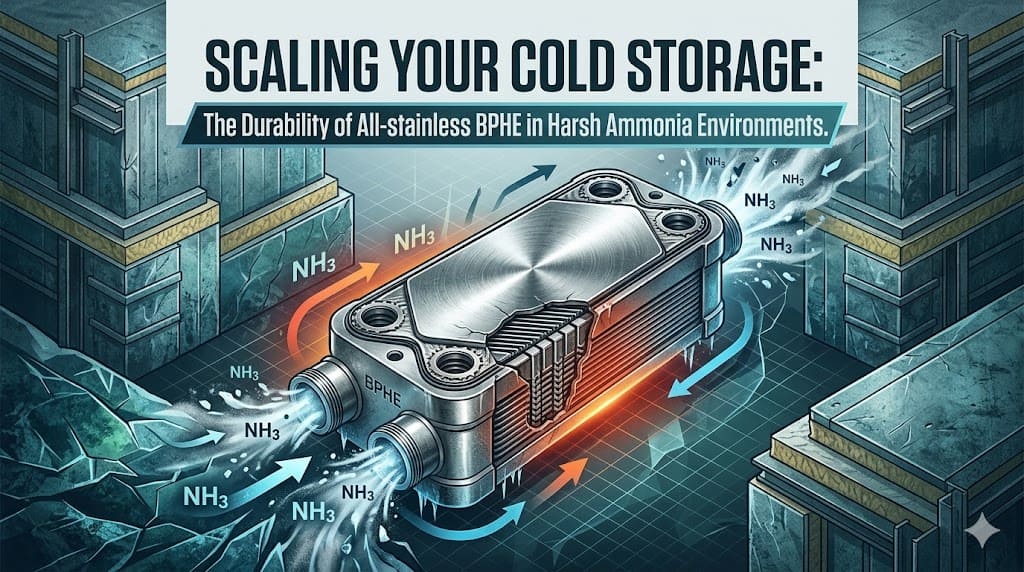
All-stainless brazed plate heat exchangers3 (BPHE) provide ultimate durability in harsh ammonia environments by completely eliminating copper materials. Using 100% stainless steel fusion bonding, these units resist severe chemical corrosion4, handle extreme pressures up to 45 bar, and withstand thermal fatigue from frequent defrosting cycles.
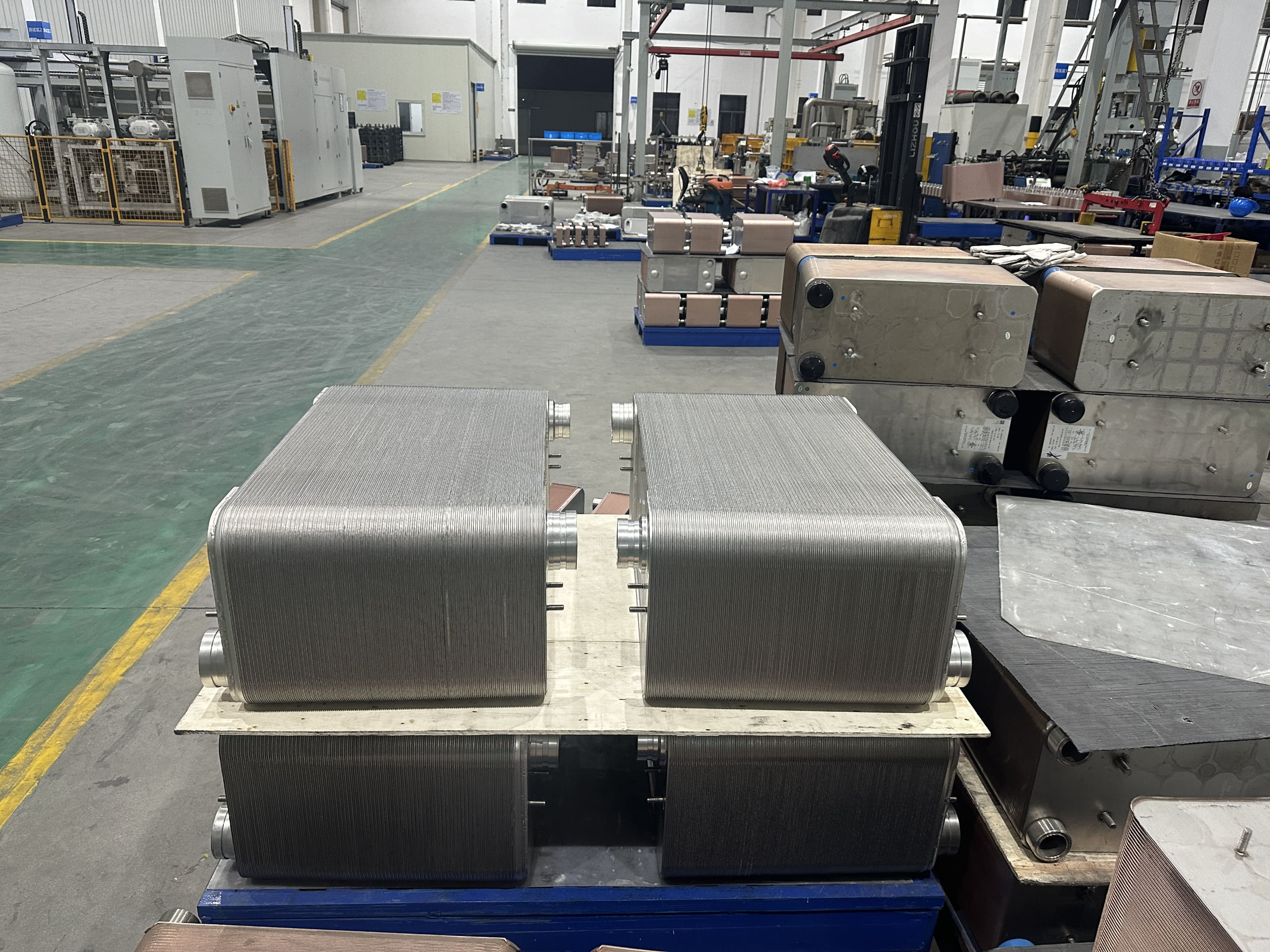
I remember visiting a large cold storage facility5 in Northern Europe last year. The plant manager looked tired. His standard heat exchangers kept failing. The high maintenance costs ruined his budget. Every time a unit broke down, the whole line stopped. You want to stop replacing broken equipment. You want to keep your ammonia systems safe. You must look at the inside of your heat exchangers. Standard units fail in these harsh conditions. You need a better solution to protect your business.
How Do All-Stainless Heat Exchangers Eliminate the Copper Corrosion Nightmare?
Does your ammonia system suffer from rapid wear? Water and ammonia mix to destroy copper parts fast. A 100% stainless steel design completely stops this deadly chemical attack.
All-stainless BPHEs eliminate copper corrosion because they use zero copper brazing. When ammonia mixes with water, it forms highly alkaline ammonium hydroxide6, which eats copper instantly. By using 100% stainless steel plates and fusion bonding, the heat exchanger becomes immune to this chemical reaction.
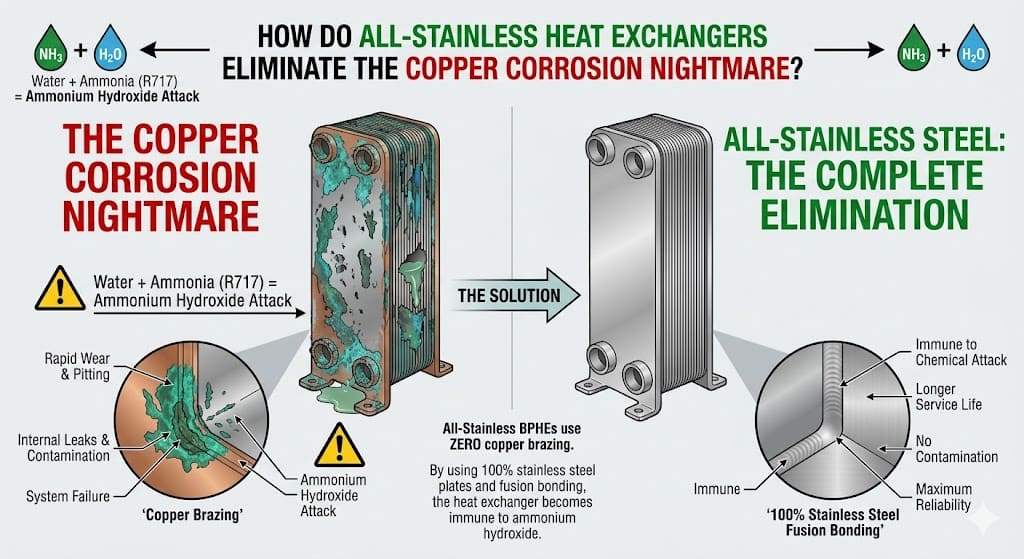
When I started in industrial refrigeration, I saw many standard heat exchangers fail. The reason was always the same. Standard units use copper to bond the steel plates. Ammonia is a harsh chemical. A tiny amount of water mixes with the ammonia gas. This creates ammonium hydroxide. This strong chemical eats copper in a few months. I have seen entire cooling systems shut down. A small copper joint melted away.
The Chemistry Behind the Failure
We must break down this problem. Copper is not safe for ammonia. At TIVO7, we use a special fusion bonded technology. The plates and the bonding material are 100% stainless steel. We use zero copper in the factory. This pure construction gives you peace of mind. You do not worry about sudden leaks. You do not worry about toxic ammonia gas hurting your staff.
Material Comparison in Ammonia Systems
| Feature | Standard BPHE (Copper Brazed) | Fusion Bonded BPHE (All-Stainless) |
|---|---|---|
| Brazing Material | Copper | 100% Stainless Steel |
| Ammonia Reaction | Highly corrosive, causes fast leaks | No reaction, completely safe |
| Lifespan in NH3 | Very short (often just months) | Very long (many years) |
| Maintenance Cost | Very high due to frequent failure | Very low, almost zero |
You protect your whole facility from the start. You cut down on expensive replacement parts. You keep your workers safe from dangerous gas leaks. You make sure your cold storage runs smoothly every single day.
Can Fusion Bonded Heat Exchangers8 Handle the High Pressures of Ammonia Systems?
Are high operating pressures9 causing your equipment to burst? Standard welds often crack under stress. Vacuum fusion bonding safely handles massive pressure, keeping your facility secure.
Yes, all-stainless fusion bonded heat exchangers easily handle the high pressures of ammonia refrigeration. Through advanced vacuum high-temperature fusion, the structural strength10 goes far beyond traditional welding. These units can safely and steadily carry operating pressures above 45 bar without failing.
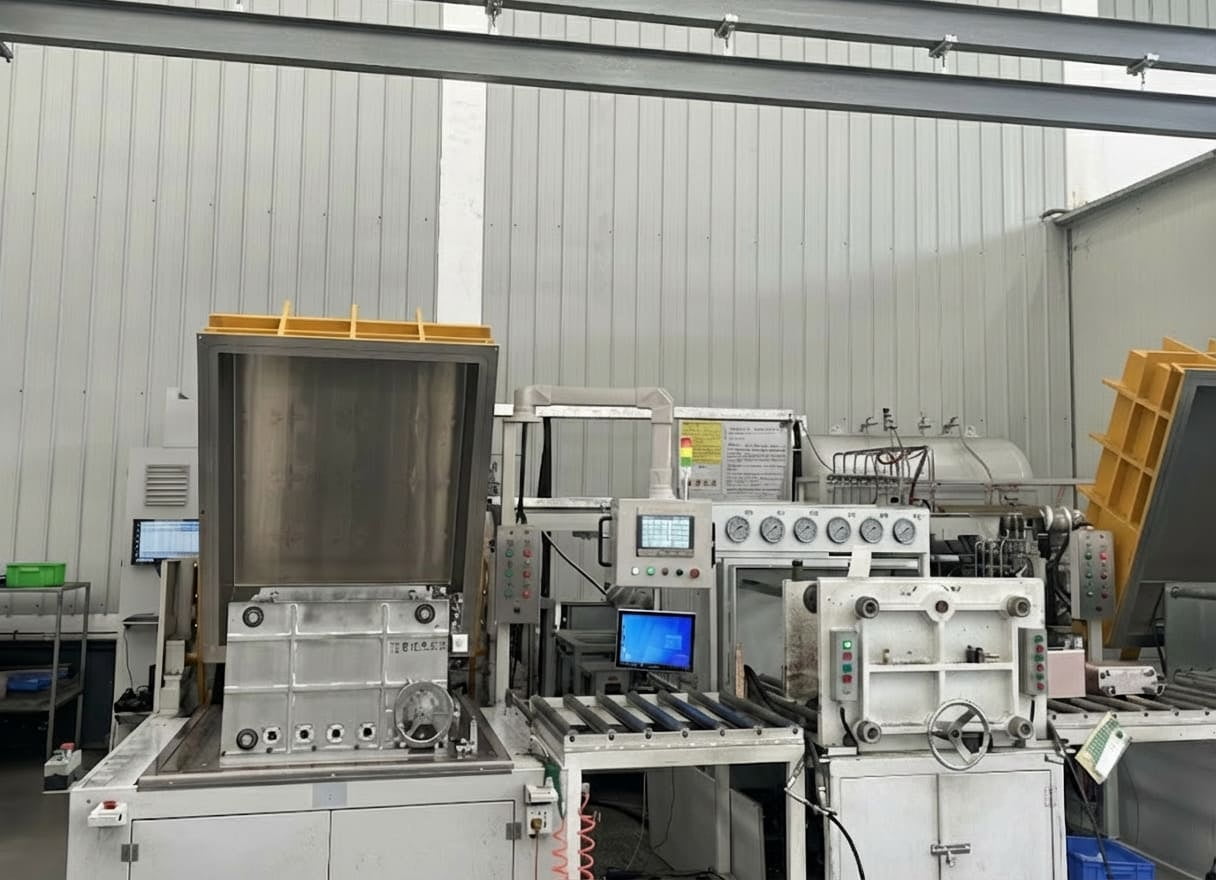
Ammonia refrigeration systems run hard all year. The condenser side pushes the pressure very high. I know many smart engineers. They worry about their heat exchangers bursting. A burst causes a total system shutdown. It costs a lot of money. It creates a huge safety hazard for everyone. Traditional welding leaves tiny weak spots in the metal. These weak spots can not hold high pressure for a long time. They will crack and break.
Why Vacuum Fusion Bonding Wins
We must fix this dangerous problem. We must look at how the metal plates join. At TIVO, we do not use normal surface welding. We use a vacuum high-temperature fusion process. This melts the stainless steel materials together deeply. The bond becomes as strong as the thick plates. The whole heat exchanger acts as one solid piece of metal. There are no weak joints. There are no fragile seams.
Pressure Handling Capabilities
| Pressure Metric | Traditional Welded Units | TIVO Fusion Bonded BPHE |
|---|---|---|
| Bonding Method | Basic surface welding | Vacuum high-temp fusion |
| Structural Strength | Moderate, prone to weak spots | Extremely high and uniform |
| Safe Operating Pressure | Usually up to 30 bar | 45 bar and above safely |
| Risk of Bursting | Medium to High over time | Nearly Zero in normal use |
This incredible strength is vital for large cold storage plants. You need equipment that stays strong day after day. Our fusion bonded units give you a rock-solid core. They easily support 45 bar of pressure. This keeps your cold storage running safely for many years.
How Does Symmetrical Stainless Steel Stop Thermal Fatigue from Defrosting?
Do frequent defrost cycles11 break your heat exchangers? Extreme temperature changes cause metal to crack. A perfectly symmetrical stainless steel structure stops thermal stress and prevents these cracks.
Symmetrical all-stainless construction stops thermal fatigue by ensuring an equal expansion coefficient across the entire unit. When cold storage systems go through harsh defrost cycles, the uniform material expands and shrinks together perfectly. This greatly reduces thermal stress and stops fatigue cracks from forming over time.
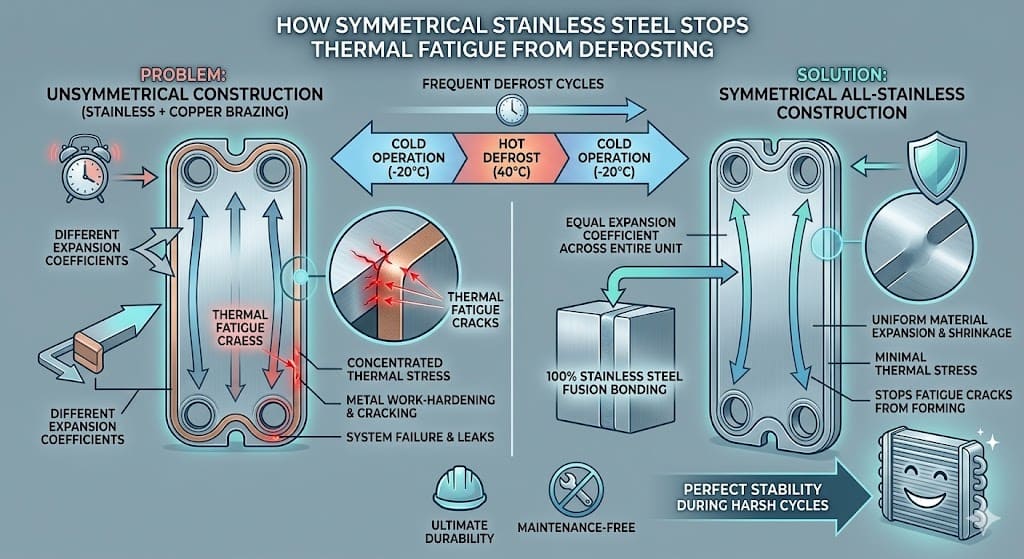
Cold storage is not just a cold room. The cooling systems go through frequent defrost cycles. They must remove thick ice. I talked to a plant operator in Japan. He replaced his heat exchangers every two years. The hot and cold temperature shifts ripped his equipment apart. Hot metal grows larger. Cold metal shrinks. A heat exchanger with copper and steel grows at different speeds. This pulls the unit apart from the inside.
The Power of Consistent Expansion
We solve this tough problem easily. We use only one type of material. TIVO uses 100% stainless steel for the plates and the joints. This creates a perfectly symmetrical structure. Every part of the heat exchanger shares the exact same expansion rate. The hot defrost cycle starts. The whole unit grows together. The cooling starts again. The whole unit shrinks together perfectly.
Impact of Defrost Cycles on Materials
| Condition | Mixed Metals (Copper/Steel) | 100% Stainless Steel (TIVO) |
|---|---|---|
| Expansion Rate | Different for each metal part | 100% Identical across unit |
| Internal Stress | Very high during hot defrost | Very low, highly stable |
| Fatigue Cracks | Common after many daily cycles | Extremely rare to find |
| Equipment Lifespan | Greatly shortened by thermal shock | Maximized for long term use |
Different metals do not fight each other. The thermal stress drops to almost zero. You do not get tiny fatigue cracks. These cracks destroy the unit from the inside out. Your equipment lasts much longer now. Your maintenance team can finally relax.
Conclusion
All-stainless fusion bonded BPHEs give you ultimate durability for ammonia cold storage. They stop copper corrosion, survive massive pressure, and beat thermal fatigue to keep your facility safe.
Understanding the risks of ammonia leaks can help you implement better safety measures in your facility. ↩
Discover the advantages of using all-stainless steel heat exchangers for improved durability and safety. ↩
Explore the functionality and benefits of brazed plate heat exchangers in industrial applications. ↩
Understanding chemical corrosion can help you choose the right materials for your refrigeration systems. ↩
Explore best practices to enhance the efficiency and safety of your cold storage operations. ↩
Learn about ammonium hydroxide's effects on materials to prevent costly equipment failures. ↩
Explore TIVO's innovative solutions for heat exchangers, ensuring safety and durability in ammonia refrigeration systems. ↩
Explore this resource to understand how fusion bonded heat exchangers enhance durability and safety in ammonia systems. ↩
Understanding the challenges of high pressures can help you select safer and more reliable equipment. ↩
Understanding structural strength can help you choose the right heat exchangers for your needs. ↩
Understanding defrost cycles can help you optimize your refrigeration systems for better performance. ↩