Selecting the wrong gasket material is the #1 cause of unscheduled downtime in industrial heat transfer. Let’s explore how to avoid this costly mistake.
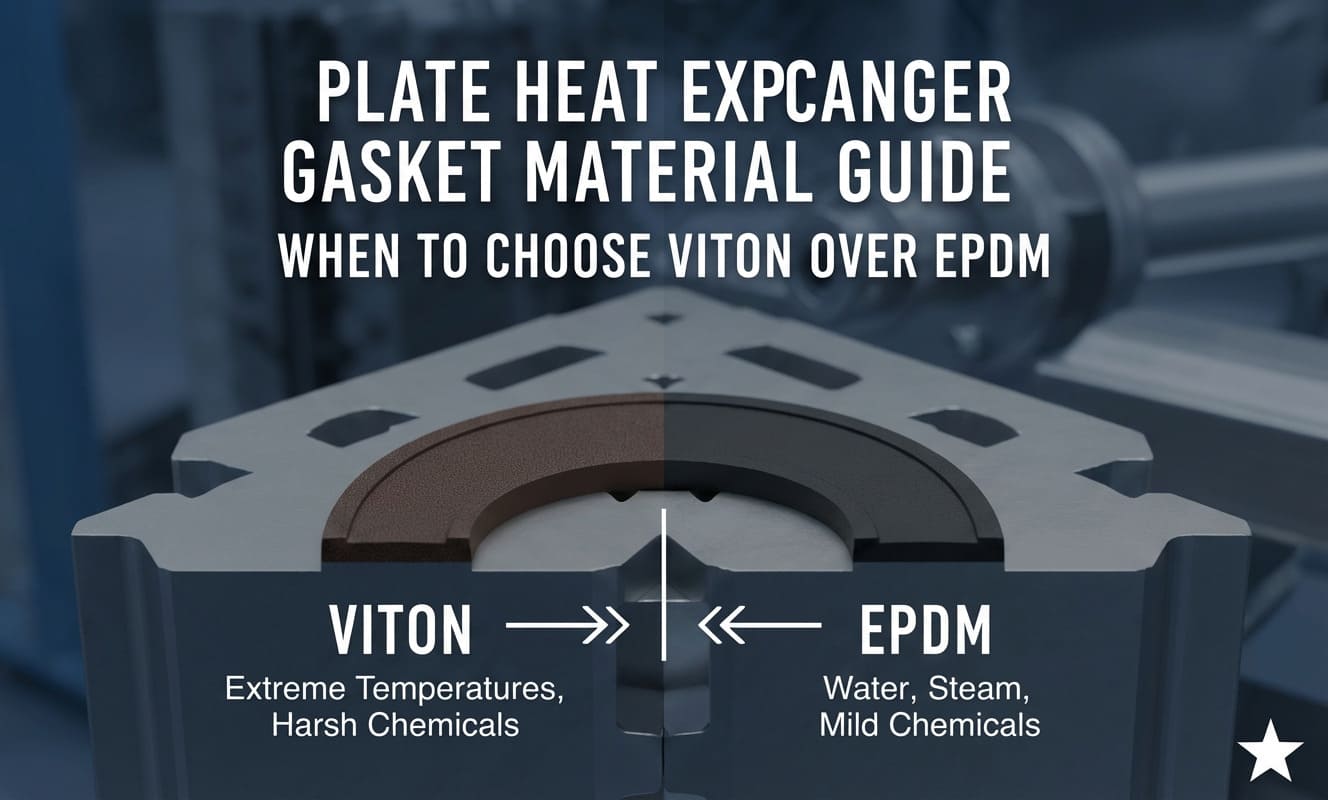
When deciding between Viton1 and EPDM2 for your heat exchanger gaskets, understanding the specific requirements of your application is crucial. This guide will help you make the right choice.
When selecting gasket materials, most people focus solely on temperature. However, the material's interaction with various media is just as important.
1. Temperature is Only Half the Story: The "Oil Test" Comparison
Most generic guides tell you Viton is for "high temperatures." That’s only half the truth.
The real "Viton vs. EPDM" battlefield is Oil Resistance3. EPDM is a non-polar elastomer; it will swell and disintegrate almost instantly when exposed to mineral oils, lubricants, or vegetable fats.
Real-World Case: Indonesia Palm Oil Refinery
I recently consulted for a major palm oil refinery in Indonesia. They were processing crude palm oil (CPO) at 180°C. They initially tried a "high-temp" EPDM to save costs. Within 48 hours, the gaskets had doubled in size, popping out of the plate grooves. The Insight: For palm oil, it’s not just the 180°C heat—it’s the fatty acids. In this environment, Viton (FKM) is the only material that maintains its Cross-linking Density without chemical swelling.
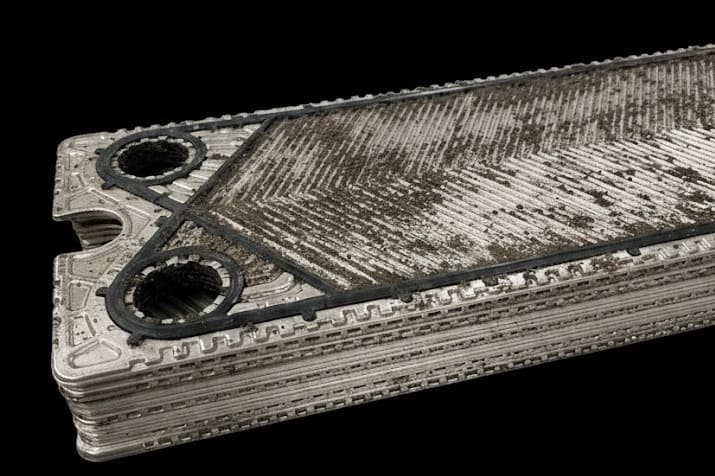
The takeaway from this example is clear: when your application involves oils, Viton is often the better choice. EPDM simply can't keep up.
2. Technical Comparison: Beyond the Datasheet?
To give you a clearer picture, we’ve compared these materials based on Compression Set4—the gasket's ability to "spring back" after being squeezed under pressure for months.
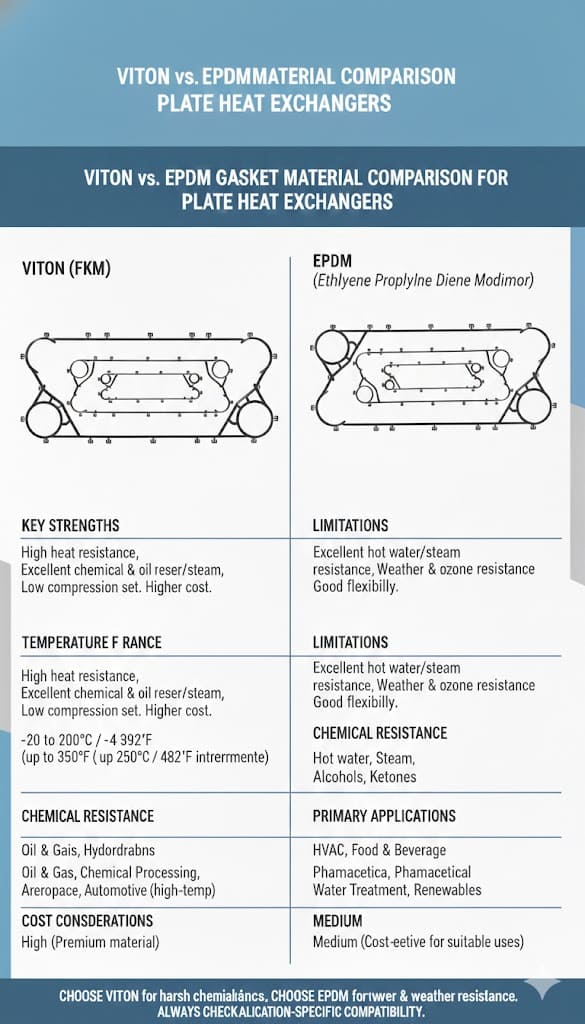
| Property | Viton (FKM - Type A/B) | EPDM (Peroxide Cured) |
|---|---|---|
| Max Continuous Temp | 180°C (356°F) | 150°C (302°F) |
| Steam Resistance | Poor (Avoid in Steam) | Excellent (Up to 4 Bar) |
| Petroleum/Oils | Excellent | Failure Risk |
| Acid Resistance | High Concentration Acids | Diluted Acids only |
TIVO Pro Tip: If your application is High-Temperature Steam5 (above 140°C), do not assume Viton is better because it's more expensive. Standard Viton degrades in steam via hydrolysis. For steam-to-water HVAC systems, a Peroxide-Cured EPDM will outlast Viton every time.
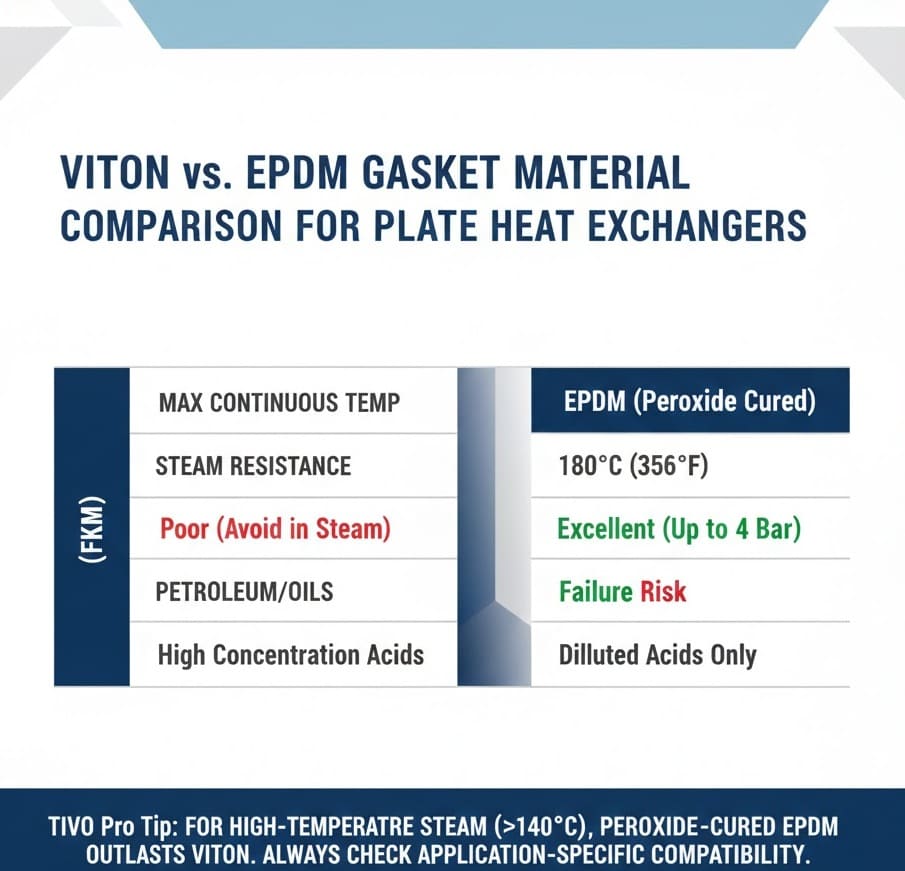
- This careful assessment leads to better decisions and ultimately saves costs in maintenance and downtime.
3. How "Working Conditions" Impact Your ROI?
When we help clients replace gaskets for Alfa Laval or GEA units, we evaluate the Cleaning-in-Place (CIP) [6] chemicals as much as the process medium.
- CIP Risks: If you use aggressive nitric acid or caustic soda for cleaning, EPDM may degrade prematurely. Viton offers superior chemical inertness, extending the interval between "Frame Opening" maintenance cycles.
- Pressure Fluctuations: In systems with frequent start-stops (like batch processing), the Elastic Recovery of the gasket is critical. TIVO’s Viton gaskets undergo a specialized Post-Curing [7] process to ensure the lowest possible compression set, ensuring a leak-free seal even after years of thermal cycling.
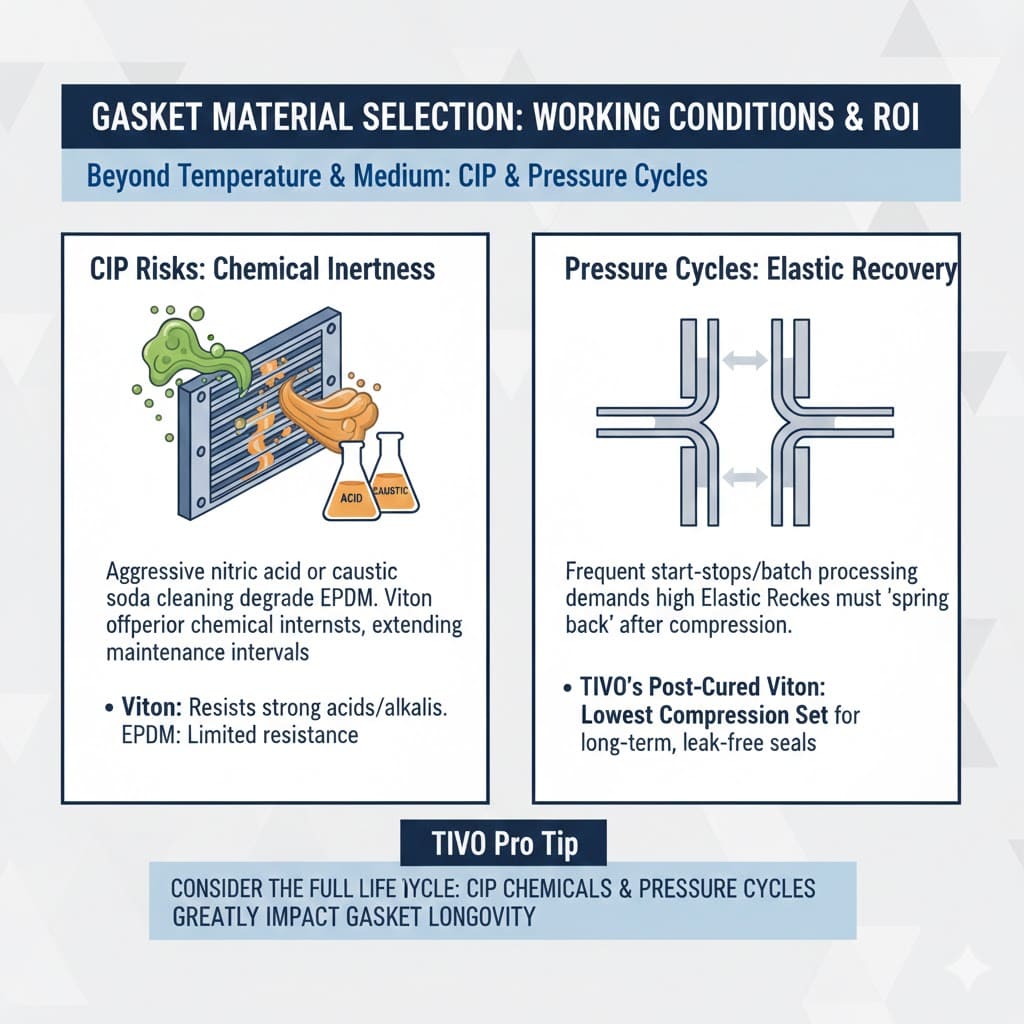
This careful assessment leads to better decisions and ultimately saves costs in maintenance and downtime.
Conclusion
Choosing between Viton and EPDM is a balance of Chemical Compatibility6, Temperature, and Maintenance Budget.
- Choose EPDM for Water, Steam, and Alcohol-based cooling where no oil is present.
- Choose Viton for Oils, Fuels, and High-Concentration Chemicals, or where "Peace of Mind" against contamination is worth the premium.
Unsure which material fits your specific medium? [Contact TIVO’s Engineering Team] for a free Gasket Compatibility Audit. We can provide 1:1 replacement gaskets for all major brands, ensuring your system runs at peak reliability.
Explore the advantages of Viton gaskets, especially in high-temperature and chemical resistance applications. ↩
Learn about EPDM gaskets, their properties, and when they are the best choice for industrial use. ↩
Understand the importance of oil resistance in gasket materials to avoid costly failures. ↩
Discover how compression set impacts gasket performance and longevity in various applications. ↩
Explore the specific challenges and solutions for gaskets in high-temperature steam environments. ↩
Learn how to evaluate chemical compatibility to ensure optimal gasket performance in your application. ↩