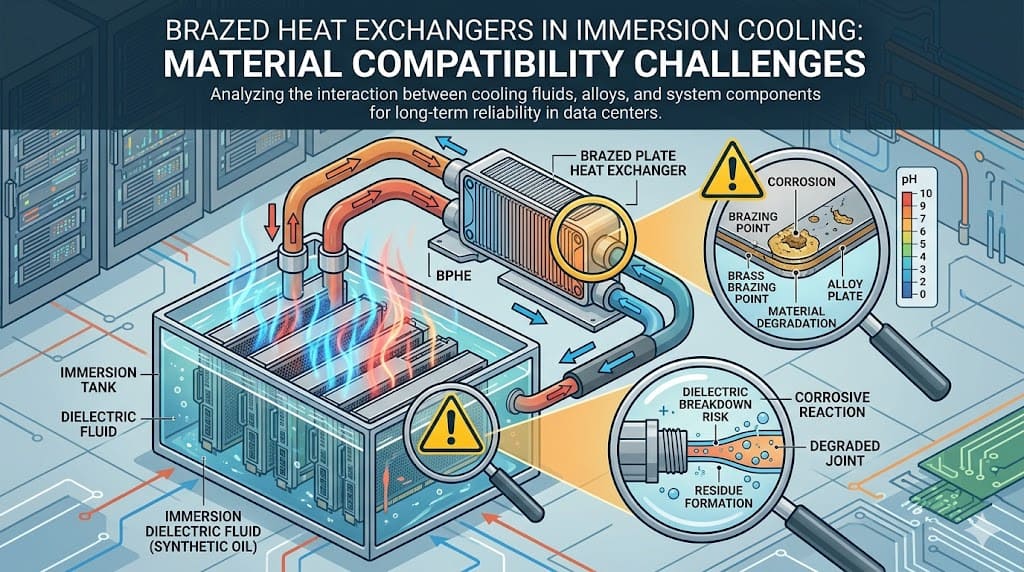
Immersion cooling systems are very expensive. When heat exchanger metals1 fail, you lose more than equipment. You ruin costly cooling fluids. How do you stop this chemical disaster?
Material compatibility in immersion cooling determines system life. Incompatible brazed heat exchanger materials act as an aging accelerator, causing coolants to oxidize and turn acidic. Using 100% tested stainless steel and copper-free fusion bonded units prevents ion leaching and protects your expensive cooling fluids from chemical breakdown2.
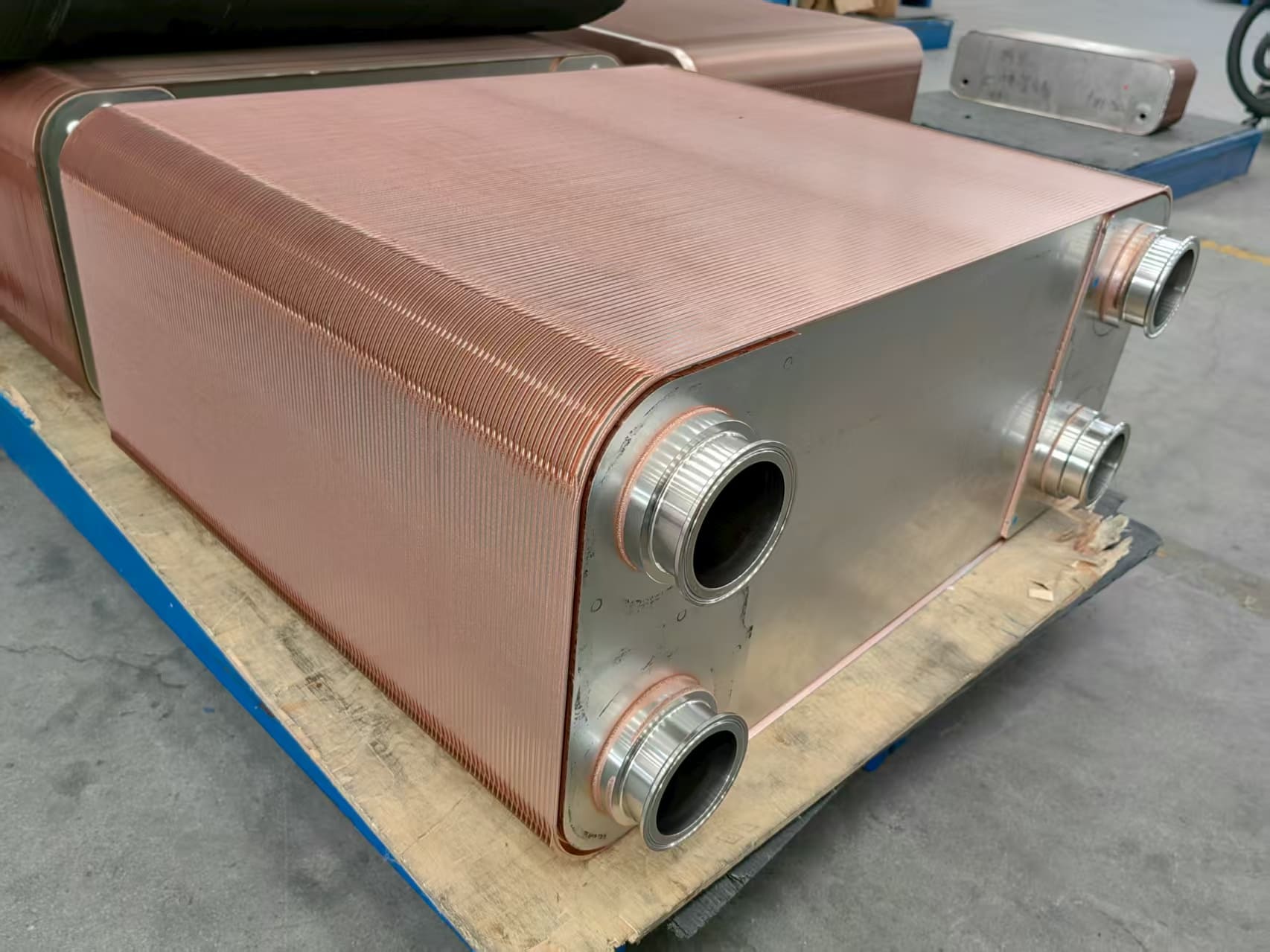
I remember visiting a massive data center where a tiny metal reaction caused a total system shutdown. The wrong heat exchanger ruined thousands of gallons of premium coolant. That day taught me that ignoring material science is the fastest way to burn your budget. Let us look at why this happens and how you can fix it before your system fails.
Why Do Incompatible Materials Destroy Expensive Coolants?
You spend thousands on premium dielectric fluids. But bad heat exchanger metals react with these fluids. Your coolant turns acidic and destroys the entire tank.
Incompatible metals catalyze the oxidation and breakdown3 of immersion coolants. This chemical reaction creates harmful acids that degrade the fluid's thermal properties4. TIVO5 uses 100% spectral material testing6 to guarantee chemical inertia and protect your fluid investment.
The Hidden Cost of Chemical Reactions
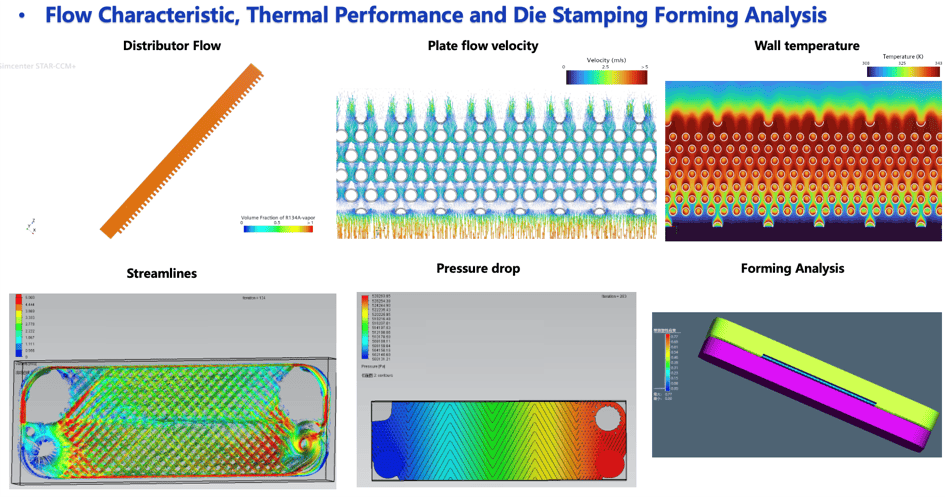
When you put the wrong metals into an immersion cooling system, the heat exchanger becomes an aging accelerator. It does not just break down. It actively destroys the fluid around it. The metals react with the coolant, causing rapid oxidation. This creates acids. Once the fluid becomes acidic, it eats away at your servers and pipes. You do not just replace a broken heat exchanger. You have to throw away a whole pool of very expensive liquid.
How Spectral Analysis Saves Your System
At TIVO, we know that guessing is dangerous. I always tell my clients that we must prove our metals are safe. We use 100% spectral material testing on all our plates, including 304, 316L, and Titanium. This ensures complete chemical inertia. The metal will never react with your fluid.
| Material Testing Method | Benefit to Immersion Cooling | Result for the Customer |
|---|---|---|
| Basic Visual Check | Very low. Cannot see chemical makeup. | High risk of fluid oxidation. |
| TIVO Spectral Analysis | 100% verifies metal purity and inertia. | Safe coolant, zero acid buildup. |
How Does High Viscosity Affect Pressure Drop and System Efficiency?
Mineral oils used in immersion cooling are thick. If your heat exchanger cannot handle this, your pumps work too hard. Your energy bills go up fast.
High-viscosity coolants like mineral oils increase resistance inside the heat exchanger. Controlling this pressure drop7 through optimized plate corrugation designs is vital. Proper brazed plate heat exchanger8 structures maintain high heat transfer rates while keeping pump energy consumption low.
Managing Thick Fluids
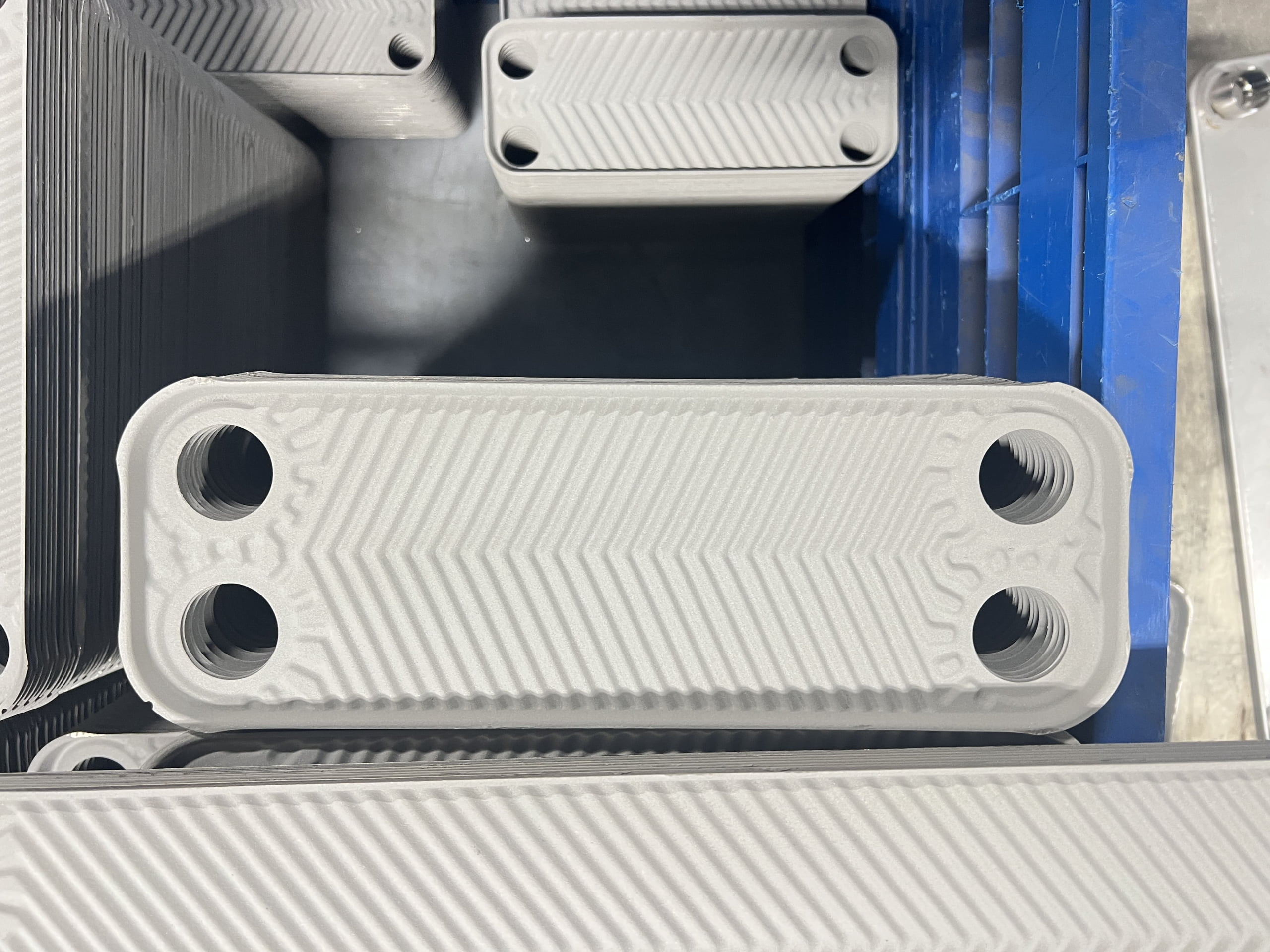
Immersion systems often use high-viscosity fluids like mineral oil. These thick liquids move slowly. They create a high pressure drop inside the heat exchanger. If the internal channels are too tight, your pumps have to push much harder. This wastes a lot of electricity. The overall structure of the Brazed Plate Heat Exchanger (BPHE) must be designed to control this pressure drop. At TIVO, we optimize the plate corrugation. This keeps the fluid moving easily and keeps your system energy-efficient.
Thermal Stress During Startups
Immersion systems usually run at very stable temperatures. But things change when you turn the system on or off. The stress distribution during these start and stop phases is very different from normal HVAC uses. The heat exchanger must have strong sealing and a long fatigue life to handle these sudden changes.
| Fluid Type | Viscosity Level | Pressure Drop Risk | BPHE Design Need |
|---|---|---|---|
| Standard Water | Low | Low | Standard corrugation |
| Mineral Oil | High | Very High | Optimized channels for easy flow |
Will the 2026 PFAS Ban Change Your Cooling Strategy?
The 2026 PFAS ban is coming fast. Old coolants will disappear soon. Are your heat exchangers ready for the new, aggressive eco-friendly fluids?
New eco-friendly coolants like ester oils9 will replace PFAS fluids by 2026. These new liquids have stricter demands on sealing materials and metals. TIVO is running advanced compatibility tests right now to ensure your future systems stay safe and leak-free.
Preparing for New Eco-Fluids
The cooling industry is changing. The ban on PFAS chemicals hits a critical point in 2026. We must adapt now. Many data centers and industrial users are switching to new eco-friendly coolants. A common choice is ester oil. But there is a big problem. These new fluids are very tough on standard sealing materials. If you use an old heat exchanger with a new ester oil, the seals will fail. You will get leaks.
Future-Proof Sealing Technology
I spend a lot of time talking with our engineers about the future. TIVO is not waiting for 2026. We are already doing deep material compatibility10 tests. We want to be sure that our gaskets and brazing materials can handle these new chemicals. This gives our clients peace of mind.
| Cooling Fluid Era | Common Fluid Type | Material Compatibility Challenge |
|---|---|---|
| Pre-2026 | PFAS-based liquids | Standard sealing is usually fine. |
| Post-2026 | Ester oils (Eco-friendly) | High risk to standard seals. Needs advanced testing. |
When Should You Use Copper-Free Fusion Bonded Heat Exchangers?
Ultrapure water is great for cooling. But standard copper brazing reacts with it. Your clean water gets dirty, and your whole system fails.
Ultrapure and deionized water11 dissolve copper ions from standard brazed heat exchangers. This ruins the fluid's purity and damages the system. To prevent this, you must use 100% stainless steel, copper-free fusion bonded heat exchangers12 for absolute chemical safety.
The Danger of Copper Ions
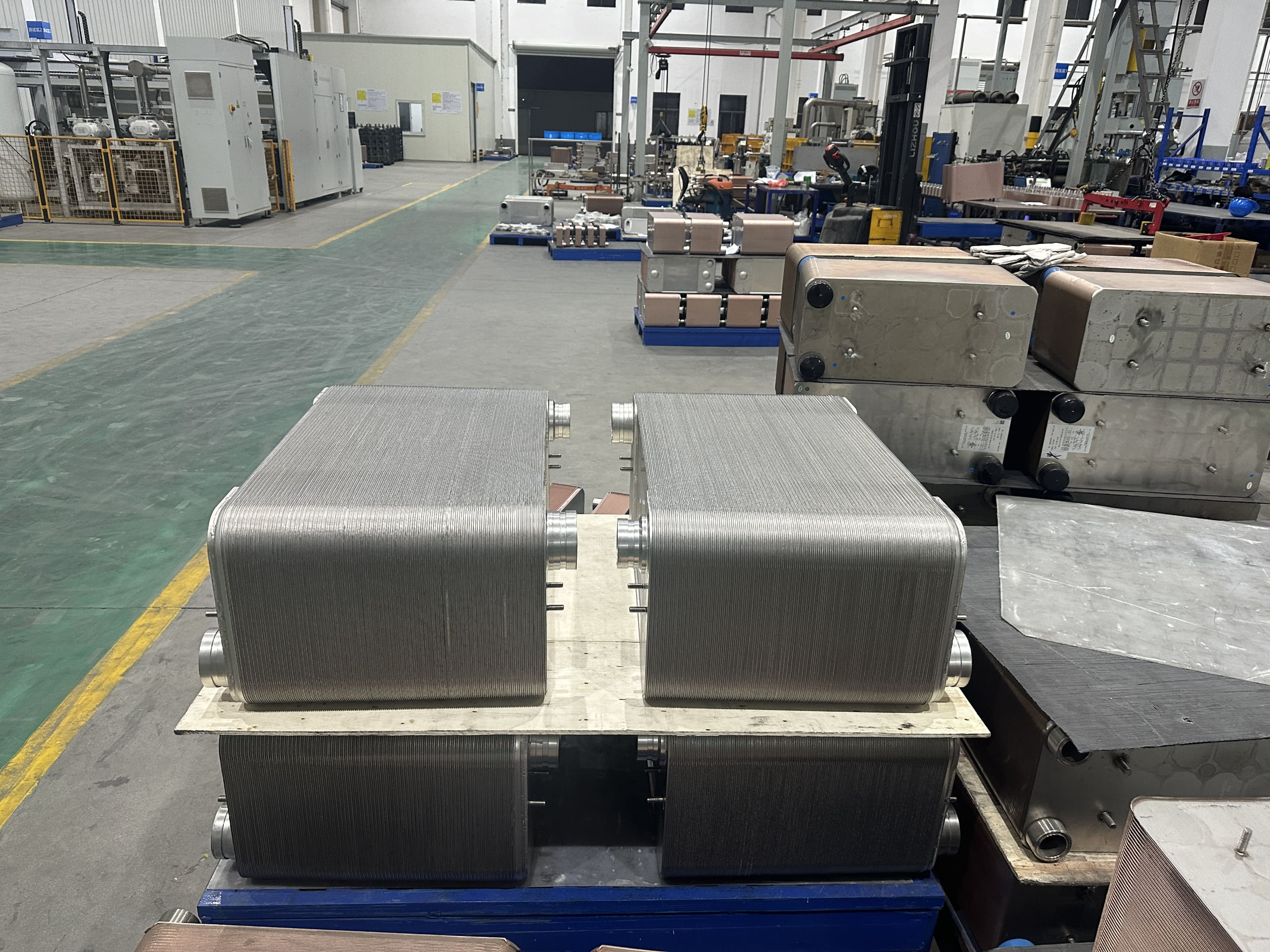
Many high-end immersion cooling systems13 use special liquids. Some use ultrapure water14 or deionized water. These fluids are amazing for pulling heat away. But they are very hungry for ions. If you use a normal Brazed Plate Heat Exchanger, you have a big problem. Normal BPHEs use copper to hold the steel plates together. The ultrapure water will pull copper ions right out of the metal. This reaction makes the water dirty. It ruins the cooling process and destroys the heat exchanger from the inside.
The 100% Stainless Steel Solution
I have seen companies lose entire cooling loops because they used copper with deionized water. The only safe way to handle these pure fluids is to remove the copper completely. This is why TIVO makes Fusion Bonded Heat Exchangers. They are 100% stainless steel. There is no copper to leak into your fluid.
| Heat Exchanger Type | Bonding Material | Safe for Deionized Water? |
|---|---|---|
| Standard BPHE | Copper | No. Copper ions will leach. |
| Fusion Bonded | 100% Stainless Steel | Yes. Totally safe and pure. |
Conclusion
Material compatibility in immersion cooling is vital. Choosing the right metals, like our copper-free stainless steel, prevents fluid breakdown, secures system efficiency, and prepares you for future regulations.
Learn about the best materials for heat exchangers to ensure system longevity. ↩
Find out the factors leading to chemical breakdown and how to prevent it. ↩
Discover the impact of oxidation on cooling fluids and how to prevent it. ↩
Explore the significance of thermal properties in the efficiency of cooling fluids. ↩
Explore TIVO's innovative solutions for material compatibility to protect your cooling systems and investments. ↩
Find out how spectral material testing ensures the safety and reliability of cooling systems. ↩
Understanding pressure drop can help optimize your cooling system's performance. ↩
Learn about the design and function of brazed plate heat exchangers in cooling. ↩
Learn about ester oils as a sustainable alternative to traditional cooling fluids. ↩
Understanding material compatibility can save you from costly system failures. ↩
Learn how deionized water interacts with cooling systems and its implications. ↩
Discover the benefits of using copper-free heat exchangers for pure cooling. ↩
Explore how immersion cooling systems operate and their benefits for efficient cooling. ↩
Understand the importance of ultrapure water in maintaining system efficiency. ↩