leading paragraph: Green hydrogen systems1 are delicate and expensive. Using the wrong cooling equipment risks system failure and costly contamination. How do you ensure safety and efficiency in your electrolyzer design2?
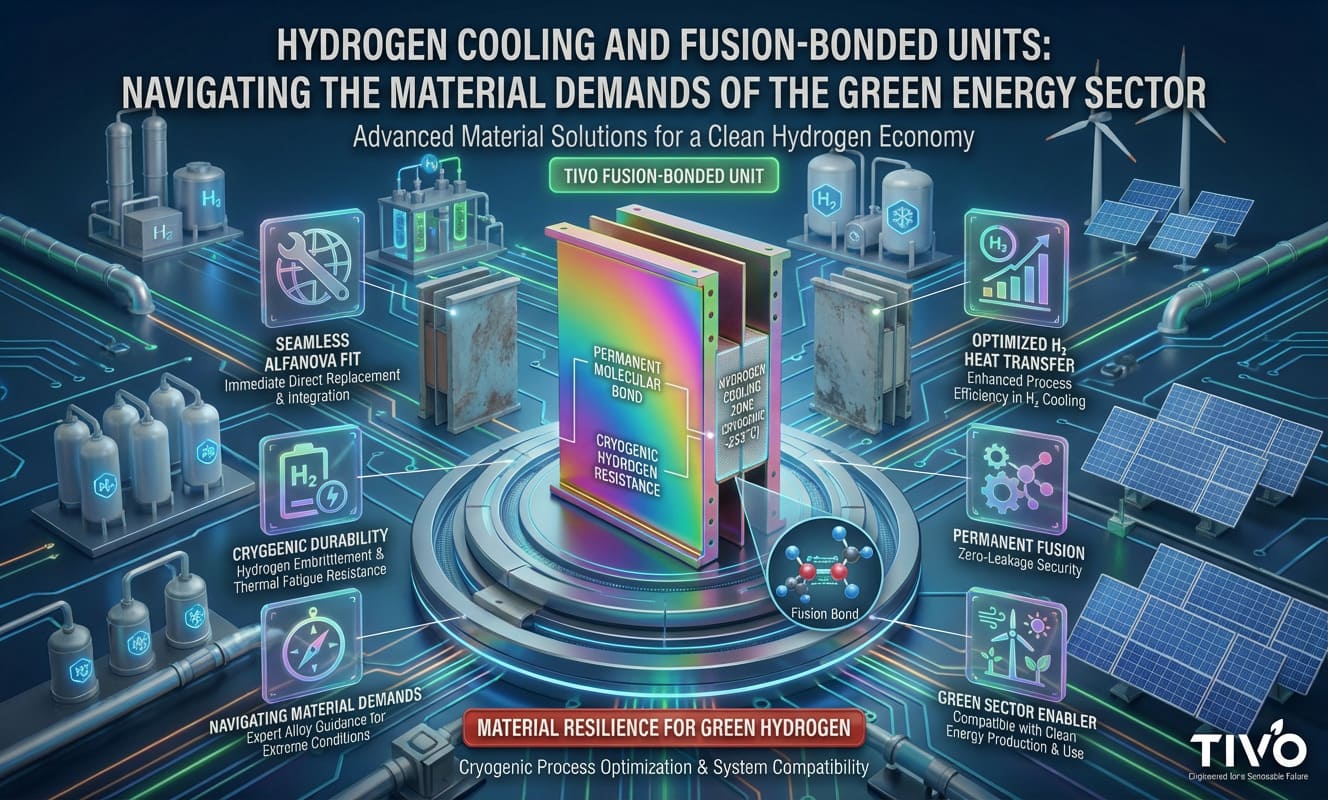
snippet paragraph: Fusion-bonded heat exchangers3 use 100% stainless steel construction without copper filler4. This prevents ion contamination in deionized water5 loops, resists hydrogen embrittlement6, and offers a compact footprint7 perfect for containerized electrolyzer stations.
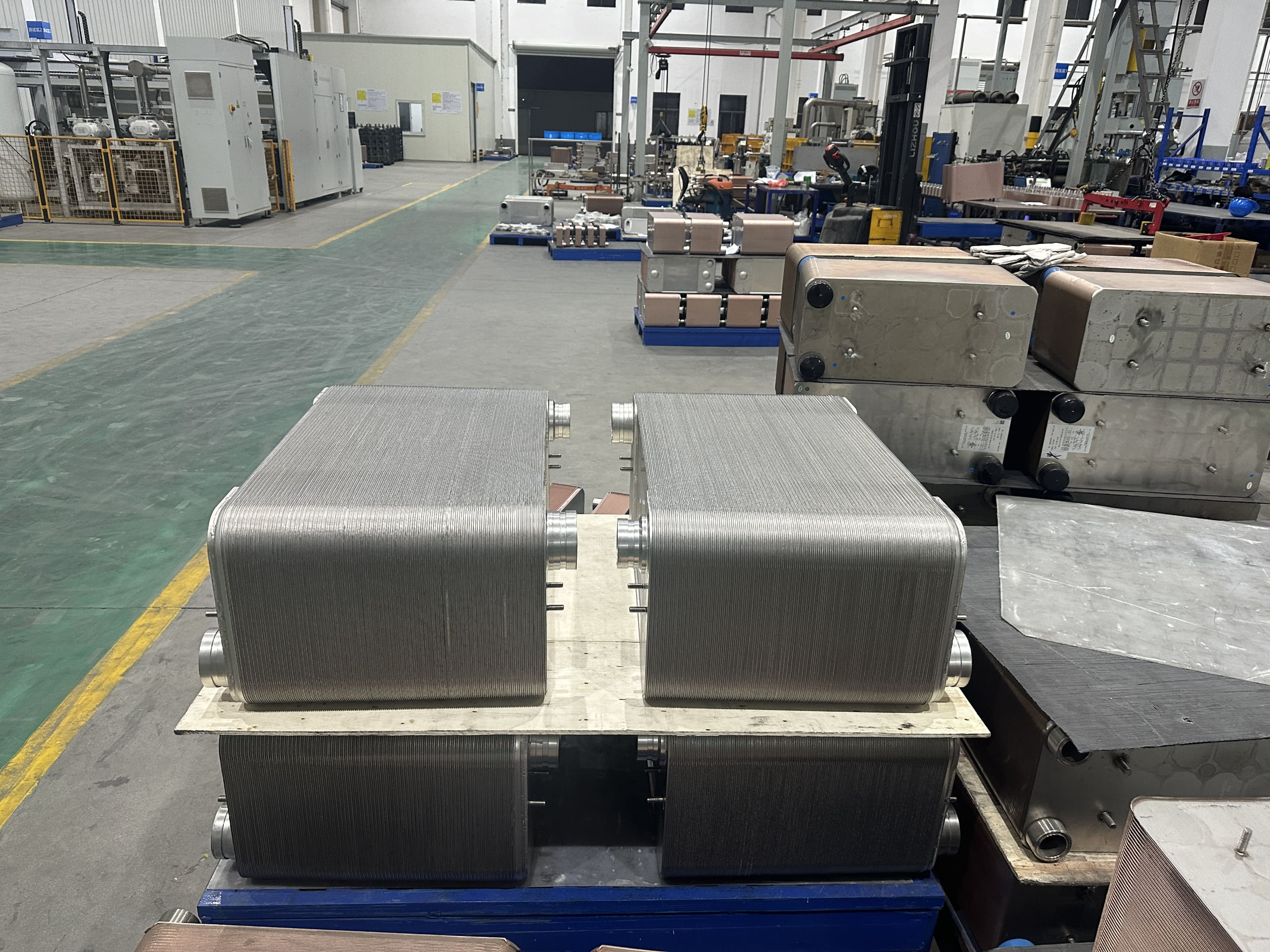
Transition Paragraph: I often see engineers choose standard copper-brazed units out of habit. They use them for HVAC or general water heating. But in the hydrogen sector, this small oversight causes massive headaches later. You cannot treat a hydrogen electrolyzer like a simple boiler. The demands are much higher. Let us look at the specific challenges you will face and why the material choice is the most critical decision you will make.
LOOP START
Why Does Copper Pose a Threat to Electrolyzer Efficiency?
leading paragraph: Electrolysis relies on pure water to function correctly. If your cooling unit releases metal ions, the whole process suffers, and you risk damaging expensive equipment components.
snippet paragraph: Standard brazed heat exchangers use copper as a filler material. These copper ions leach into deionized water, increasing conductivity and damaging the electrolysis stack8. Fusion-bonding eliminates this risk entirely.
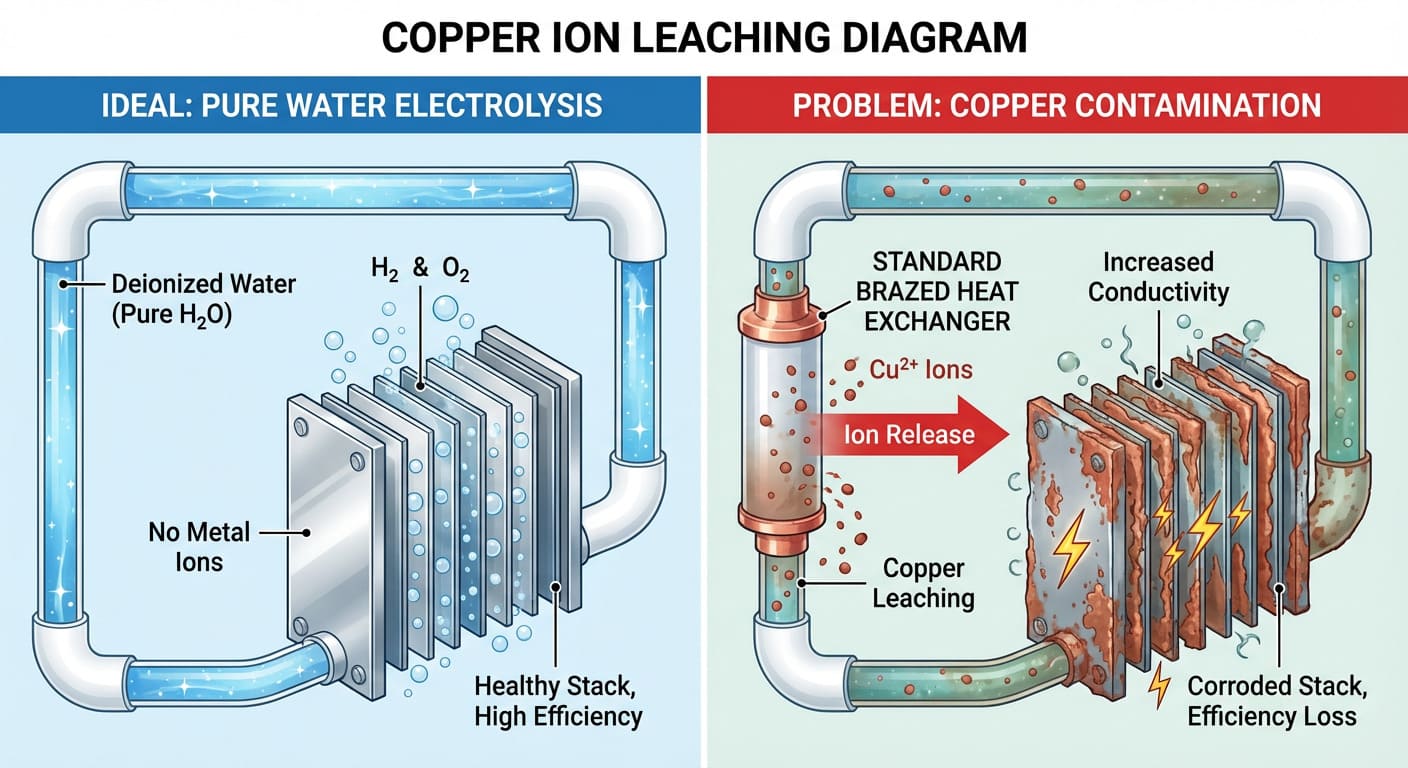
Dive deeper Paragraph: I have worked with many clients in the green energy sector. Their biggest worry is usually the lifespan of the electrolyzer stack. These stacks are the heart of the system. They are also the most expensive part. To keep them running, we use deionized water5. This water must have very low electrical conductivity. If the conductivity goes up, the efficiency goes down. This is where standard heat exchangers fail.
Standard "Brazed Plate Heat Exchangers9" (BPHE) are great for many things. But they use copper to glue the stainless steel plates together. When deionized water flows over copper, a reaction happens. The copper does not stay solid. It slowly releases ions into the water. We call this precipitation.
These copper ions are a disaster for your system. They travel through the cooling loop and enter the electrolyzer. Once there, they react with the internal media. This raises the conductivity of the water. It causes short circuits at a microscopic level inside the stack. I have seen systems degrade in just a few months because of this.
At TIVO10, we solve this with Fusion Bonded Heat Exchangers. We do not use copper. We do not use nickel filler. We use a special process to melt stainless steel to stainless steel. The result is a unit that is 100% stainless steel. There is no foreign material to leak out. Your water stays pure. Your conductivity stays low. This simple change in material can extend the life of your system by years.
| Feature | Standard Brazed (Copper) | Fusion Bonded (100% Steel) |
|---|---|---|
| Bonding Material | Copper | Stainless Steel |
| Ion Leaching | High (Copper Ions) | None |
| Water Compatibility | Standard Water | Deionized / Ultra-pure |
| Risk to Electrolyzer | High | Zero |
LOOP END
LOOP START
How Do We Prevent Hydrogen Embrittlement in Cooling Units?
leading paragraph: Hydrogen is a tricky gas to handle safely. It attacks the metal structure itself, causing sudden cracks and leaks that can shut down your entire operation immediately.
snippet paragraph: Hydrogen atoms are tiny and penetrate metal lattices. This causes "hydrogen embrittlement6," making standard metals brittle. Fusion-bonded stainless steel offers the necessary resistance to this dangerous phenomenon.
Dive deeper Paragraph: Dealing with hydrogen is different from dealing with water or oil. You must understand the physics of the element. Hydrogen is the smallest molecule in the universe. Because it is so small, it does not just sit on the surface of a container. It tries to push its way inside the material. It enters the metal lattice. We call this process permeation.
When hydrogen gets inside the metal, it causes big problems. It makes the metal lose its ductility. The metal becomes brittle. It is like turning a piece of rubber into a piece of glass. If the pressure changes suddenly, the metal cracks. This is "hydrogen embrittlement." In a high-pressure system, a crack is very dangerous.
Standard brazed units have a weakness here. The boundary between the copper filler and the stainless steel plate is a weak point. Hydrogen loves to attack these boundaries. It forces the joint apart. I have seen brazed units leak at the joints because the hydrogen pushed through the bond.
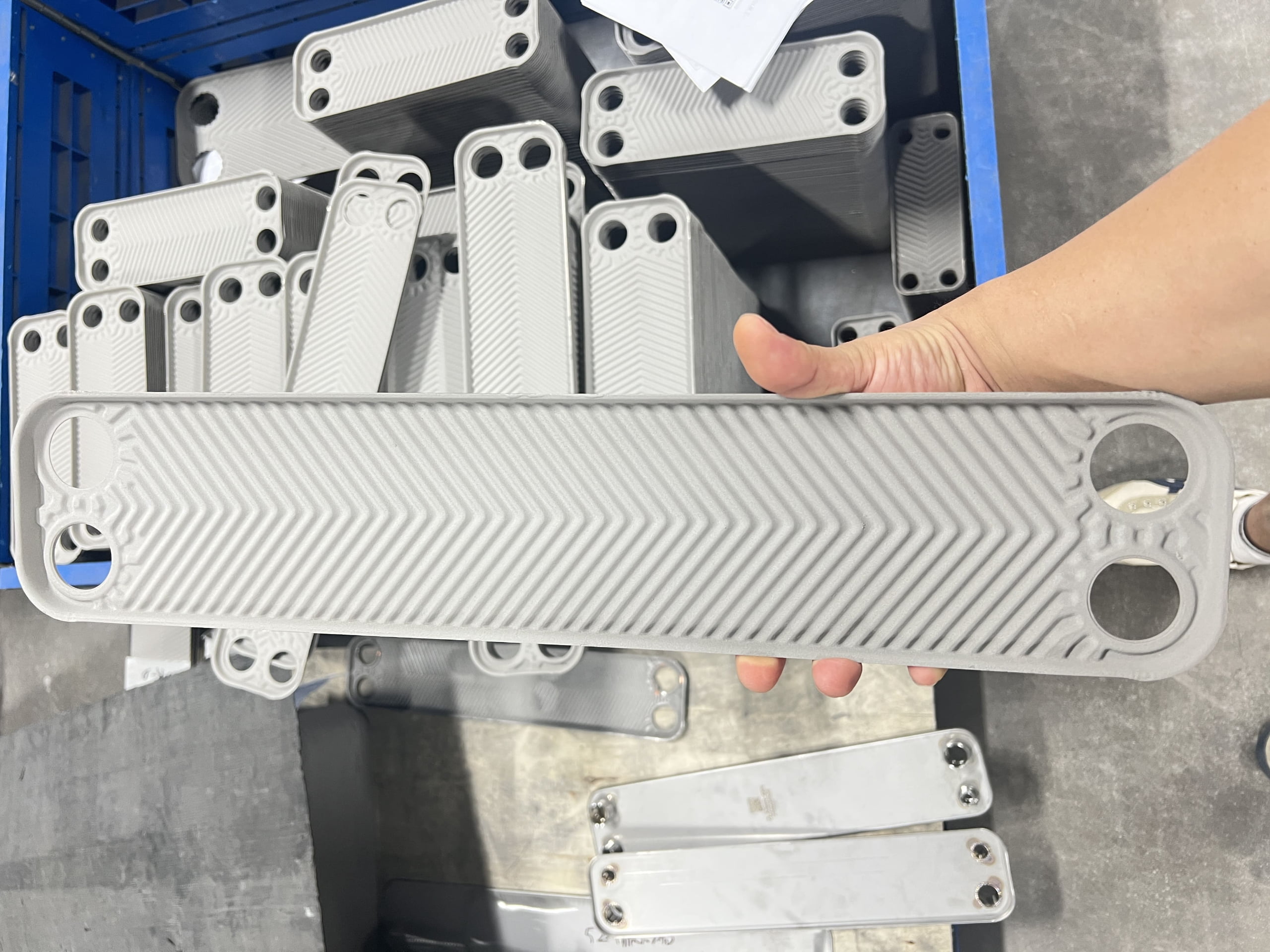
Fusion bonding creates a uniform structure. It is one solid piece of 316L stainless steel. There are no dissimilar metals. There are no weak boundaries. Stainless steel is naturally more resistant to hydrogen damage than copper.
Also, we must consider pressure. Modern hydrogen systems operate at very high pressures. At TIVO, we test our CO2 and Hydrogen units up to 140 bar. We use helium leak detection11. Helium is also a very small molecule. If helium cannot get out, hydrogen cannot get out. You need this level of certainty. You cannot guess when dealing with explosive gases. Using a fusion-bonded unit is the safest choice for high-pressure hydrogen loops.
LOOP END
LOOP START
Can High Performance Fit Into Containerized Solutions?
leading paragraph: Space is money in modern hydrogen projects. Bulky equipment limits your ability to scale up efficiently and makes transportation of your energy solutions difficult and expensive.
snippet paragraph: Fusion-bonded units handle massive heat loads in a fraction of the space required by shell-and-tube exchangers. This makes them ideal for compact, containerized hydrogen stations12.
Dive deeper Paragraph: The trend in green energy is modularity13. Companies want "plug and play" solutions. They build the entire hydrogen production system inside a standard shipping container. This makes it easy to ship to wind farms or solar plants. But a shipping container has very limited space. Every inch matters.
I often see old designs that use Shell & Tube heat exchangers. These units are reliable, but they are huge. They look like big torpedoes. A Shell & Tube unit might take up 20% or 30% of the floor space in a container. This is a waste. It leaves less room for the electrolyzer stack, the pumps, and the control panels.
Gasketed plate heat exchangers are smaller than tubes, but they are still bulky. They have large frames and heavy bolts. They also have rubber gaskets. Rubber can fail in extreme conditions.
Fusion Bonded Heat Exchangers are the champions of space saving. They are incredibly compact. A fusion unit is often 80% smaller than a Shell & Tube unit for the same duty. But it handles the same heat load. This is because the plate design creates high turbulence. The fluid moves around a lot inside the plate. This pulls the heat out very fast.
We call this high thermal efficiency14. Because the unit is so small, you can tuck it into a corner of the container. You can mount it on a skid. You save floor space. You also save weight. This makes the whole container easier to transport.
At TIVO, we design these units specifically for these tight spaces. We calculate the pressure drop carefully. We ensure the unit fits your piping layout. If you want to build a mobile hydrogen station, you cannot afford to waste space. Fusion bonding gives you the power of a large industrial unit in a package that fits in your hands.
LOOP END
Conclusion
Fusion-bonding provides the purity, safety, and compact size required for green hydrogen. It protects your equipment and optimizes your space. It is the smart choice for modern energy systems.
Explore the advantages of green hydrogen systems for sustainable energy solutions. ↩
Find expert tips on designing efficient and safe electrolyzers for hydrogen production. ↩
Learn how fusion-bonded heat exchangers enhance efficiency and safety in hydrogen systems. ↩
Understand the risks associated with copper filler in hydrogen electrolyzers. ↩
Learn about the critical role of deionized water in maintaining electrolysis efficiency. ↩
Discover the dangers of hydrogen embrittlement and how to prevent it in your systems. ↩
Discover how a compact design can enhance the efficiency of hydrogen energy solutions. ↩
Understand the function and importance of the electrolysis stack in hydrogen systems. ↩
Understand the benefits and limitations of Brazed Plate Heat Exchangers in various applications. ↩
Explore TIVO's innovative solutions in green hydrogen, ensuring safety and efficiency in electrolyzer design. ↩
Learn about the effectiveness of helium leak detection in ensuring system safety. ↩
Explore the advantages of containerized solutions for hydrogen production and transport. ↩
Learn how modular designs enhance efficiency and scalability in green energy solutions. ↩
Understand the importance of thermal efficiency in optimizing heat exchanger performance. ↩