leading paragraph: Are you worried about strict new environmental laws killing your old cooling systems? You are right to be concerned, but switching to natural refrigerants like CO2 is the best way to save your business.
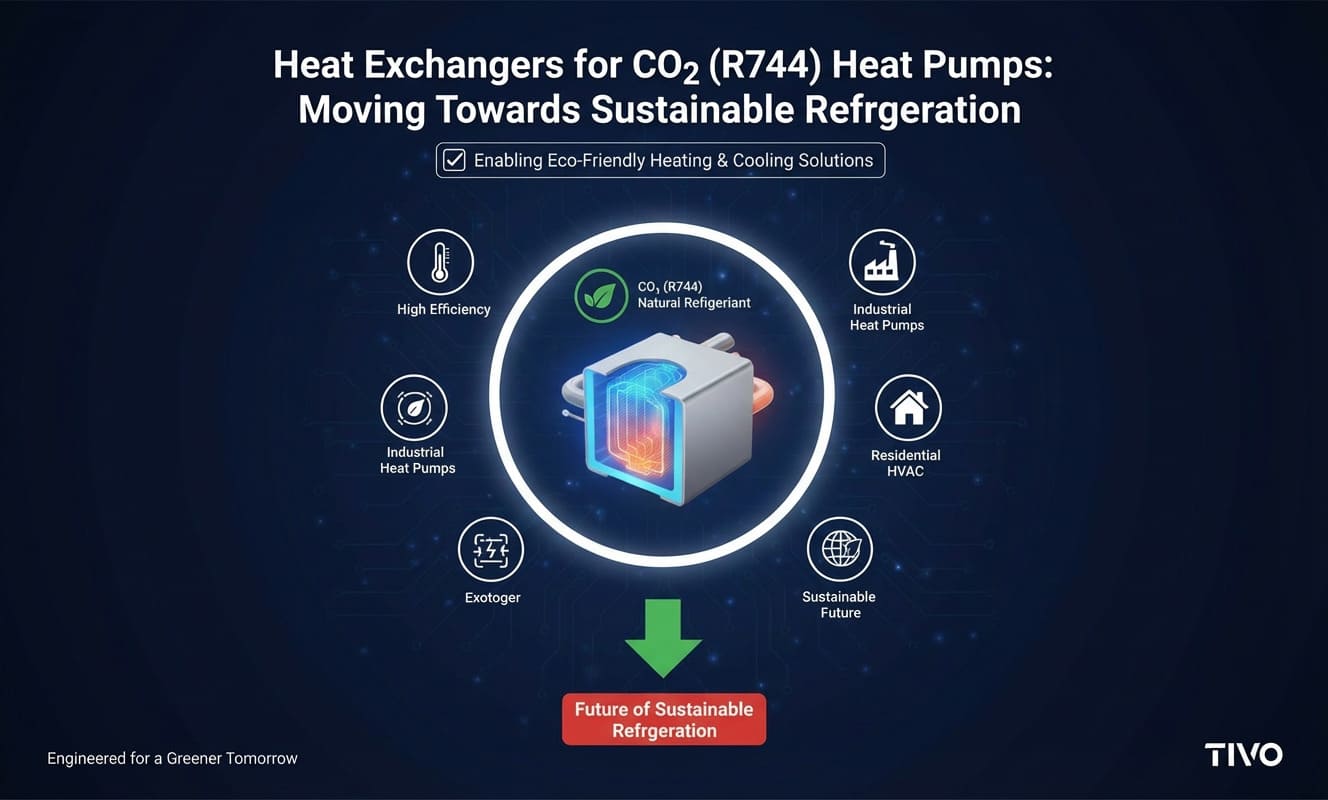
snippet paragraph: High-pressure Brazed Plate Heat Exchangers1 (BPHE) are the core component for R744 (CO2) systems2. They allow heat pumps to operate safely in trans-critical cycles with pressures up to 140 bar. These units provide high efficiency and a compact footprint for sustainable refrigeration.
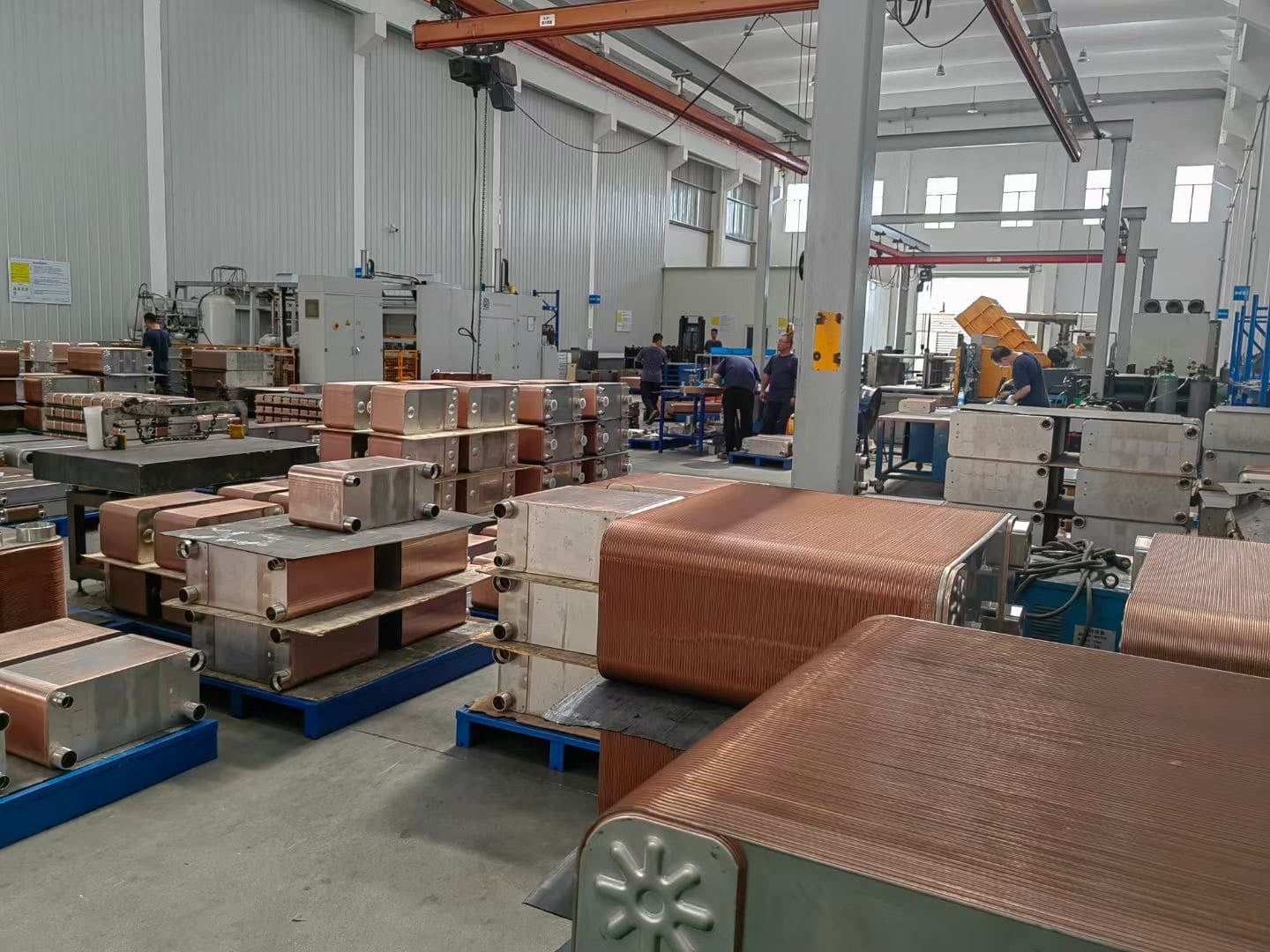
Transition Paragraph: Many people think that changing to a new refrigerant is just about swapping the gas. This is a dangerous mistake. The equipment needs to be much stronger. I want to explain why this change is happening and how we handle the pressure.
LOOP START
Why is R744 becoming the preferred natural refrigerant?
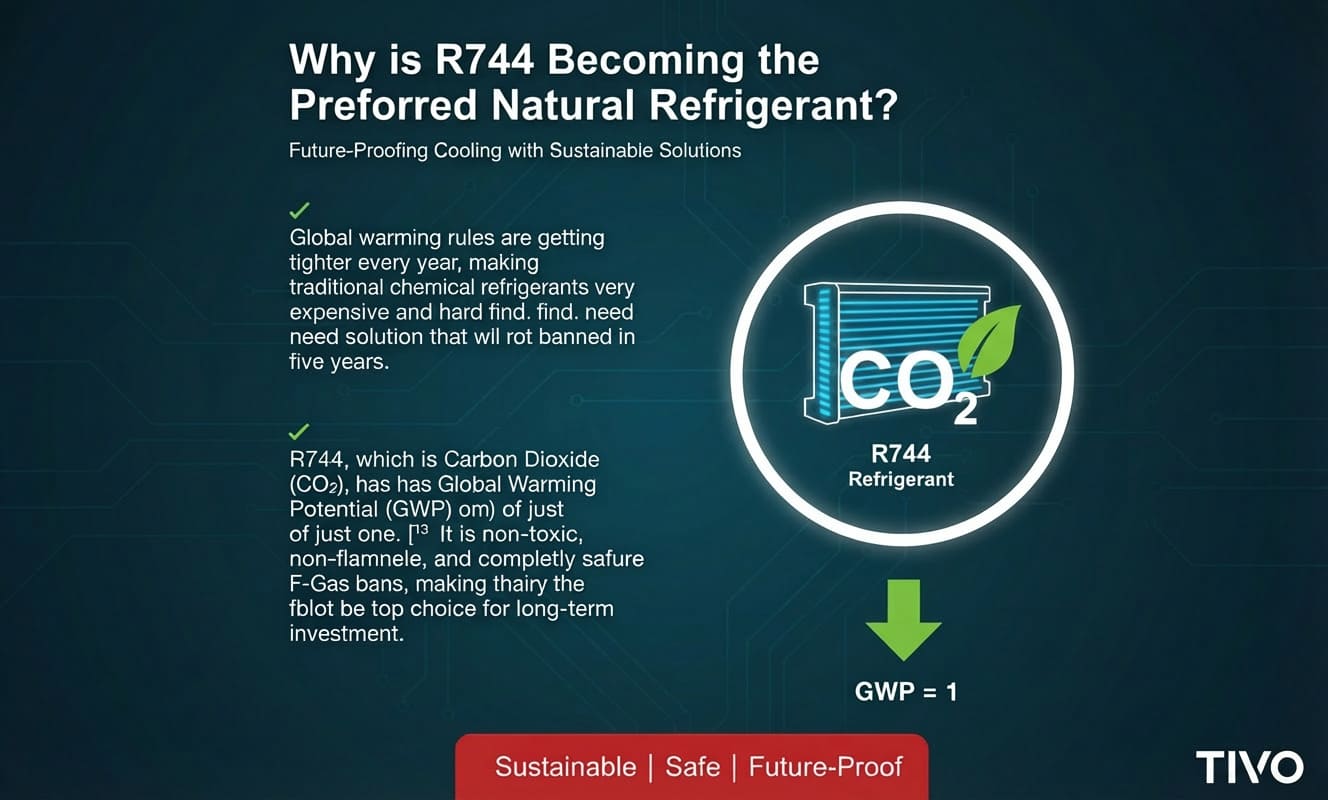
leading paragraph: Global warming rules are getting tighter every year, making traditional chemical refrigerants very expensive and hard to find. You need a solution that will not be banned in five years.
snippet paragraph: R744, which is Carbon Dioxide (CO2), has a Global Warming Potential (GWP)3 of just one. It is non-toxic, non-flammable, and completely safe from future F-Gas bans, making it the top choice for long-term investment.
Dive deeper Paragraph: I have seen many changes in this industry over the last 15 years. The biggest change right now is the F-Gas regulation4. Governments in Europe and the Americas are phasing out HFCs like R410A and R134a5. This puts immense pressure on manufacturers. If you build a system today with old refrigerants, it might be obsolete or illegal to service very soon. This is why R744 is winning. It is a natural substance. It is cheap to buy. It is available everywhere.
However, using CO2 is not simple. It behaves differently than other gases. It has excellent heat transfer properties, which is good for efficiency. It allows for very high temperature output, which is perfect for water heating. But, we must respect its physical properties. It requires a complete rethink of the system design. At JIANGYIN TIVO TECHNOLOGY CO., LTD6., we see this shift as an opportunity, not a problem. We help our clients, like David in the USA or Ahmad in Indonesia, move away from uncertain chemical supplies. We guide them toward the stability of natural refrigerants.
| Feature | Traditional HFC (e.g., R410A) | Natural R744 (CO2) |
|---|---|---|
| GWP Score | > 2000 (High) | 1 (Ultra Low) |
| Flammability | Low to Medium | Non-Flammable |
| Future Availability | Restricted/Phasing Out | Unlimited |
| Cost of Gas | Rising Quickly | Very Low |
LOOP END
LOOP START
What makes the trans-critical CO2 cycle so difficult to manage?
leading paragraph: The biggest problem with CO2 is not the cold, but the extreme pressure required to make it work. Standard equipment will fail immediately if you try to use it here.
snippet paragraph: A trans-critical CO2 cycle often operates at pressures exceeding 100 bar, whereas standard systems run below 40 bar. This massive pressure difference requires heat exchangers with exceptional structural integrity to prevent dangerous explosions or leaks.
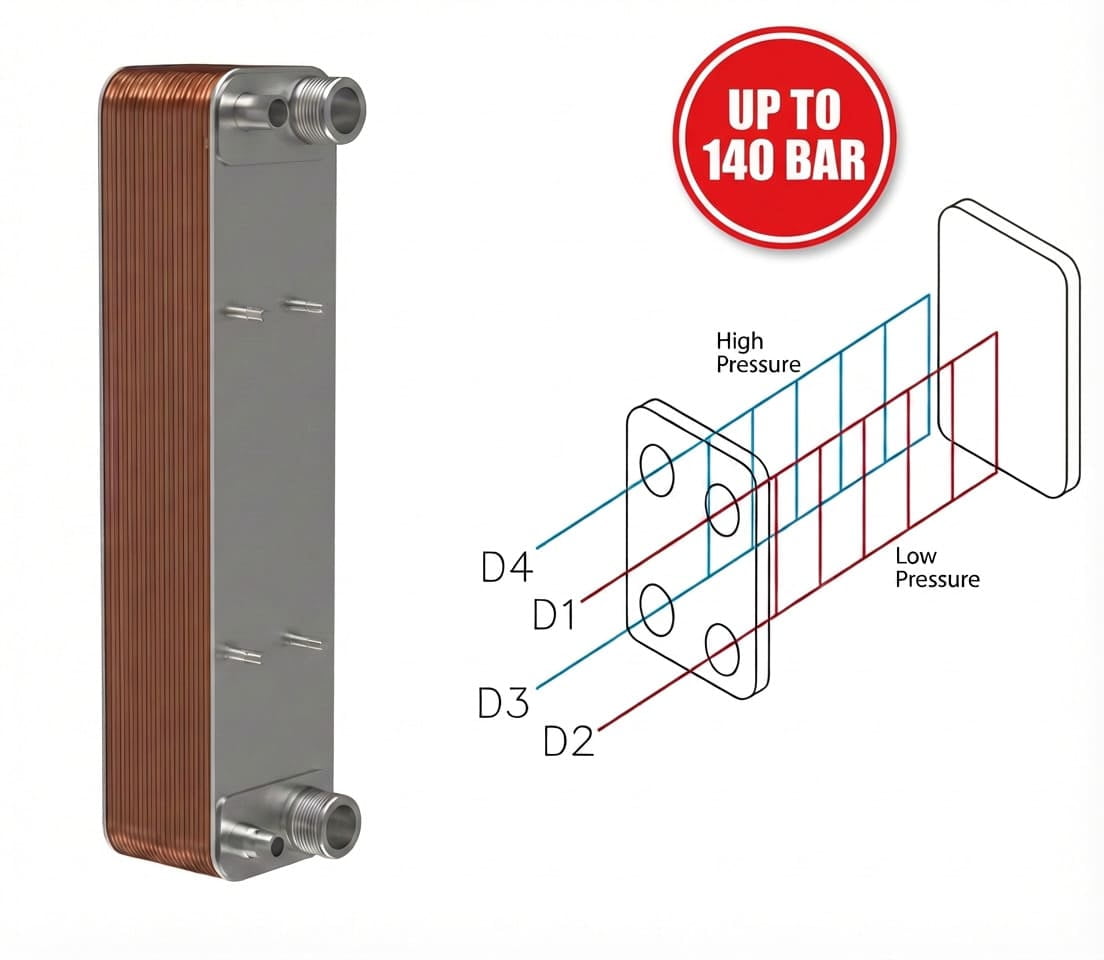
Dive deeper Paragraph: Let us talk about pressure. In a standard air conditioning unit, the pressure is manageable. You can use standard copper pipes and standard brazed heat exchangers. These usually have a design pressure of around 30 to 45 bar. This is safe for R410A. But CO2 is different. To work efficiently in high ambient temperatures, CO2 must operate in a "trans-critical" cycle. This means the gas does not condense into a liquid in the normal way. It stays as a dense gas.
To achieve this, the system pressure must go very high. We are talking about operating pressures of 90, 100, or even 120 bar. If you put a standard heat exchanger in this system, it will deform. The plates will bulge out like a balloon. Eventually, the brazing points will snap. This leads to catastrophic failure. For engineers like Elena Rossi, who focus on safety, this is the main worry. A leak at 100 bar is very dangerous. It is also very expensive to fix. We need to understand that the physics of the gas dictates the strength of the metal. You cannot cheat physics. You must build stronger walls.
LOOP END
LOOP START
How does TIVO ensure safety at 140 bar pressure?
leading paragraph: We know that standard brazing is not enough, so we developed a completely new manufacturing process. We focus on reinforcing the weakest points of the heat exchanger.
snippet paragraph: Our Ultra-High Pressure series7 uses a specialized "reinforcement zone" plate pattern and an enhanced vacuum brazing process. These technologies allow our units to withstand working pressures of 140 bar with a significant safety margin.
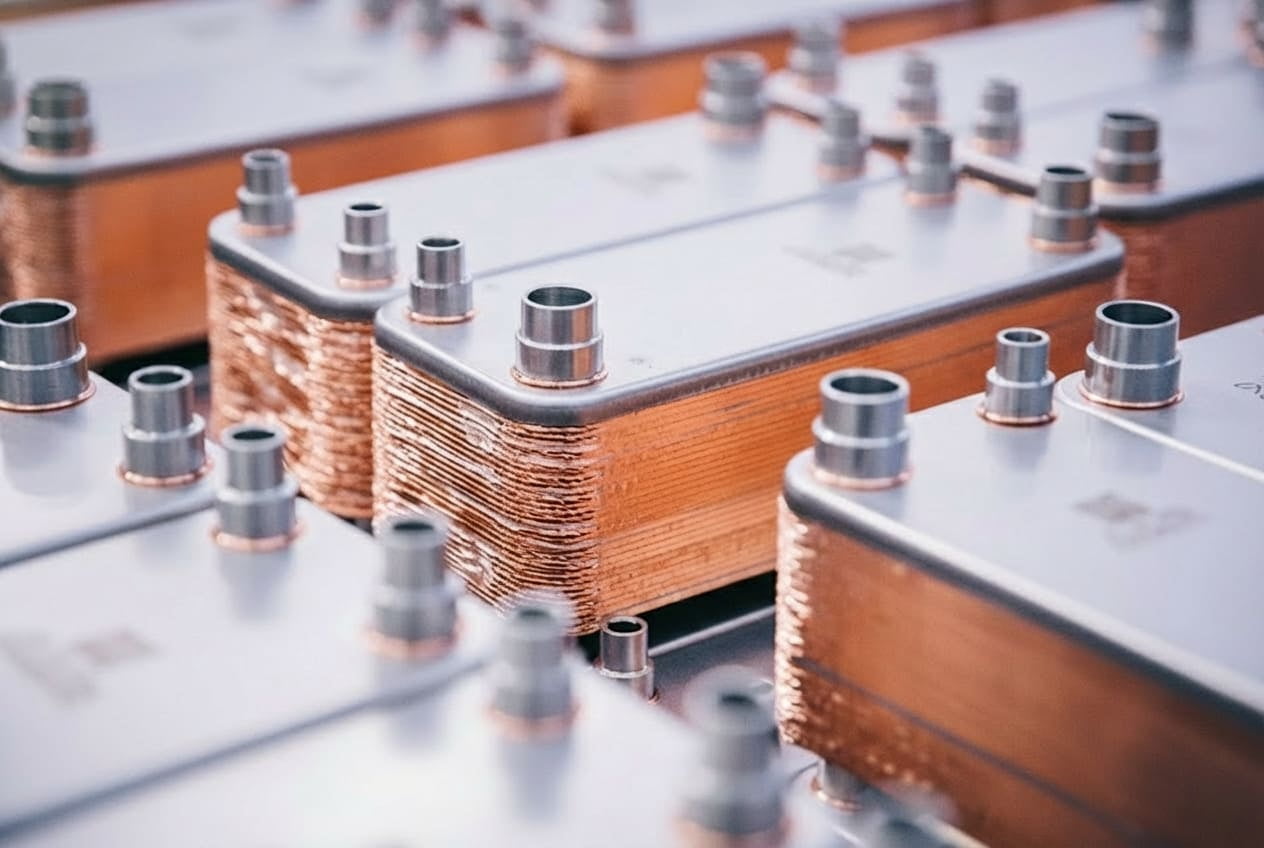
Dive deeper Paragraph: At TIVO, we took a serious look at how heat exchangers fail under high pressure. We found that the area around the ports is usually the weakest spot. So, we changed the design. We created a special plate structure. This structure adds more contact points between the stainless steel plates. More contact points mean more strength. It acts like a mesh of support pillars inside the unit.
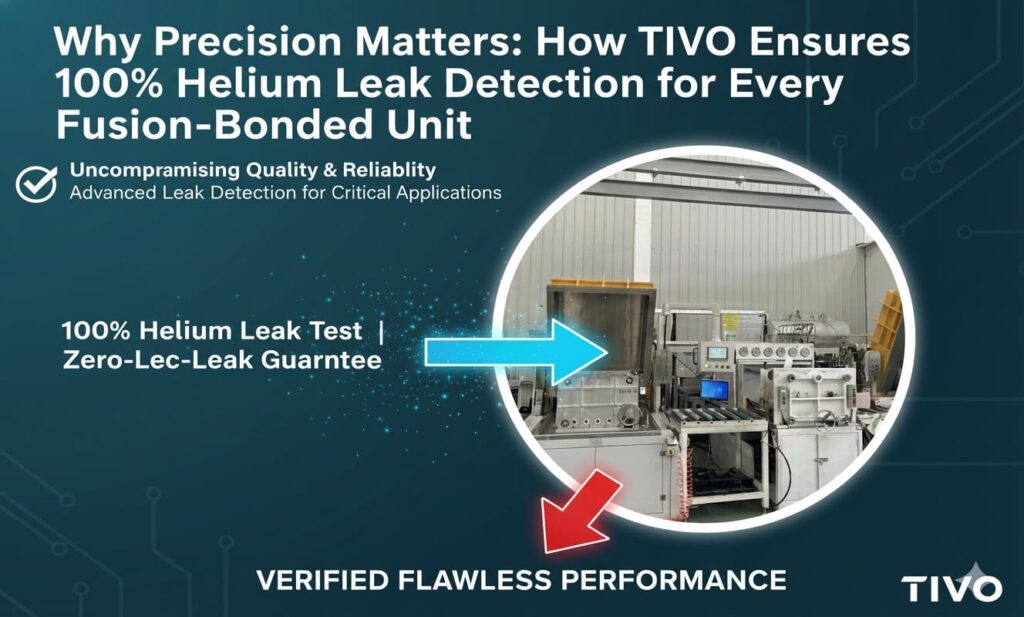
We also upgraded our brazing process. We use a high-temperature vacuum furnace. This ensures that the copper or nickel filler material flows perfectly into every joint. There are no air pockets. There are no weak spots. We do not just guess that it works. We test it. Every single unit for CO2 applications goes through helium leak detection8. Helium atoms are very small. If helium cannot get out, CO2 certainly cannot get out. We also perform burst pressure testing9. We push the units well past 140 bar in our lab to see when they break. This data proves that our safety margin is real. When we ship a unit to Germany or Canada, we know it will hold.
LOOP END
LOOP START
What are the ideal applications for these high-pressure units?
leading paragraph: You might be wondering where exactly you can use these super-strong heat exchangers in real life. They are perfect for industries that need both hot water and cooling.
snippet paragraph: These units are essential for commercial heat pumps10, supermarket refrigeration racks11, and industrial water heaters. They recover heat efficiently, turning waste energy into useful hot water while keeping cooling systems running smoothly.
Dive deeper Paragraph: The best place to use our R744 heat exchangers is in a heat pump water heater. CO2 is amazing at heating water. It can take cold water at 10°C and heat it up to 90°C in one single pass. This is very hard for other refrigerants to do. This makes our units perfect for hotels, hospitals, and food processing plants. These places need a lot of hot water every day.
Another key application is in supermarkets. Modern supermarkets use large refrigeration racks to keep food cold. These systems produce a lot of heat. In the past, this heat was blown outside and wasted. Now, with a TIVO CO2 heat exchanger, the supermarket can capture that heat. They use it to warm the store in winter or heat water for cleaning. This lowers their energy bill significantly. For EPC contractors like Sergey, offering a "Heat Recovery" solution is a great way to win projects. It shows the client that you care about their operating costs (OpEx).
LOOP END
LOOP START
Why is material testing critical for preventing leakage?
leading paragraph: Even the best design will fail if the raw material is poor quality. We check every sheet of metal before it enters our production line to ensure purity.
snippet paragraph: We perform 100% spectral analysis on our 316L stainless steel and other alloys. This confirms the chemical composition is correct, preventing corrosion and fatigue cracking that lead to leaks in high-vibration environments.
Dive deeper Paragraph: In the world of high pressure, the quality of the steel is everything. Sometimes, suppliers might sell "316L" stainless steel that is not quite pure. It might have too much carbon or not enough molybdenum. If we use that steel, it might look fine today. But after one year of high pressure and vibration, it will crack. This is called fatigue failure.
That is why we do not trust the label on the box. We have our own lab. We use a spectral analyzer gun. We shoot a laser at the metal. The machine tells us exactly what is inside. If the nickel content is 9.9% instead of 10%, we reject it. We send it back. We are very strict about this. For customers like Ahmad, who worry about spare parts and maintenance, this is vital. He cannot afford to shut down his palm oil refinery because a cheap piece of metal cracked. By ensuring the material is perfect from the start, we extend the life of the heat exchanger by many years.
LOOP END
Conclusion
Switching to R744 is necessary for the future, and using TIVO's reinforced, tested, ultra-high pressure heat exchangers ensures your transition is safe, efficient, and profitable for the long term.
Learn about the critical role of BPHEs in CO2 systems and their efficiency benefits. ↩
Discover the mechanics and advantages of R744 systems in modern refrigeration. ↩
Gain insights into GWP and its impact on refrigerant choices and environmental regulations. ↩
Explore the implications of F-Gas regulations on the refrigeration industry and future trends. ↩
Learn about the environmental concerns leading to the phase-out of HFCs. ↩
Explore TIVO's innovative solutions for high-pressure CO2 systems, ensuring safety and efficiency in your refrigeration needs. ↩
Learn about the innovations in heat exchangers that allow for ultra-high pressure applications. ↩
Explore the importance of helium leak detection in ensuring the safety of high-pressure systems. ↩
Understand the testing processes that ensure the reliability of high-pressure heat exchangers. ↩
Discover how commercial heat pumps utilize advanced heat exchangers for efficiency. ↩
Learn about the technology behind supermarket refrigeration and its energy-saving potential. ↩