High-speed CNC spindles generate massive heat. If you fail to cool them fast, thermal expansion ruins your parts. Brazed Plate Heat Exchangers (BPHEs)1 fix this problem easily.
BPHEs enhance thermal stability2 in CNC machines by using high-turbulence designs3. This provides highly sensitive temperature control4. BPHEs keep spindle oil temperature5 fluctuations within ±0.5°C. This strict control stops micro-expansion6 in machine parts and greatly improves your overall machining yield.
You might think any cooling method works for machine tools. But bad cooling choices will cost you time and money. Let me show you why BPHEs are the best choice for your CNC systems.
Why Does Thermal Stability Equal Machining Precision?
Temperature swings cause metal to expand. This slight change destroys your machining accuracy. A good BPHE stops these shifts and keeps your work perfect.
Thermal stability equals precision because CNC spindles run very fast and get hot. Heat makes the metal expand by micrometers. BPHEs create high fluid turbulence. This cools the oil quickly and keeps the temperature within ±0.5°C, stopping any unwanted metal growth.
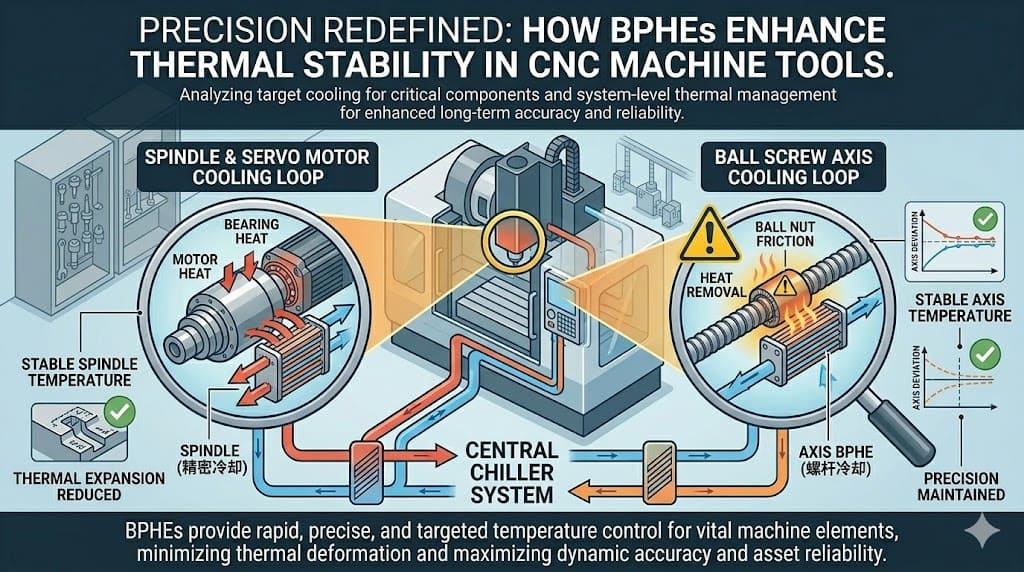
Let us look deeper at spindle heat. When I visit factory floors, I see many rejected parts. Most times, the problem is heat. A CNC spindle spins at thousands of rounds per minute. This friction creates a lot of heat. If the cooling system7 is slow, the spindle oil gets hot. Hot oil makes the spindle expand. Even a micrometer of expansion will ruin a high-precision part.
The Science of Heat Expansion
Metal changes shape when it gets warm. You cannot see it with your eyes. But the CNC machine feels it. A BPHE solves this by using thin, corrugated plates. These plates force the oil and water to mix in a turbulent way.
How BPHEs Control Temperature
Here is a simple look at how BPHEs perform better than older systems:
| Feature | Old Cooling Systems | TIVO BPHE System |
|---|---|---|
| Temperature Control | Slow response | Fast response |
| Heat Transfer | Low efficiency | High turbulence |
| Fluctuation | ±2.0°C to ±5.0°C | ±0.5°C |
| Scrap Rate | High | Very Low |
This high turbulence transfers heat instantly. The BPHE senses the heat and removes it right away. It keeps the oil temperature stable within ±0.5°C. This level of control means your CNC machine cuts exactly where it should, every single time.
Why Is a Compact Design More Than Just Saving Space?
Modern CNC machines have very tight internal spaces. Bulky old coolers do not fit well and cause pipe leaks. A compact BPHE solves your layout problems completely.
A compact BPHE is about one-fifth the size of a shell-and-tube heat exchanger. This small size lets engineers put the cooling unit directly inside the machine chassis. It reduces the number of external pipes. Fewer pipes mean a much lower risk of dangerous fluid leaks.
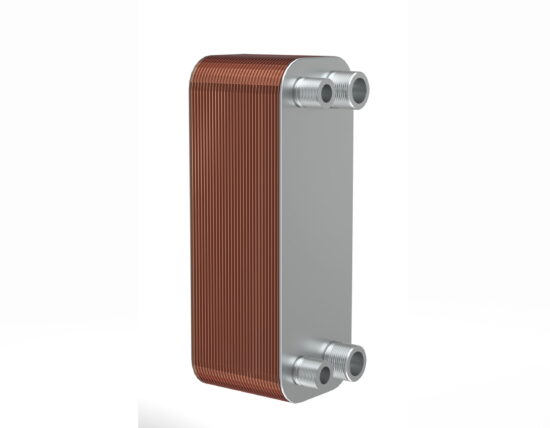
When people talk about compact parts, they only think about saving room. But in my years of supplying BPHEs to OEM manufacturers8, I learned that size means safety. A CNC machine has a very crowded inside. You have wires, motors, and tool changers all packed together.
The Problem with Big Coolers
If you use a big shell-and-tube cooler, you must put it outside the machine. Then, you must run long pipes to connect it. Every pipe joint is a place where oil can leak. Leaks cause machine downtime and safety hazards.
The Benefit of Integration
Because our BPHEs are so small, you can hide them inside the machine base.
| Design Aspect | Big Shell-and-Tube | Compact BPHE |
|---|---|---|
| Volume | Very large | 1/5 the size |
| Installation | Outside the chassis | Inside the chassis |
| Piping Needs | Long external pipes | Short internal pipes |
| Leak Risk | High | Very Low |
Putting the BPHE inside the chassis changes everything. You cut down on extra pipes. You remove weak joints. The oil travels a shorter distance, which also keeps the pressure strong. It makes the whole CNC machine look cleaner and run safer.
How Do We Handle the Complexity of CNC Cutting Fluids and Oils?
Dirty cutting fluids block cooling channels. A blocked cooler stops working and overheats your machine. Proper filtration and BPHE planning keep your fluids flowing smoothly.
CNC cooling fluids often carry tiny metal chips. These chips can easily clog the narrow channels of a BPHE. To prevent this, you must install a fine filter before the BPHE. At TIVO9, we strongly suggest using a 50 to 100-micron filter to protect the heat exchanger.
High efficiency comes with strict rules. The plates inside a BPHE are pressed very close together. This creates the high turbulence we need for fast cooling. But it also creates a trap for dirt. CNC machines cut metal all day. Tiny metal shavings get into the cutting fluid and the cooling oil.
The Risk of Metal Debris
If these tiny metal chips enter the BPHE, they will get stuck. Over time, the dirt builds up. The fluid stops moving. The heat exchanger fails, and the spindle burns up. I have seen this happen when operators forget to use filters.
The Fine Filter Solution
You must treat the fluid before it reaches the cooler.
| Filter Type | Particle Size Allowed | Result in BPHE |
|---|---|---|
| No Filter | Large and small chips | Fast clogging and failure |
| Coarse Filter | > 200 microns | Slow build-up of dirt |
| Fine Filter | 50 - 100 microns | Clean channels, long life |
We always tell our clients to add a fine filter. A 50 to 100-micron filter catches the bad metal dust. It lets the clean oil pass through easily. This simple step protects your BPHE. It keeps your CNC machine running without surprise breakdowns.
How Can We Overcome the Challenge of High Viscosity Oils?
Cold hydraulic oil is thick and hard to pump. This high viscosity causes huge pressure drop10s. Special BPHE flow designs fix this cold start problem easily.
Hydraulic and spindle oils become very thick at low temperatures. This makes cold starts difficult. TIVO optimizes the internal channels of our BPHEs to handle this. Our special design balances the pressure drop during a cold start while keeping high heat transfer efficiency11 at high speeds.
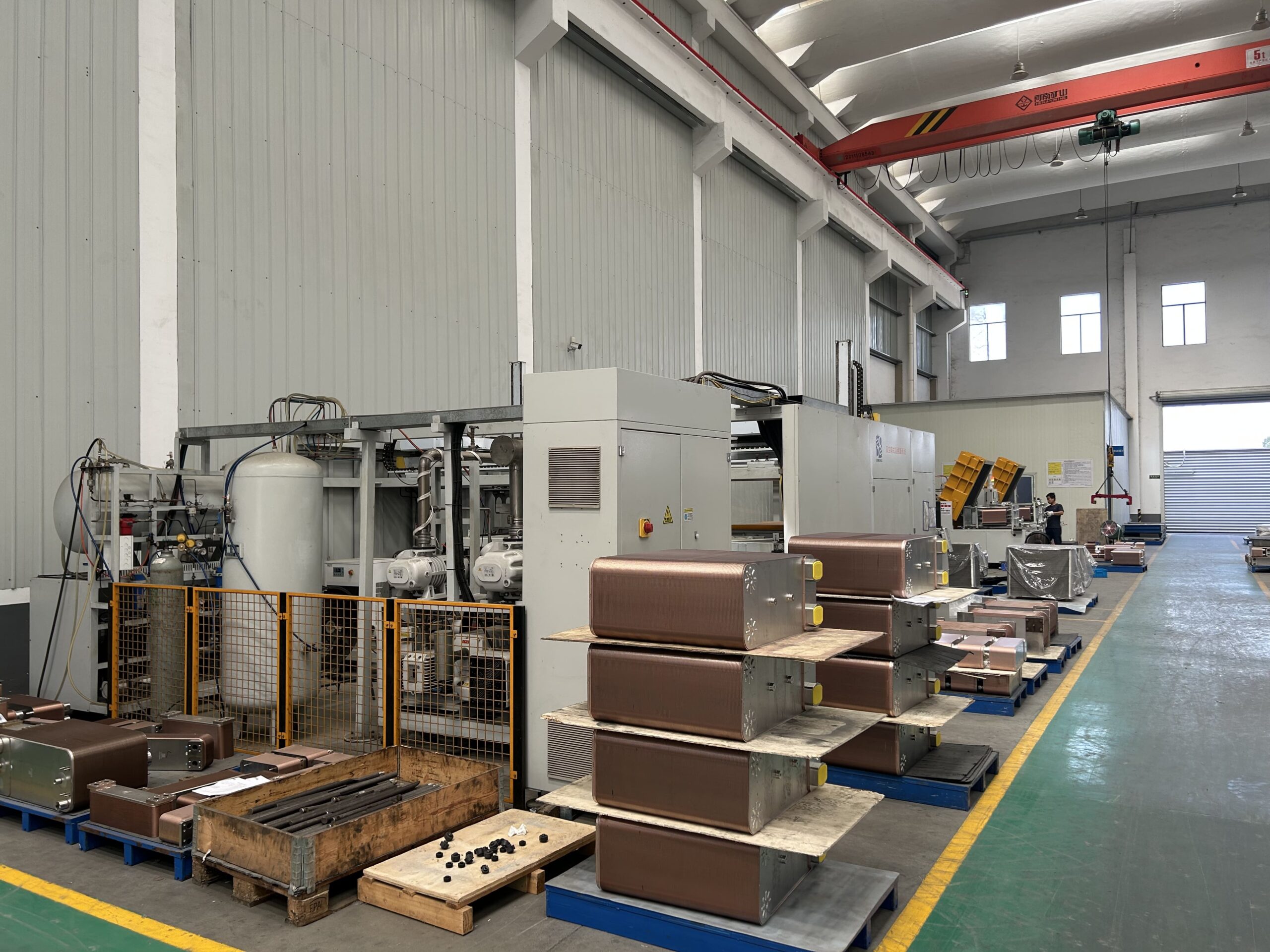
Oil acts very differently depending on its temperature. When you start a CNC machine in a cold factory, the oil is thick like syrup. We call this high viscosity. Pumping thick oil through small spaces requires a lot of energy.
The Cold Start Problem
If the flow channels in the cooler are wrong, the thick oil creates a massive pressure drop. The pump works too hard and might break. But when the machine speeds up, the oil gets hot and thin. Then, you need fast heat transfer.
Balancing Pressure and Cooling
At TIVO, we design the BPHE plates to handle both cold and hot oil states perfectly.
| Oil State | Viscosity | BPHE Channel Challenge | TIVO Design Solution |
|---|---|---|---|
| Cold Start | Very High (Thick) | High pressure drop | Wider entry paths |
| High Speed | Low (Thin) | Need fast cooling | High turbulence patterns |
We use a special plate corrugation. It gives the thick oil enough room to push through during a cold start. The pressure drop stays low. But when the oil warms up and flows fast, the plate shape forces the oil to mix rapidly. This gives you the exact cooling power you need without breaking your pumps.
Conclusion
BPHEs give your CNC machines perfect thermal stability. They save space, handle thick oils, and control heat precisely. Choose the right BPHE to improve your machining yield today.
Explore how BPHEs enhance thermal stability and improve machining yield in CNC machines. ↩
Understanding thermal stability can help you achieve higher precision and reduce part rejection rates. ↩
Discover how high-turbulence designs improve heat transfer efficiency in CNC applications. ↩
Learn about the critical role of temperature control in maintaining machining precision. ↩
Find out the optimal temperature range for spindle oil to ensure machining accuracy. ↩
Learn how micro-expansion can ruin precision parts and how to prevent it. ↩
Explore various cooling systems and why BPHEs are superior for CNC applications. ↩
Learn how OEM manufacturers leverage BPHEs for improved performance and reliability. ↩
Explore TIVO's innovative solutions for CNC machines to enhance thermal stability and machining precision. ↩
Understanding pressure drop can help you optimize your CNC machine's performance. ↩
Explore strategies to enhance heat transfer efficiency for better machining outcomes. ↩