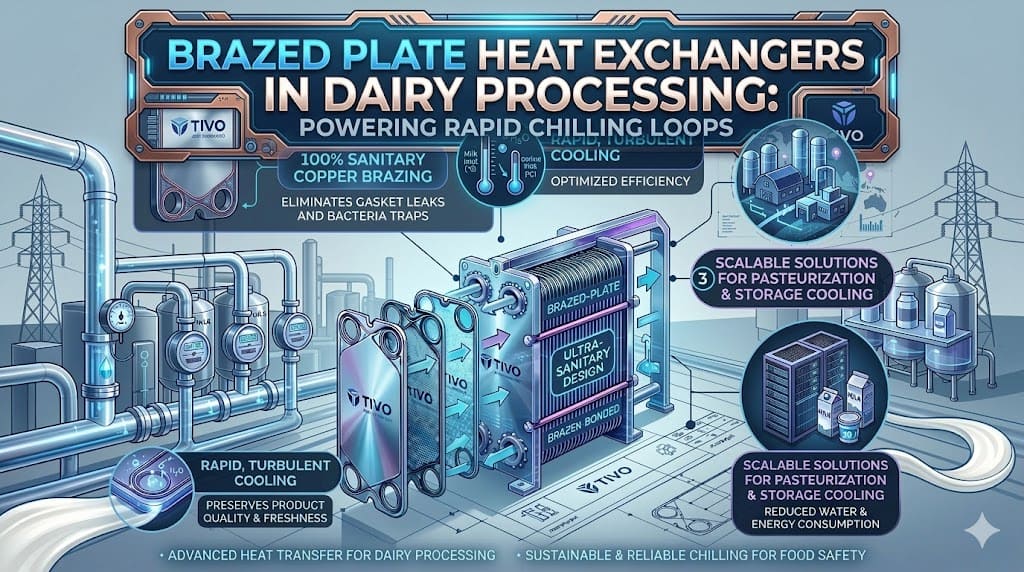
Milk spoils fast. Slow cooling ruins your whole batch. It costs you money. I use brazed plate heat exchangers1 to chill milk quickly. I save the product.
Brazed plate heat exchangers power rapid chilling loops2 in dairy processing. They work inside the chiller unit. They cool water or glycol fast. This cold liquid then cools the milk safely. This indirect method stops contamination. It keeps your milk fresh.
You might think any heat exchanger works for milk. You will soon see the truth. Picking the wrong one is a costly mistake. Read on to find out the right way to build your system.
Why is the Safety Firewall Strategy Vital in Dairy Cooling?
Direct cooling risks leaks. Refrigerant in your milk means a ruined brand. I build a physical barrier with brazed units. I stop this risk completely.
The safety firewall strategy3 uses indirect cooling. A brazed unit cools water or glycol. It does not cool the milk directly. This physical barrier stops refrigerant and copper from touching the food. It keeps your dairy production line4 completely safe.
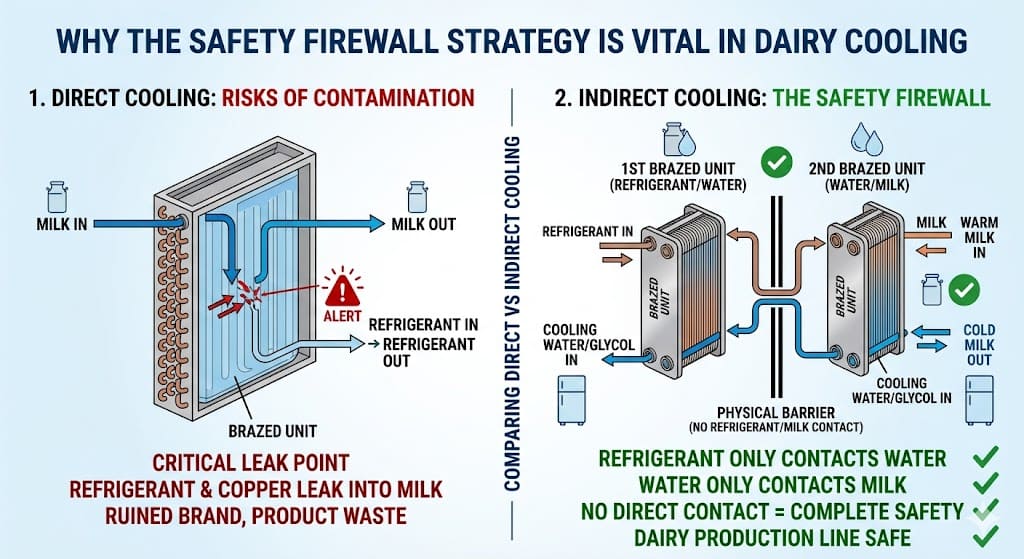
I always tell my clients about the indirect cooling5 method. It is the gold standard in the dairy industry. We never let the milk touch the brazed plate heat exchanger directly. We use the brazed unit as the core part of the chiller. The unit transfers cold from the refrigerant to ice water. It also cools glycol.
The Benefits of Physical Isolation
This method creates a strong physical firewall. A brazed unit handles very high pressure. It has very high heat transfer efficiency6. It contains copper inside the brazing joints. Copper and refrigerants must never enter your food production line. A leak ruins your product. We use a secondary water loop. We completely remove this risk. You get the cooling power of the unit. You avoid the food safety worry.
I worked with a plant manager named Ahmad last year. He ran a large food processing plant in Indonesia. He worried about refrigerant leaks in his old system. We set up an indirect loop for him. His food safety7 scores went up immediately. He sleeps better now.
| Cooling Method | Fluid Touching Unit | Food Safety Risk | System Efficiency |
|---|---|---|---|
| Direct Cooling | Raw Milk | High | High |
| Indirect Cooling | Water or Glycol | Zero | Very High |
You see clearly. Indirect cooling is the only safe choice. It uses the best features of TIVO products safely. We build these systems to protect your brand.
How Do We Handle the Golden Two Hours Peak Load?
Raw milk stays warm. Bacteria grow fast. I use high-efficiency brazed units to drop milk temperature in record time. I stop bacteria in their tracks.
Raw milk must cool from 38°C to 4°C within two hours. This creates a huge thermal shock8. TIVO units have a compact plate design. They provide a massive heat transfer area. This keeps the ice water temperature stable during peak loads.
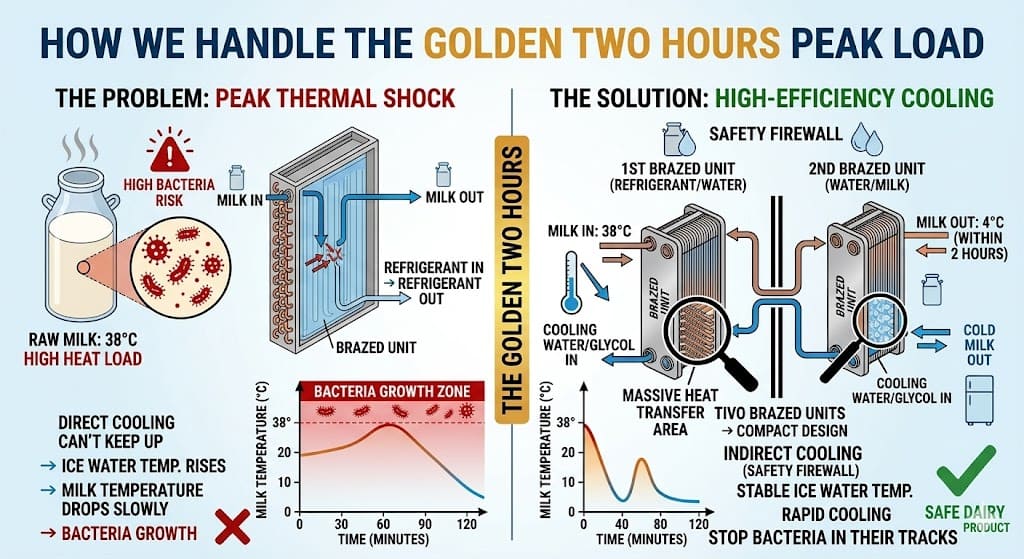
Raw milk comes out of the cow at about 38°C. You must cool it down to 4°C very fast. You only have two hours to do this. We call this time the golden two hours. You miss this window. Bacteria grow too fast. The raw milk goes bad. You lose the whole batch.
Managing Massive Heat Loads
This fast cooling puts a huge heat load on your chiller equipment9. The system faces a sudden thermal shock. I see many standard chillers fail right here. The return water gets too warm. The chiller cannot keep up with the heat.
TIVO brazed units solve this problem completely. We design our stainless steel plates to fit in a very small space. They have a huge surface area for heat transfer. The hot milk pushes heat into the ice water. Our unit pulls that heat out of the water instantly. The ice water stays perfectly cold at all times.
This temperature stability is critical for your plant. You do not want the water temperature to go up and down. A stable temperature stops bacteria from growing. It keeps your raw milk safe for processing.
| Time Frame | Milk Temp | Water Temp | Unit Action |
|---|---|---|---|
| 0 Minutes | 38°C | 1°C | Absorbs high heat |
| 60 Minutes | 20°C | 1°C | Maintains stable cooling |
| 120 Minutes | 4°C | 1°C | Finishes peak load safely |
We make sure your system handles the peak load every single day. Fast delivery of these units keeps your lines running. You never miss the golden two hours.
Can We Minimize Thermal Shock in Pasteurization Loops?
Pasteurization heats milk fast. The sudden heat breaks weak cooling parts. I use vacuum-brazed plates to handle high stress. I protect your whole system.
Milk from pasteurization is very hot. It causes big pressure changes in the ice water loop. TIVO uses strong vacuum brazing10. This makes the unit very tough. It handles hot and cold cycles easily. It protects your compressor from liquid shock.
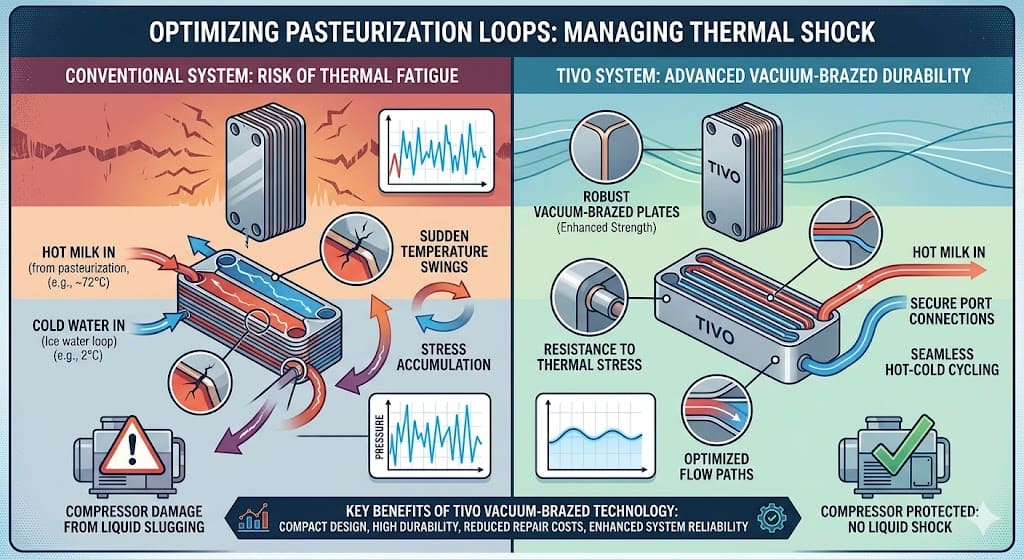
Pasteurization kills germs. It heats milk to a very high temperature. You must cool the milk again after heating. This hot milk hits the cold ice water loop hard. The sudden change in temperature causes a big thermal shock.
The Power of Vacuum Brazing
This thermal shock makes the pressure in the water loop jump up and down. The chiller compressor turns on and off a lot. Weak heat exchangers crack under this heavy stress. The heat exchanger cracks. Water gets into the refrigerant lines. This destroys the expensive compressor.
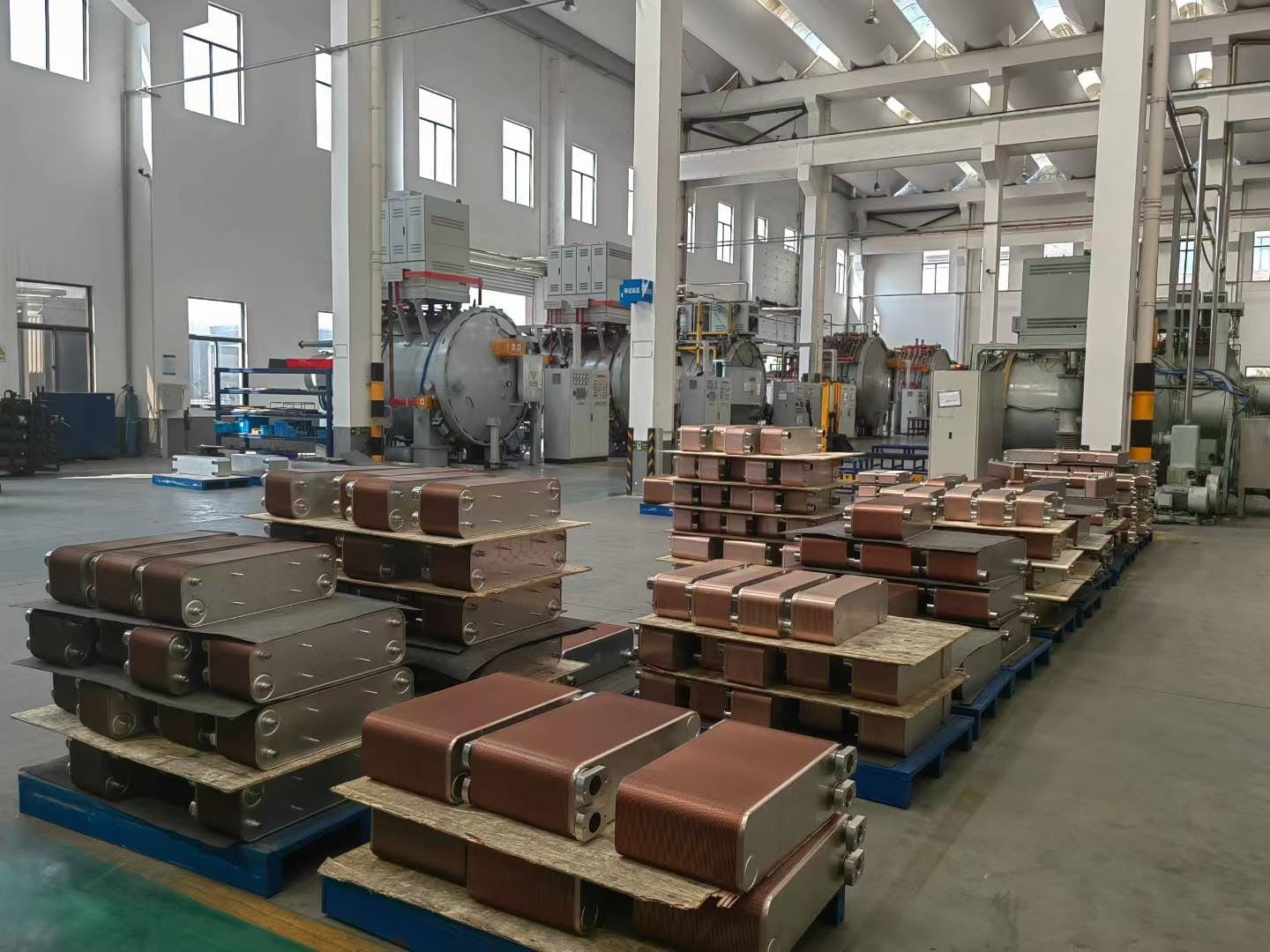
We prevent this damage at TIVO. We use a high-strength vacuum brazing process in our factory. We do not use normal welding methods. Vacuum brazing joins the stainless steel plates with copper in a hot vacuum oven. The joints become incredibly strong.
I saw weak units fail in large food plants before. We replaced them with our vacuum-brazed units. The breaking problems stopped at once. Our units take the stress of frequent starts and stops easily. They protect the whole system.
| Stress Type | Normal Welding | TIVO Vacuum Brazing |
|---|---|---|
| Thermal Shock | Cracks easily | Absorbs stress |
| Pressure Change | Leaks over time | Stays sealed |
| Compressor Risk | High risk of liquid hit | Safe and protected |
You must protect your expensive compressors from liquid hits. A strong brazed unit is the best way to do it. We test every unit. We make sure it handles the pressure.
Does a Secondary Loop Reduce Your Maintenance Costs?
Cleaning machines takes time. Dirty plates ruin production. I use secondary loop11s with clean water. You never have to open or clean the brazed unit.
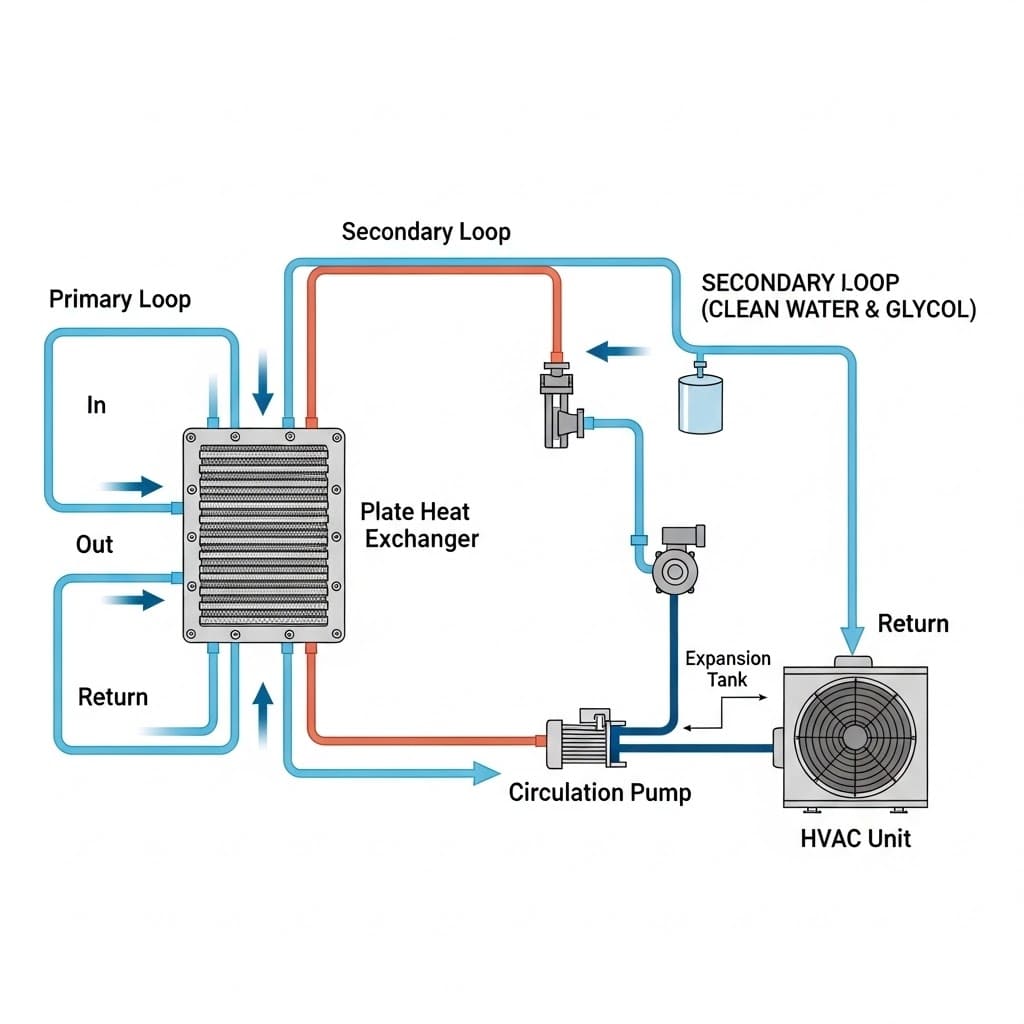
A brazed unit is sealed. It cannot open. Milk runs inside. Milk stone forms. You must throw the unit away. A secondary loop uses clean water or glycol. The unit stays clean inside. It becomes maintenance-free. It saves you money.
Maintenance costs eat into your daily profits. Every hour your plant stops for cleaning is an hour of lost money. Brazed plate heat exchangers are fully sealed units. You cannot take them apart with tools.
Beating the Milk Stone Problem
You run milk directly through a brazed unit. You get milk stone12. Milk stone is a hard scale from the milk fat and calcium. It blocks the narrow channels inside the plates. You cannot open a brazed unit. You cannot clean the milk stone out with brushes. You have to throw the whole unit in the trash. This is a huge waste of money.
I design cooling systems differently. We put the brazed unit in a secondary loop. We run a clean medium like water or glycol through it. The milk stays in a separate gasketed plate heat exchanger. The gasketed unit opens easily for cleaning.
The fluid in the brazed unit is always clean. The unit never clogs with dirt or scale. It needs almost no maintenance for its whole life.
| Fluid in Unit | Clogging Risk | Maintenance Need | Unit Lifespan |
|---|---|---|---|
| Direct Raw Milk | Very High | Replace Unit | Very Short |
| Clean Water | Zero | None | Lifetime |
This system design saves dairy plants a lot of time. You stop paying for replacement units every few months. You keep your production running smoothly. Your maintenance team focuses on other important jobs.
Conclusion
Indirect cooling with brazed units keeps dairy safe. They handle peak loads. They survive thermal shock. They cut maintenance costs. Smart system design makes your milk processing highly reliable.
Explore how brazed plate heat exchangers enhance efficiency and safety in dairy processing. ↩
Learn about the technology behind rapid chilling loops and their importance in dairy safety. ↩
Understand how the safety firewall strategy protects dairy products from contamination. ↩
Explore the essential elements that make up a successful dairy production line. ↩
Discover the advantages of indirect cooling methods for maintaining milk quality. ↩
Understand the principles of heat transfer efficiency and its importance in dairy processing. ↩
Explore essential food safety practices to ensure high-quality dairy products. ↩
Find out how thermal shock impacts dairy systems and how to mitigate its effects. ↩
Discover the various chiller equipment options available for dairy processing. ↩
Explore the benefits of vacuum brazing for creating durable and efficient heat exchangers. ↩
Discover how secondary loops enhance the efficiency and cleanliness of dairy cooling. ↩
Learn about milk stone formation and effective strategies to prevent it. ↩