Hydrogen fueling creates brutal temperature swings that crack standard heat exchangers. Are your current units failing under the stress of rapid cooling cycles and high pressure?
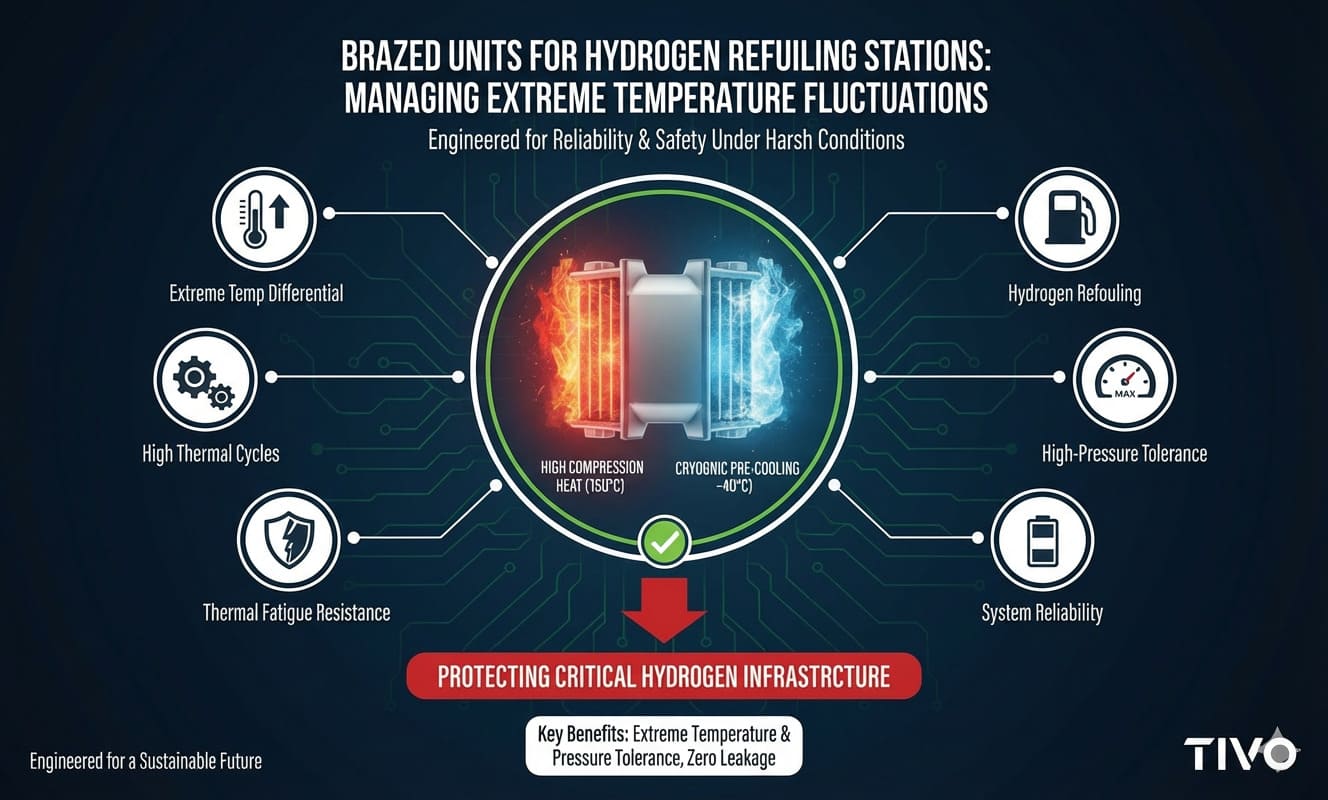
Brazed Plate Heat Exchangers (BPHE)1 with optimized "stress buffer" plate patterns handle the rapid drop to -40°C. They ensure SAE J2601 compliance2, enabling fast fueling without leaks in compact station cabinets3.
I have seen many engineers struggle with leaks in this field. The equipment looks fine on paper, but it fails in the field. This happens because hydrogen applications are unique. They are not steady. They are violent and fast. Let's look at why this happens and how we fix it.
How does intermittent fueling4 damage standard heat exchangers?
You fill a car, the unit freezes, then it warms up. This cycle repeats all day, causing metal fatigue5.
The rapid drop from ambient temperature to -40°C causes metal to shrink instantly. Standard brazing points cannot handle this movement, leading to fatigue and dangerous hydrogen leaks.
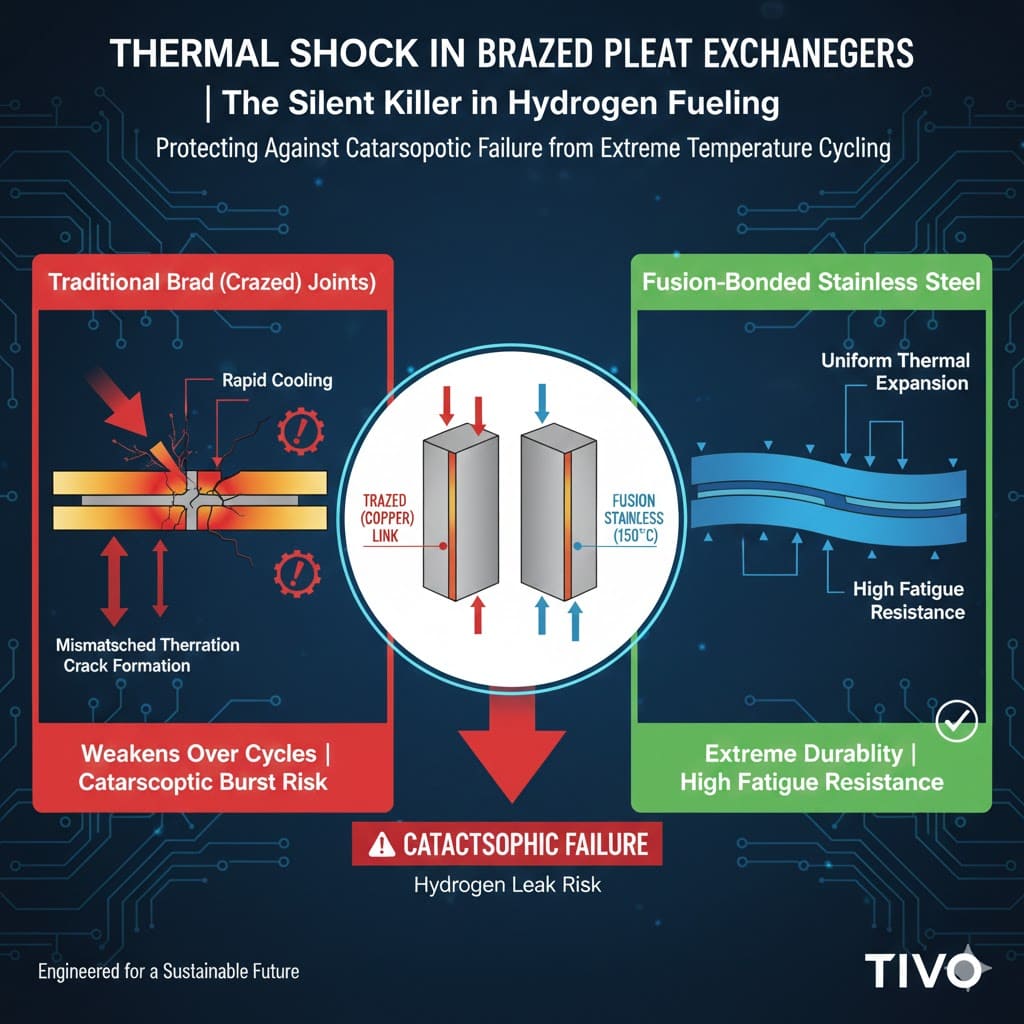
Hydrogen refueling6 stations operate differently than standard industrial chillers. A chiller usually runs at a steady temperature for hours. A hydrogen station works intermittently. A car pulls up, and the system must cool the hydrogen gas immediately. The temperature inside the heat exchanger drops from the outside air temperature down to -40°C in seconds. Once the car leaves, the unit warms up again.
This rapid cooling causes "thermal shock7." Metal shrinks when it gets cold. In a standard Brazed Plate Heat Exchanger (BPHE), the contact points between the plates are rigid. When the plates shrink quickly, these rigid points experience massive stress. If the design is too stiff, the brazing seams8 will crack. A crack in a hydrogen system is a major safety risk.
At TIVO, we solved this by changing the plate design. We developed a "stress buffer" capability within the plate corrugation. We do not just stack standard plates. We use a specific pattern that allows for microscopic movement. This absorbs the physical contraction caused by the cold hydrogen. The plates can "breathe" slightly without breaking the copper or nickel brazing points. This significantly extends the life of the unit.
| Feature | Standard BPHE | TIVO Stress Buffer BPHE |
|---|---|---|
| Operation Mode | Steady State | Intermittent / Cyclic |
| Thermal Shock | Prone to cracking | Absorbs contraction |
| Plate Pattern | Rigid contact points | Flexible contact points |
| Lifespan in H2 | Short (High failure risk) | Long (High durability) |
Why is thermal response speed9 critical for SAE J2601 compliance2?
Filling a hydrogen tank is not just about pumping gas; it is strictly about temperature control.
The SAE J2601 protocol dictates fueling speeds based on temperature (T40). If your exchanger reacts slowly, the station automatically slows down, causing long queues and frustrated customers.
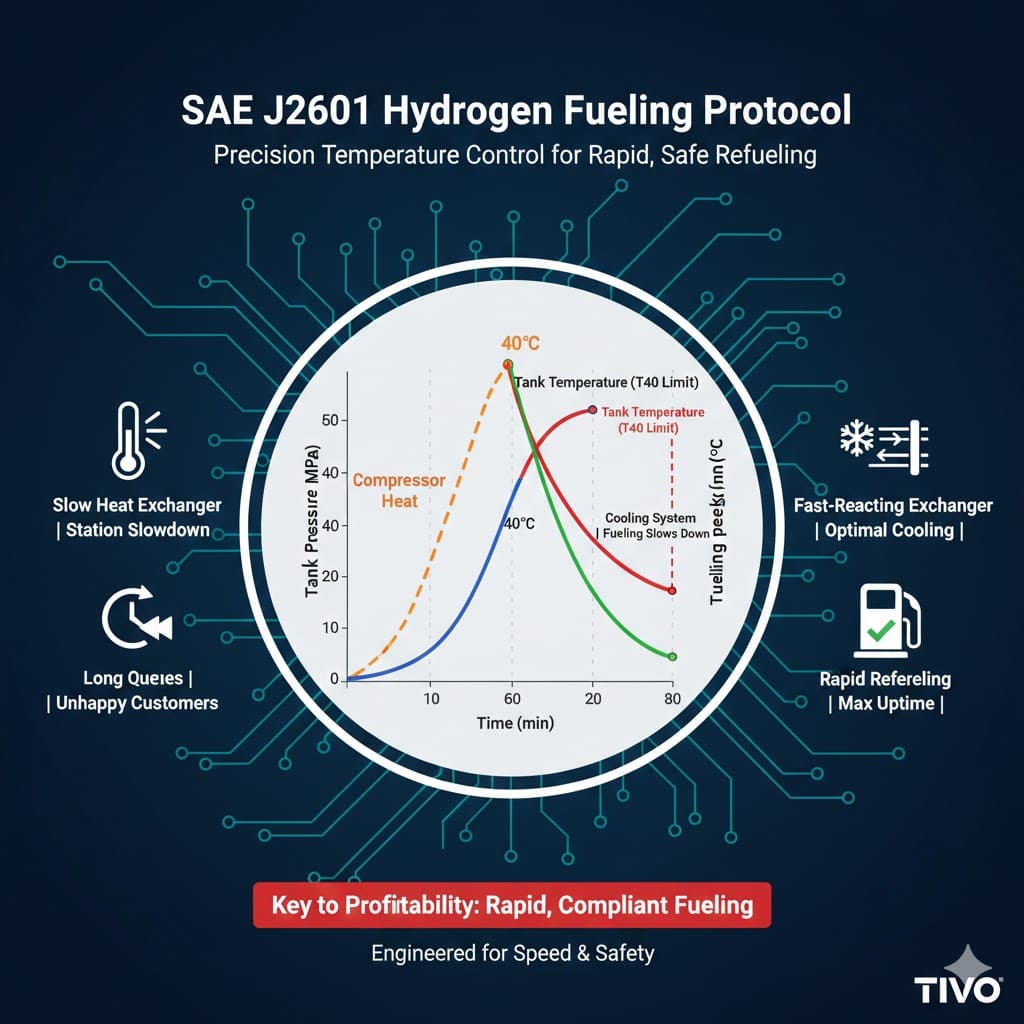
The hydrogen industry runs on strict rules. The most important rule is the SAE J2601 protocol. This standard sets the safety limits for fueling. It defines the "T40" temperature class, which means the hydrogen must be cooled to -40°C before it enters the vehicle tank. This is necessary to prevent the vehicle tank from overheating as the gas compresses inside it.
Here is the problem I see often: many heat exchangers have a slow "Thermal Response." When the fueling starts, the exchanger takes too long to get the gas down to the target temperature. The station's computer monitors this. If the sensor sees that the gas is too warm, it forces the pump to slow down. It restricts the flow rate to stay safe.
This creates a commercial problem. If the flow rate is slow, it takes 10 minutes to fill a car instead of 3 minutes. This leads to long lines at the station. In this emerging market, efficiency is everything. TIVO units use high-turbulence plate patterns10. This turbulence forces the heat transfer to happen instantly. We minimize the "dead time" at the start of the fueling cycle. This allows the station to run at maximum speed while staying fully compliant with SAE J2601.
| Performance Metric | Slow Thermal Response | TIVO Fast Response |
|---|---|---|
| Cooling Speed | Gradual drop to -40°C | Instant drop to -40°C |
| System Reaction | Limits flow rate | Allows max flow rate |
| Customer Impact | Long wait times | Fast refueling |
| Compliance | Risk of violation | Full SAE J2601 Safety |
Can big brand standard units fit into compact hydrogen dispensers11?
Hydrogen stations are small. You often do not have room for bulky, standard piping layouts.
Major manufacturers often refuse to change connection locations for low-volume orders. This forces you to use complex piping that wastes space and adds leak points.
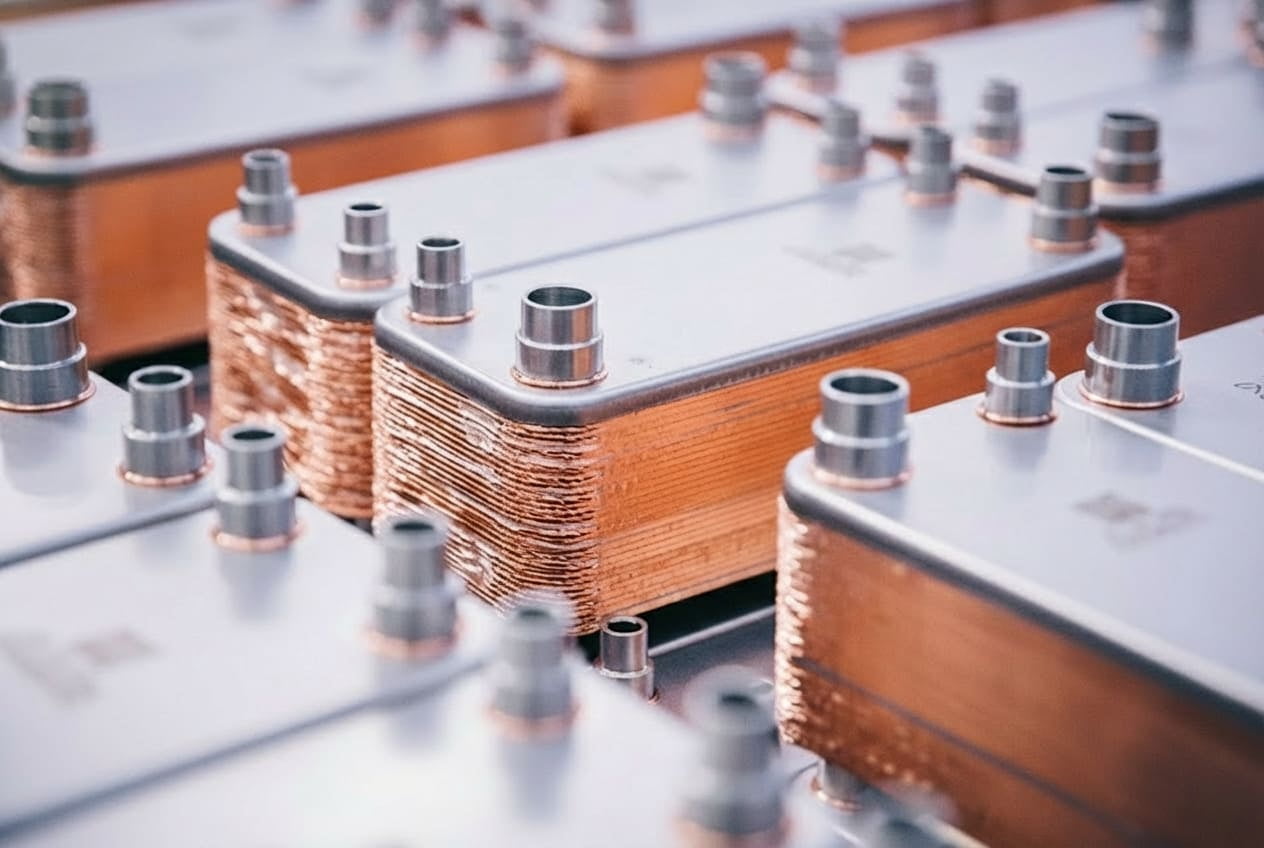
The hydrogen energy sector is still an "emerging track." This means the equipment designs are not yet standard. Every manufacturer designs their dispenser cabinets differently. Space is always very tight. Engineers are constantly fighting for every millimeter of internal space.
I often talk to customers who try to buy from the big global brands. These brands have excellent products, but they are rigid. They sell standardized units. They might say, "The water inlet is on the front, and the gas outlet is on the back. Take it or leave it." If your cabinet design does not fit that layout, you have a problem. You have to add elbows and extra pipes to make it fit. This takes up more space and adds more potential leak points.
At TIVO, we understand that you need flexibility. We can adjust our production quickly. If you need the refrigerant interface on the left side and the hydrogen outlet on the top, we can do that. If you need the mounting brackets moved 5 centimeters up, we can do that too. We do not require you to order 10,000 units to get this service. We support personalized cabinet designs. This helps you keep your station footprint small and your piping simple.
| Customization Aspect | Global Standard Brands | TIVO Flexible Approach |
|---|---|---|
| Port Locations | Fixed / Standard | Customizable |
| Mounting Brackets | Fixed positions | Adjustable per drawing |
| Minimum Order | High for custom units | Low / Supportive |
| Design Fit | Requires adapters | Plug-and-Play |
Is your heat exchanger truly safe for high-pressure hydrogen applications?
Hydrogen is flammable and stored at high pressure. Safety margins cannot be guessed.
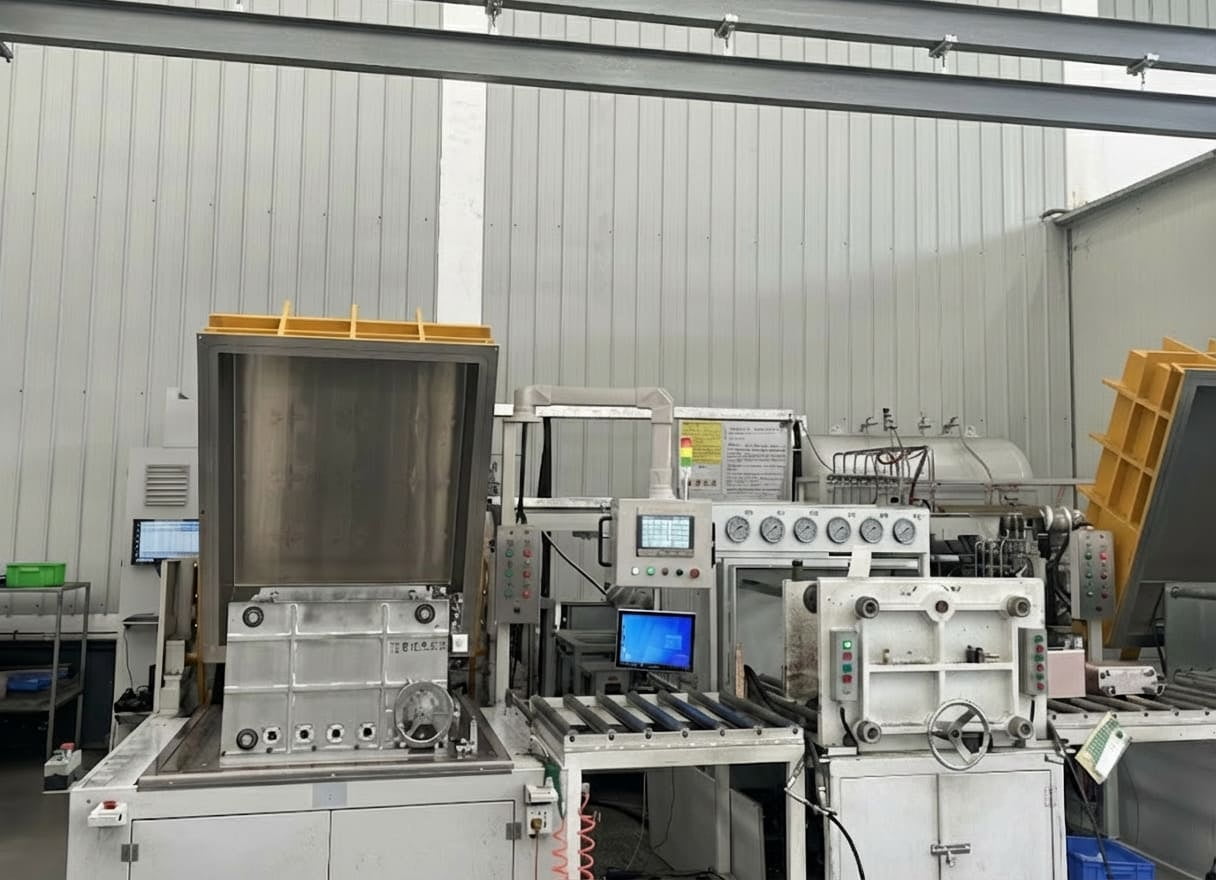
We use rigorous burst pressure testing and helium leak detection12. We ensure our stainless steel 316L materials are pure to prevent hydrogen embrittlement13 and catastrophic failure.
Safety is the baseline for everything we do in the hydrogen industry. You are dealing with a gas that is highly flammable and under immense pressure. In transcritical CO2 cycles or direct hydrogen cooling, pressures can exceed 100 bar easily. Our Ultra-High Pressure units are rated for up to 140 bar. But a rating on a paper is not enough.
We focus heavily on material purity. We use 100% spectral analysis on our 316L stainless steel. If the steel has impurities, hydrogen can cause "embrittlement." This makes the metal weak and brittle over time, leading to sudden explosions. We certify that our materials are pure.
Furthermore, testing methods matter. Standard water pressure testing is good, but helium is better for this industry. Helium molecules are very small, similar to hydrogen. If a unit can hold helium without leaking, it will hold hydrogen. We use advanced helium leak detection on our high-pressure units. This ensures that when you install a TIVO unit, it is sealed tight. We remove the risk of microscopic leaks that could turn into major hazards.
| Safety Protocol | Standard Industry Practice | TIVO Advanced Protocol |
|---|---|---|
| Leak Testing | Hydraulic (Water) | Helium Leak Detection |
| Pressure Rating | 30-45 Bar | Up to 140 Bar |
| Material Check | Mill Certificate | 100% Spectral Analysis |
| Risk Focus | General leaks | Hydrogen Embrittlement |
Conclusion
Hydrogen stations need heat exchangers that handle thermal shock, ensure SAE J2601 speed, and fit tight spaces. TIVO delivers safe, customizable solutions for this demanding industry.
Explore how BPHE technology enhances efficiency and safety in hydrogen fueling applications. ↩
Learn about the SAE J2601 standard and its critical role in ensuring safe and efficient hydrogen refueling. ↩
Discover the key design factors for creating efficient and safe compact hydrogen fueling stations. ↩
Understand the unique challenges of intermittent fueling and how to address them effectively. ↩
Discover the factors leading to metal fatigue and how to prevent it in hydrogen systems. ↩
Explore this resource to understand the latest innovations and safety measures in hydrogen refueling, ensuring efficient and safe operations. ↩
Understand the impact of thermal shock on heat exchangers and how to mitigate its effects. ↩
Explore the potential problems with brazing seams and how to ensure their integrity. ↩
Learn how thermal response speed impacts fueling times and customer satisfaction. ↩
Explore the advantages of high-turbulence designs for faster heat transfer in hydrogen fueling. ↩
Learn about the unique design requirements for hydrogen dispensers and how to optimize space. ↩
Understand the importance of helium leak detection for ensuring safety in hydrogen systems. ↩
Explore the risks of hydrogen embrittlement and how to choose materials that resist it. ↩