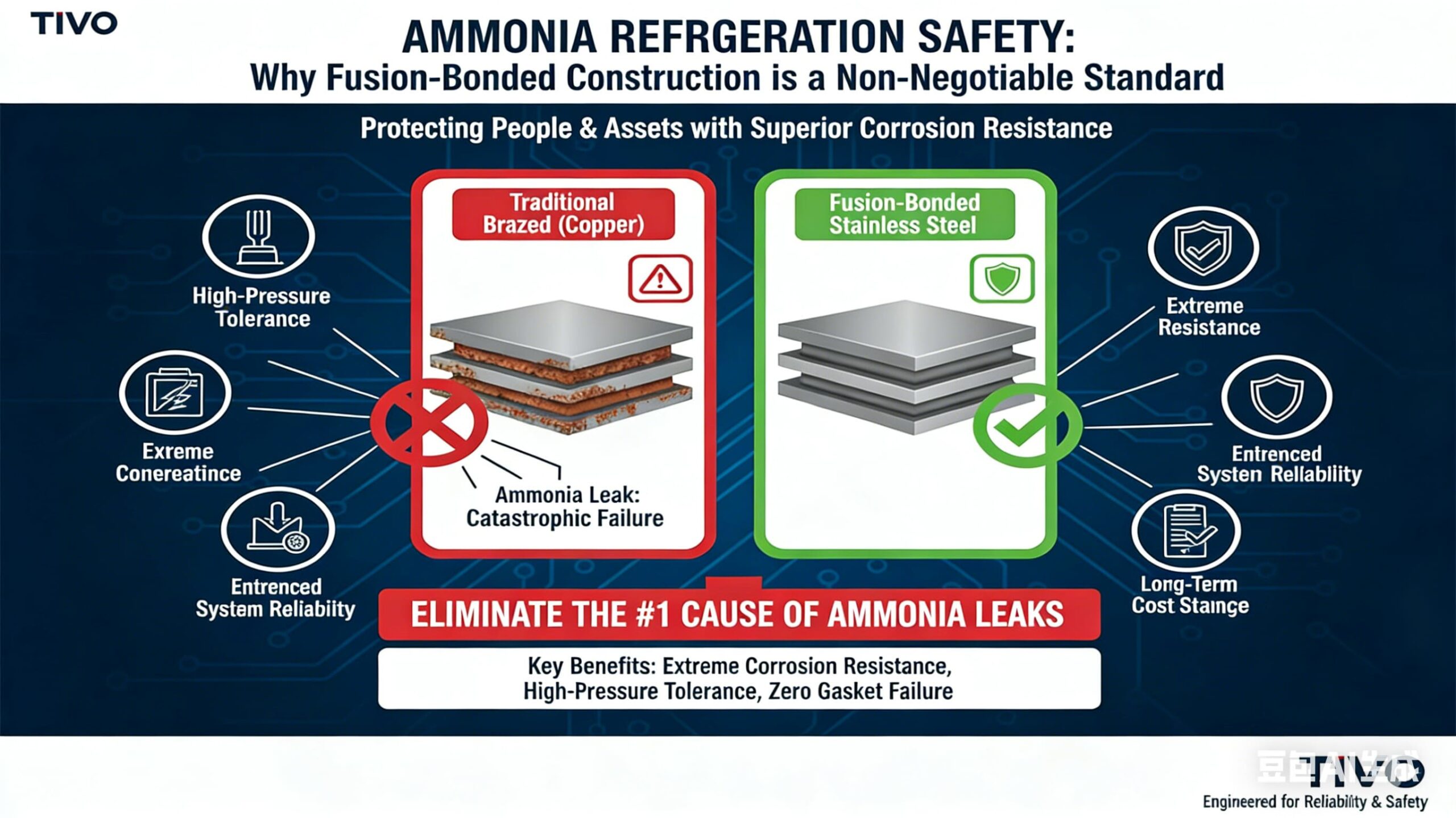
You worry about ammonia leaks1 in your factory. These leaks stop production and endanger your workers. You need a solution that handles ammonia safely without breaking down.
Fusion-bonded plate heat exchangers are the best choice for ammonia systems. They are made of 100% stainless steel and contain zero copper. This construction eliminates the risk of copper corrosion2. They offer high efficiency and a compact size compared to older technologies.
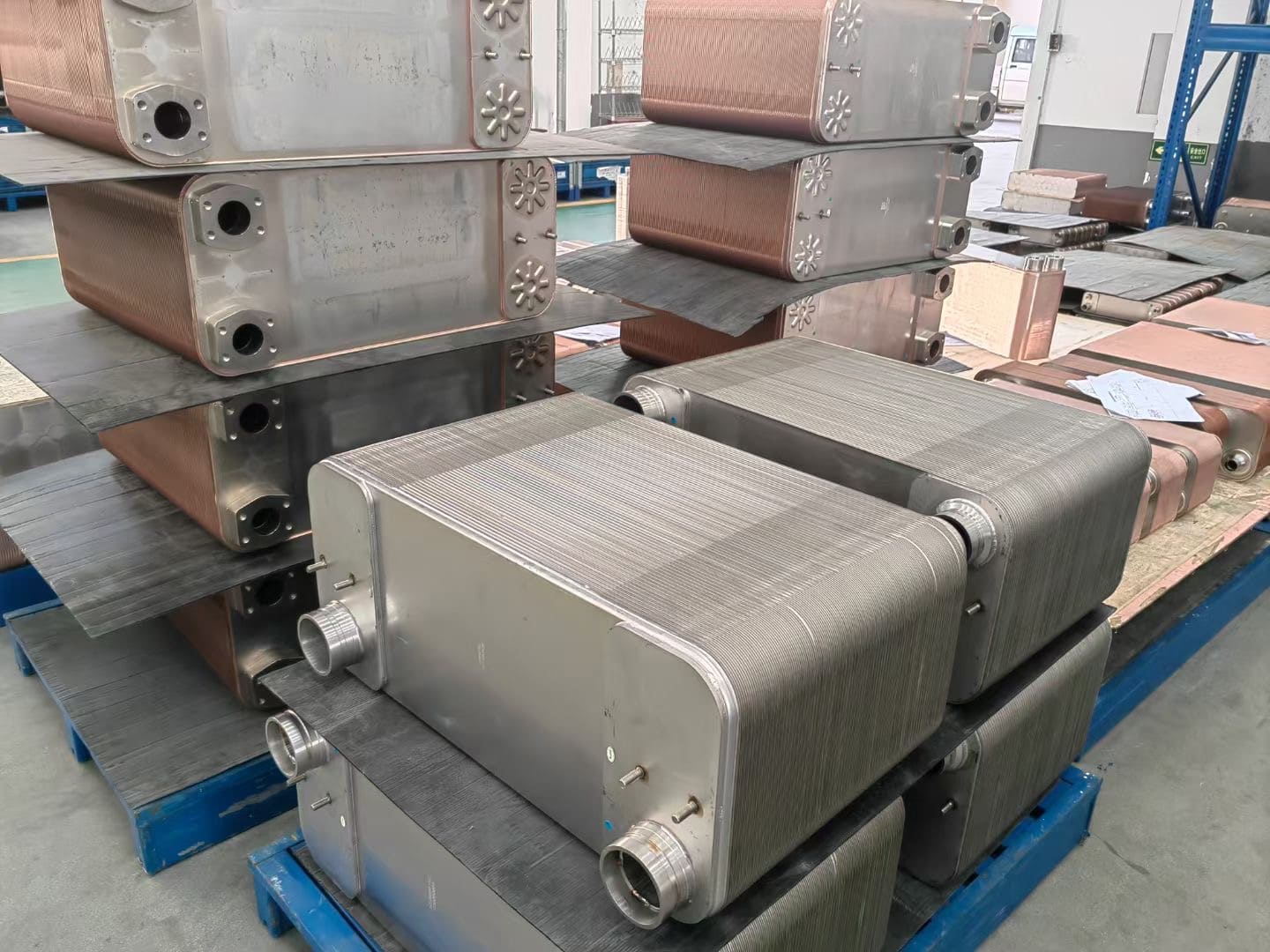
I have visited many factories over the last 15 years. I often see maintenance managers stressed about their cooling systems. They use ammonia because it is efficient. However, they struggle with equipment failures. The problem usually comes from the materials inside their heat exchangers. If you choose the wrong unit, it will leak. It is only a matter of time. I want to explain why this happens and how we solved it at JIANGYIN TIVO TECHNOLOGY3.
Why does ammonia destroy traditional copper-brazed heat exchangers4?
Ammonia is a powerful refrigerant, but it is very aggressive. It eats through copper quickly. If you use copper parts, you invite disaster into your plant.
Traditional brazed plate heat exchangers use copper as a filler metal. Ammonia reacts with this copper. This reaction causes the joints to dissolve. The unit falls apart, and dangerous ammonia leaks out.
I want to dive deeper into the chemistry and history here. In the past, engineers had limited choices. They knew they could not use standard copper-brazed units. So, they used Shell & Tube heat exchangers or Gasketed Plate Heat Exchangers (GPHE)5. These were the only safe options for a long time. However, they have big problems. Shell & Tube units are huge. They take up too much floor space. They are also very heavy. Gasketed units are better, but the rubber gaskets can fail over time.
The real danger comes when someone tries to cut costs. I have seen buyers purchase standard brazed units for ammonia systems. They think it will be fine. It is never fine. The ammonia attacks the copper brazing material immediately. It eats the copper like acid. Soon, the internal channels mix. Then, the fluid leaks to the outside. This creates a safety hazard.
At TIVO, we understand this chemical conflict. We know that ammonia and copper can never touch. This is why we tell our customers to avoid standard brazed units for these projects. You cannot rely on a thin layer of protection. You need a material that is naturally safe.
Here is a simple comparison of how different units handle ammonia:
| Heat Exchanger Type | Material Composition | Ammonia Safety | Size/Footprint |
|---|---|---|---|
| Standard Brazed (BPHE) | Stainless Steel + Copper | Unsafe (High Corrosion) | Compact |
| Shell & Tube | Carbon/Stainless Steel | Safe | Very Large |
| Gasketed (GPHE) | Stainless Steel + Rubber | Safe (Maintenance needed) | Medium |
| Fusion Bonded (TIVO) | 100% Stainless Steel | Very Safe | Compact |
You can see the clear winner. You need safety, but you also want a small unit. The old ways force you to choose between safety and size. Now, you do not have to choose.
How does fusion-bonded technology ensure 100% stainless steel6 safety?
We use a special process to join the steel plates. We do not use copper or nickel filler. We melt the stainless steel together to create a solid block.
This fusion-bonded technology creates a unit that is 100% stainless steel. It resists corrosion completely. It handles high pressure and extreme temperatures without any risk of leaks.
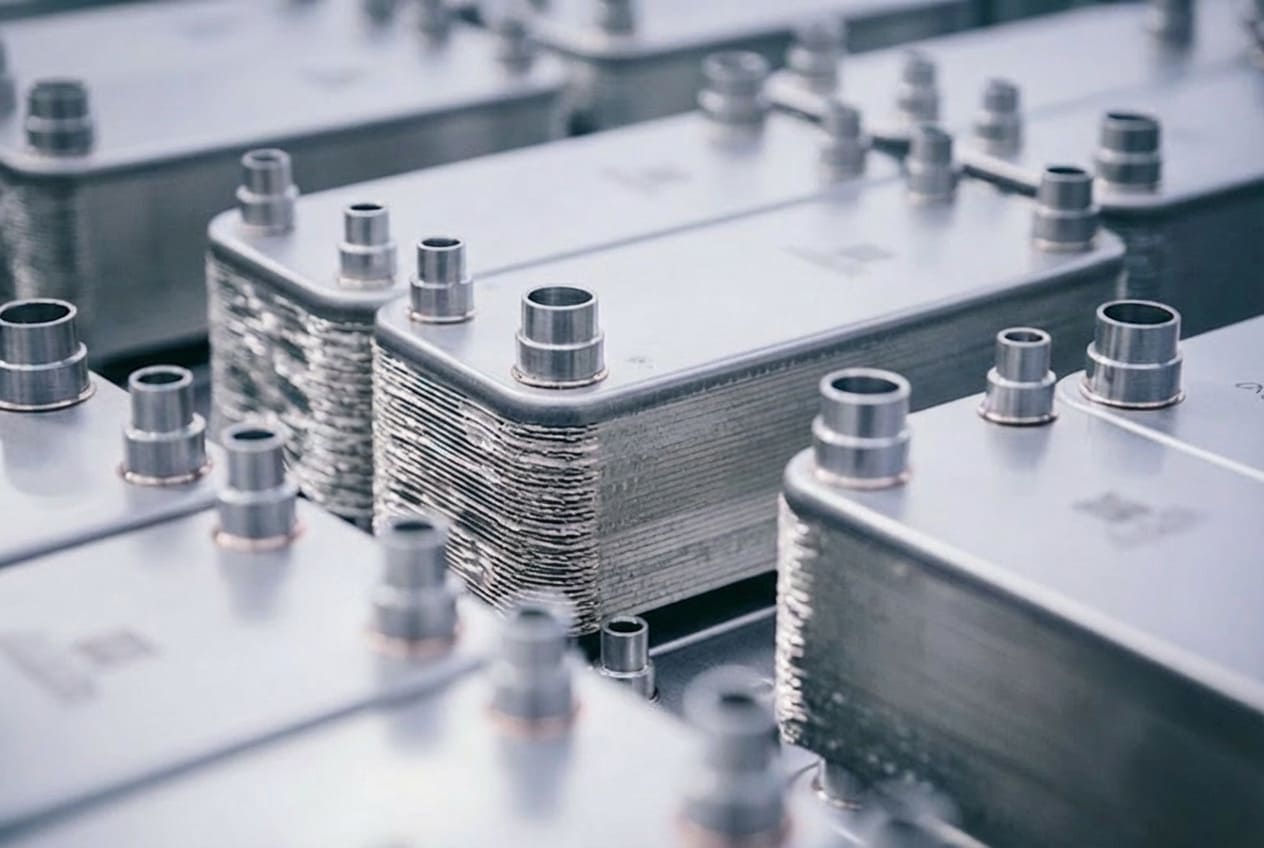
Let me explain how we make these at our factory. The process is different from traditional brazing. In normal brazing, you put a sheet of copper between steel plates. You heat it up, and the copper melts like glue. In fusion bonding, we rely on the active diffusion bonding of the steel itself. We use specialized materials like 304 or 316L stainless steel. We heat them under vacuum conditions. The metal atoms move and bond with each other.
The result is a single piece of metal. There are no gaskets to replace. There is no copper to corrode. It is pure stainless steel. This is perfect for ammonia (NH3) applications. It is also great for deionized water7 and corrosive chemicals.
I am very proud of our engineering team. They worked hard to perfect this. We tested these units rigorously. We use helium leak detection8. We push the pressure limits. We ensure that every unit can handle the stress. Our fusion-bonded units can replace the old Shell & Tube exchangers. But they are much smaller. They fit into tight spaces in skids and machinery.
This technology also helps with heat transfer. Copper is a good conductor, but the fusion design optimizes the flow. We design the corrugations on the plates to mix the fluid well. This creates high turbulence. High turbulence means better cooling or heating. You get the same performance as a giant Shell & Tube unit, but the device is the size of a suitcase.
Here are the key technical benefits we achieved:
- Zero Contamination: No copper ions enter your fluid.
- High Pressure: Can handle pressures that break gaskets.
- Temperature Resistance: Handles extreme cold and heat.
- Durability: No solder joints to crack under vibration.
Why is fast delivery critical for your refrigeration projects?
Big brands take months to deliver special orders. They prioritize their biggest clients. You wait, and your project stalls. This costs you money every day.
We deliver custom fusion-bonded units in about 20 days. We treat every order with urgency. We help you finish your project on time and keep your customers happy.
I talk to many project managers. People like David in the USA or Lars in Europe. They all have the same complaint. They go to the big famous brands. I will not name them, but you know who they are. These brands make good products. But they are slow. If you want a specialized fusion-bonded unit, they say, "Wait 8 weeks." Sometimes they say, "Wait 12 weeks."
If you are a huge global company, maybe they hurry for you. But if you are a medium-sized manufacturer, you wait. Your assembly line stops. You cannot ship your chillers. You lose money. You lose trust with your clients.
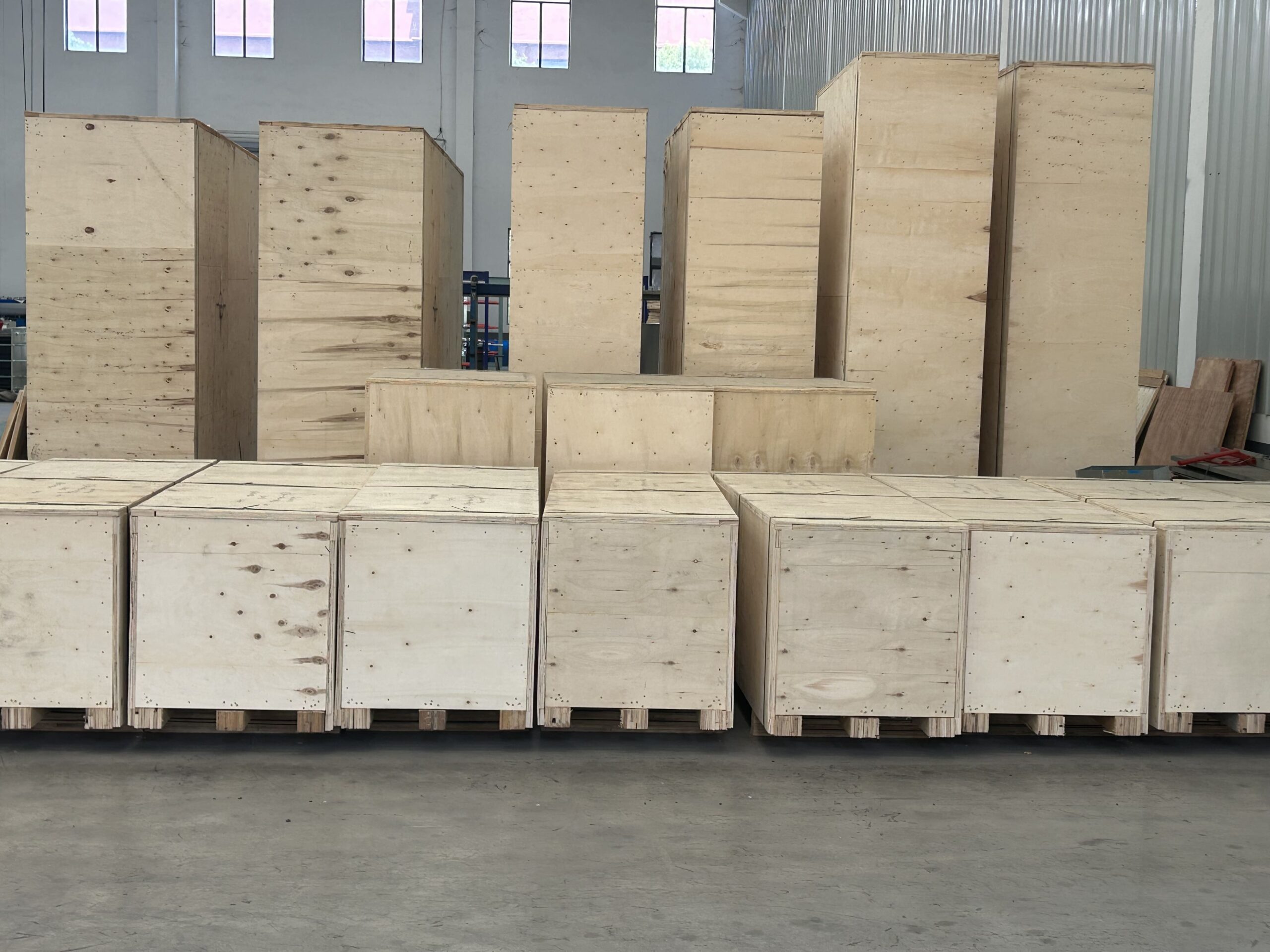
At JIANGYIN TIVO, we changed this. We built a flexible production system. We have 16 production lines. We do not have a slow bureaucracy. When you confirm an order, we start work. For a standard fusion-bonded order, we aim for 20 days. That is very fast in this industry.
We keep stock of the raw materials. We have the molds ready. Our team works in shifts. We know that speed is part of quality. A good product that arrives three months late is a bad product.
I remember a client in Indonesia. His plant shut down because of a leak. He needed a replacement fast. The big brand told him to wait three months. He called us. We made the unit and shipped it in two weeks. He saved his production season. That is the value of speed. We support you when the big guys ignore you.
Where have we successfully applied these fusion-bonded units?
We use these units in many tough industries. They work in food processing, chemical plants, and clean energy. They prove their reliability every day in real-world conditions.
Our fusion-bonded exchangers9 cool ammonia compressors and heat clean water. They operate in high-purity environments. They solve problems where copper is not allowed.
I want to share some specific examples of where our units are running right now. The most common place is in industrial refrigeration. Ammonia is the best refrigerant for the environment. It does not damage the ozone layer. But it is dangerous if it leaks. Our units are the heart of these systems. They act as oil coolers or condensers. They hold the ammonia safely inside.
We also see great success in the semiconductor industry. They need ultra-pure water. They cannot have any copper contamination. Even a tiny bit of copper can ruin a microchip. Our 100% stainless steel units are perfect for this. They keep the water pure.
Another growing area is hydrogen energy10. Electrolyzers need cooling. The fluids there can be aggressive. Copper is often not compatible. Fusion-bonded stainless steel is the standard choice here.
We have customers in Germany, the USA, and Brazil using these units. They replace the old, heavy equipment. They save space in their skids. This makes their machines smaller and cheaper to ship.
We test every single unit before it leaves China. We do not just check a few. We check 100%. We use hydraulic pressure testing. For critical units, we use helium. Helium atoms are very small. If helium cannot get out, ammonia cannot get out. This gives our customers peace of mind.
Here is a breakdown of industries we serve with this tech:
- Natural Refrigeration: Ammonia (NH3) heat pumps and chillers.
- Clean Water: Deionized water cooling for electronics.
- Chemical Processing: Handling fluids that eat copper.
- Pharmaceuticals: Processes requiring sanitary, copper-free surfaces.
- Renewable Energy: Hydrogen production and storage cooling.
Conclusion
Ammonia systems require 100% stainless steel fusion-bonded heat exchangers to prevent dangerous leaks. We provide these high-quality units in just 20 days, keeping your operations safe and efficient.
Understanding the risks of ammonia leaks can help you implement better safety measures in your facility. ↩
Discover the factors leading to copper corrosion and how to avoid them in your systems. ↩
Explore JIANGYIN TIVO TECHNOLOGY to discover their innovative solutions for ammonia systems, ensuring safety and efficiency in your operations. ↩
Explore this resource to understand the dangers of copper-brazed heat exchangers and why they fail in ammonia applications. ↩
Understand the role of GPHE in refrigeration and their limitations compared to fusion-bonded units. ↩
Learn why using 100% stainless steel can prevent corrosion and ensure safety in ammonia applications. ↩
Learn about the importance of deionized water in preventing contamination in sensitive processes. ↩
Discover the importance of helium leak detection in ensuring the integrity of heat exchangers. ↩
Explore this resource to understand how fusion-bonded exchangers enhance safety and efficiency in ammonia systems. ↩
Understanding the challenges can help you choose the right equipment for hydrogen energy systems. ↩