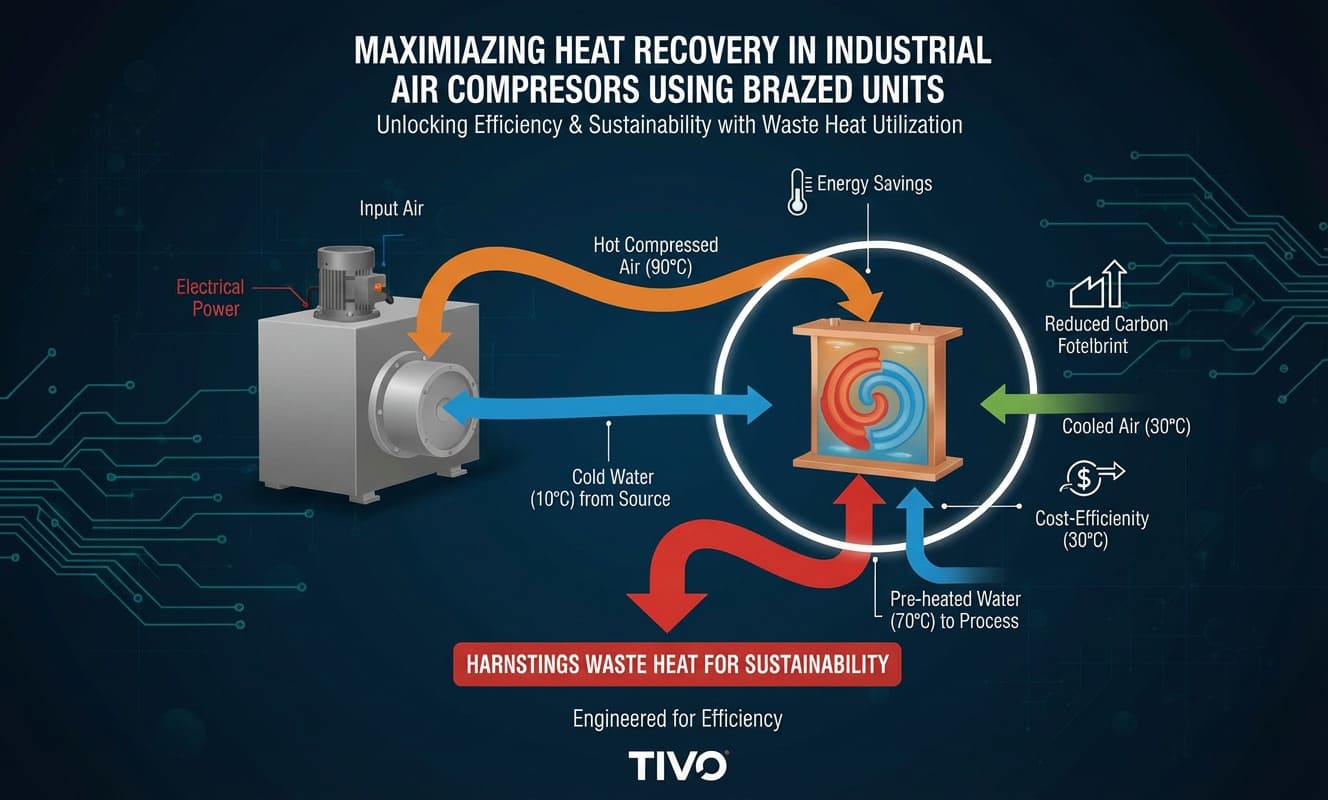
You run your industrial air compressors all day long. You watch your electricity bills climb higher every month. It feels like you are burning money just to keep the plant running. I understand this frustration because I see it with my customers every day. But there is a simple, proven way to stop this waste and reclaim that energy.
Brazed Plate Heat Exchangers1 (BPHE) are the most efficient tool for this job. They can recover over 90% of the waste heat2 from your compressor's oil circuit or compressed air3 side. These units are compact, handle high temperatures easily, and require almost no maintenance, turning waste heat into free hot water for your facility.
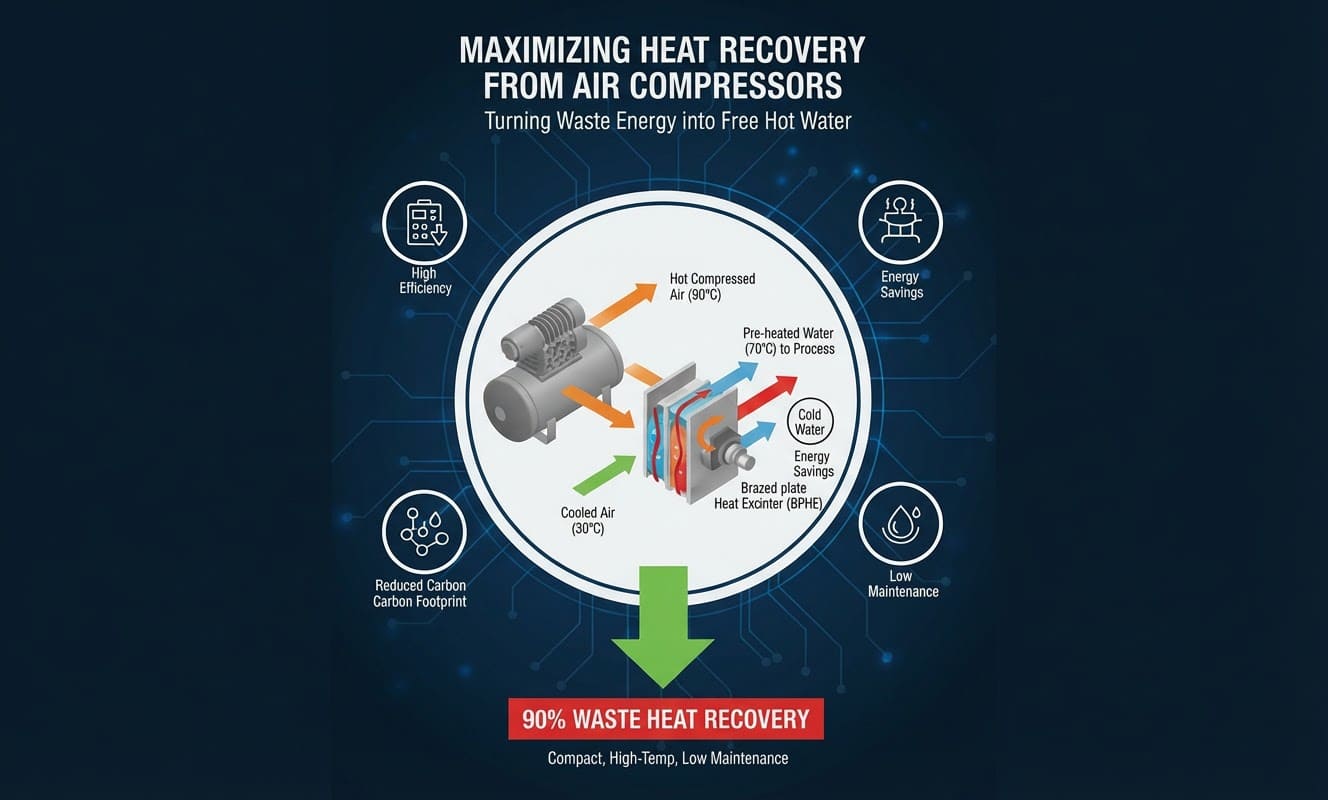
Many facility managers ignore this opportunity. They think installing a heat recovery system4 is too complex or takes up too much space. They continue to vent hot air into the atmosphere. But if you stop reading now, you will miss the chance to cut your energy costs significantly. I want to show you exactly how we do this at JIANGYIN TIVO TECHNOLOGY5.
Why Is Compactness Critical for Air Compressor Design?
Compressors are getting smaller and more powerful. You do not have extra room for bulky tanks or large pipes. This creates a massive headache for design engineers who need to add heat recovery.
The Brazed Plate Heat Exchanger solves this space problem perfectly. It offers extremely high power density in a very small footprint. You can fit our TIVO BPHE units directly inside the compressor cabinet without changing the external design of your machine.
I talk to OEM manufacturers like David Thompson often. He manages procurement for a large compressor company. His main pain point is always space. He cannot make his compressor skids larger just to add a heat exchanger. This is where the physics of our products becomes very important.
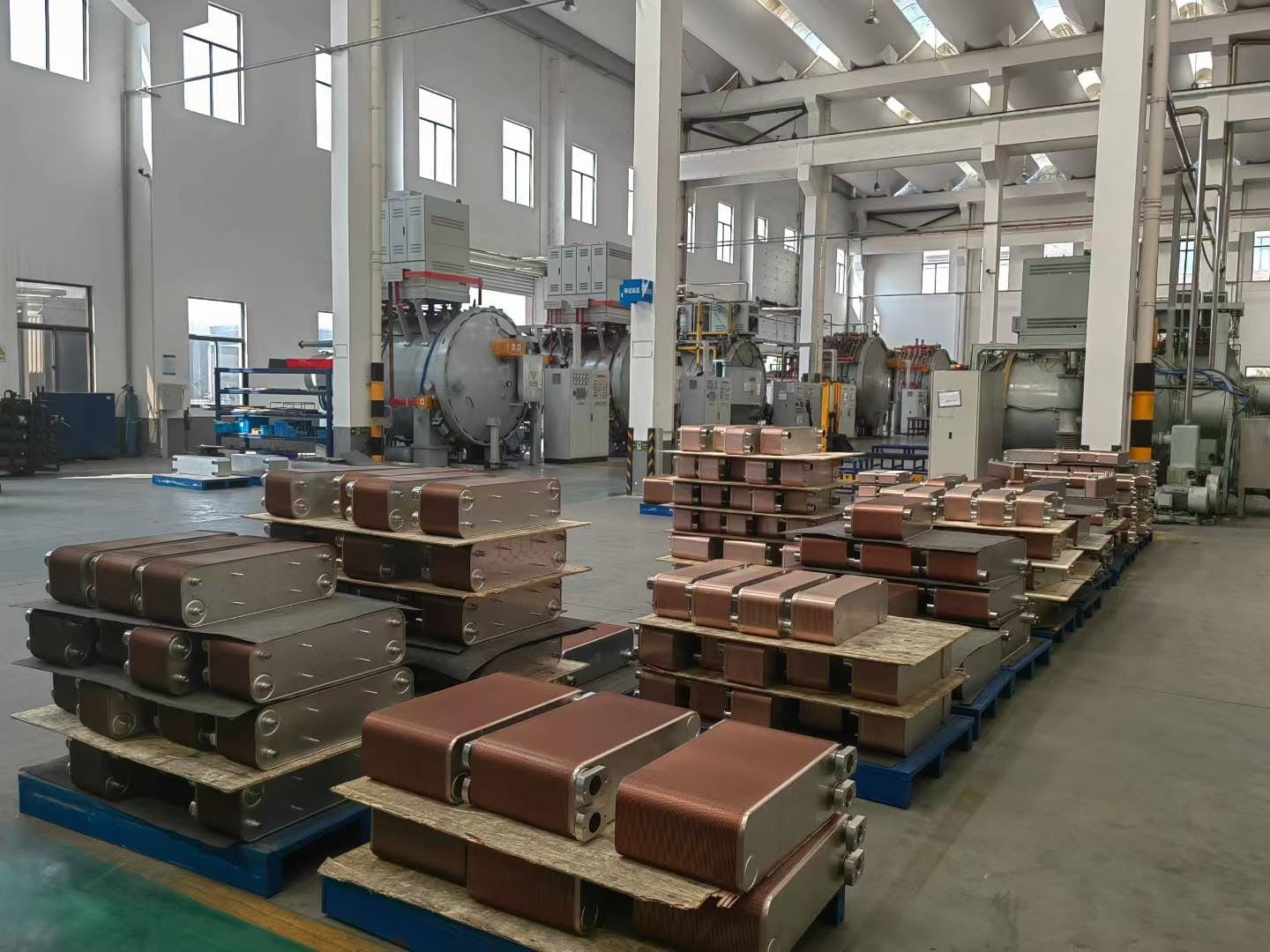
A traditional shell-and-tube heat exchanger is long and heavy. It requires a lot of steel and a lot of floor space. In contrast, a brazed plate heat exchanger uses thin stainless steel plates. These plates are stacked together. We braze them in a vacuum furnace. This creates a solid block. The surface area for heat transfer is huge, but the physical size is small.
At TIVO, we design the corrugation on these plates specifically for this purpose. The patterns on the plates create high turbulence. Turbulence makes the heat move from the hot oil to the water very fast. Because the heat transfer is so efficient, we need less surface area to do the job. This means the unit can be smaller.
Here is a simple comparison of the space requirements:
| Feature | Shell-and-Tube Exchanger | TIVO Brazed Plate Exchanger |
|---|---|---|
| Footprint | Large, requires floor mounting | Small, fits inside cabinet |
| Weight | Heavy, needs support structure | Light, hangs on piping |
| Heat Transfer Coefficient | Low to Medium | Very High |
| Internal Volume | High (lots of fluid hold-up) | Low (fast response time) |
For a standard screw compressor, our unit might be ten times smaller than an old-style exchanger. This allows you to keep your machine sleek. You do not need to redesign your entire assembly line. You simply mount the BPHE into the oil circuit. It hides inside the box, doing its job silently. This compactness is the first reason why brazed technology6 is the only real choice for modern compressors.
Can Brazed Plate Heat Exchangers Handle Extreme Temperatures and Pressures?
Compressor oil gets incredibly hot during operation. Standard plumbing parts often fail under this thermal stress. This leads to dangerous leaks, messy cleanups, and expensive downtime for your factory.
Our BPHE units withstand these extreme conditions with ease. We design them to handle high temperatures and working pressures up to 45 bar or even higher. They handle the thermal shock7 of compressor startup without cracking or leaking.
When you compress air, you generate heat. A lot of it. The oil in a screw compressor seals the rotors and absorbs this heat. The oil temperature can easily reach 100°C or more. On the air side, the pressure is high. If you use a weak heat exchanger, the plates will deform. The joints will fail. I have seen this happen with inferior products, and it is a disaster for the end-user.
At JIANGYIN TIVO, we take safety very seriously. We know that clients like Elena Rossi, who works with high-pressure systems8, demand reliability. Our brazed exchangers are made from 316L stainless steel plates. We use 99.9% pure copper for the brazing material. When we put this in the furnace, the copper melts and fuses the steel plates together at every contact point.
This creates a unit that is essentially one solid piece of metal. It is not just glued together. It is fused. This construction allows the unit to hold very high pressures. For specific applications, like CO2 compressors, we even have units that handle up to 140 bar.
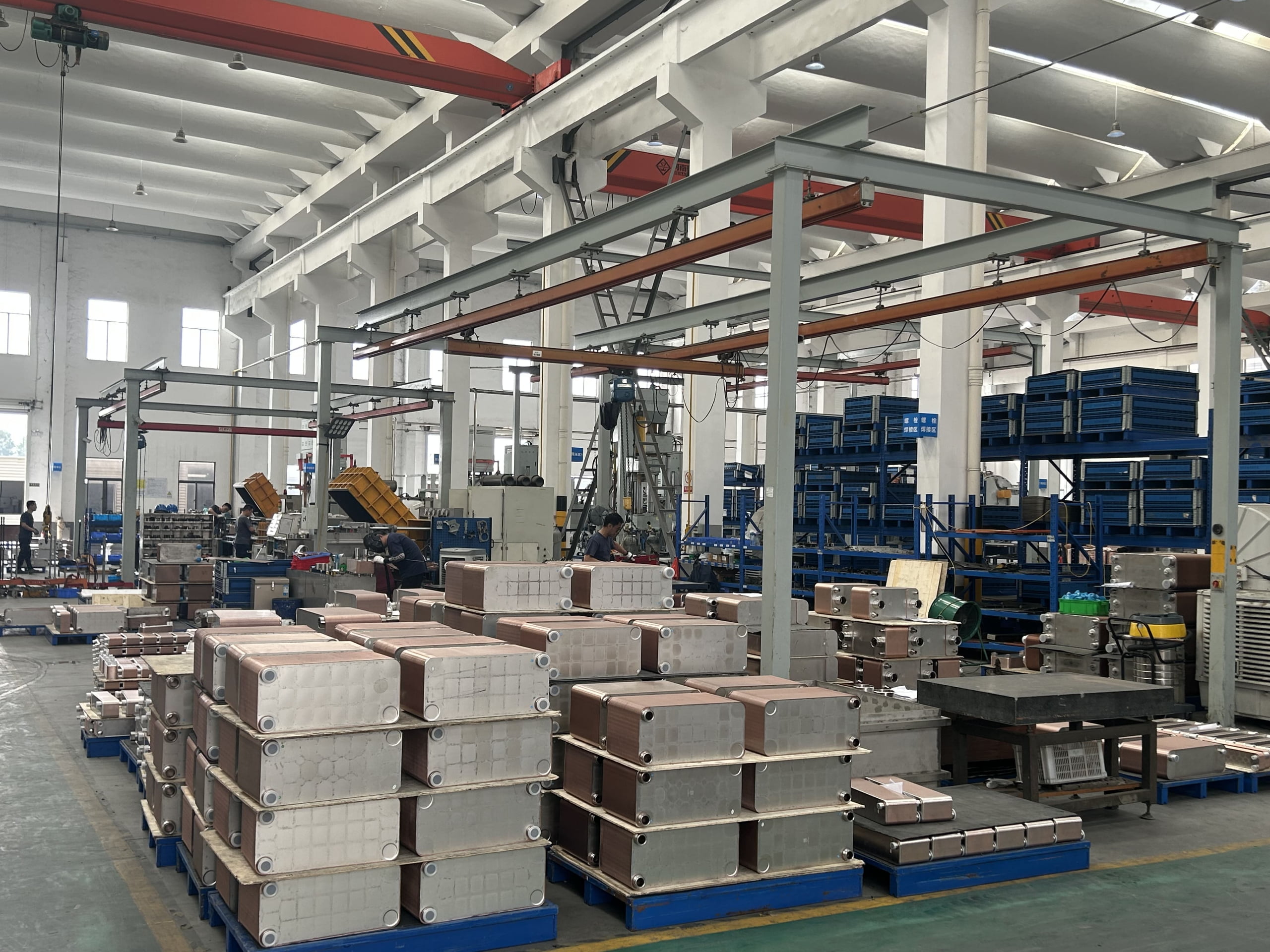
We also perform rigorous testing. Every single unit goes through a testing process before it leaves our factory in China. We use helium leak detection. Helium atoms are very small. If there is a microscopic hole, helium will find it. We also do burst pressure testing on sample batches. This ensures that the unit in your compressor is stronger than it needs to be.
You do not need to worry about the unit failing when the compressor cycles on and off. The fatigue resistance of a properly brazed unit is excellent. It handles the rapid temperature changes—from cold start to full load—without losing integrity. This reliability is why we are a trusted supplier for major OEMs in Germany and the USA.
What Are the Long-Term Maintenance Benefits of Using BPHEs?
Nobody likes maintenance shutdowns. Changing gaskets on an old heat exchanger is messy and expensive. It eats into your production time and requires skilled labor that is hard to find.
Brazed units are virtually maintenance-free9. They do not use rubber gaskets that dry out or crack over time. Since air compressor oil is a clean medium, these units can run for years without you ever needing to open them.
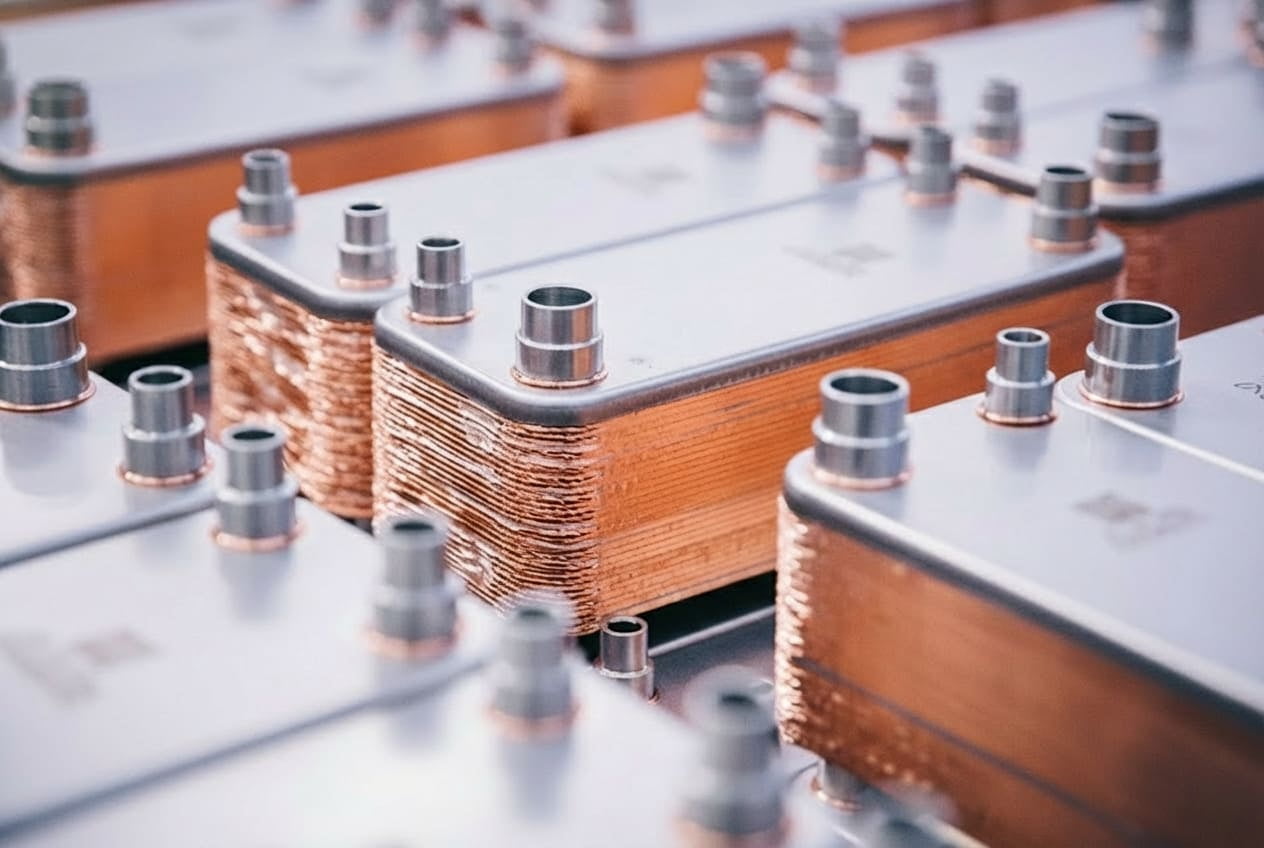
Let me explain why "maintenance-free" is such a big advantage here. In a traditional Gasketed Plate Heat Exchanger (GPHE)10, you have rubber seals between every plate. Rubber is organic. Over time, heat destroys it. It gets hard and brittle. Eventually, it leaks. You have to take the unit apart, peel off the old rubber, and glue on new gaskets. This costs money for parts and labor.
In an air compressor application, the fluids are usually quite clean. You have compressor oil on one side and water on the other. The oil is filtered by the compressor's internal system. It does not have rocks or sludge in it. Because the fluid is clean, you do not need to open the heat exchanger to scrub the plates manually.
Since you do not need to open it, you do not need gaskets. This is why the Brazed Plate Heat Exchanger (BPHE) is perfect. It is a sealed unit. There are no O-rings to replace. There are no bolts to tighten. You install it, and you forget it. This fits the "Fit and Forget" philosophy that many of my customers, like Ahmad Mansour, really appreciate. He manages plants in remote locations. He cannot wait weeks for a spare gasket kit to arrive. He needs equipment that just works.
Of course, you might worry about fouling on the water side11. If your cooling water is very dirty, it could clog. But even then, cleaning is simple. You do not take the unit apart. You just use "Cleaning in Place" (CIP). You pump a mild cleaning solution through the unit backwards. This flushes out any dirt. It takes an hour, not a day.
The stainless steel construction also resists corrosion. We use 316L steel. It handles water and oil without rusting. This ensures that your heat exchanger lasts as long as the compressor itself. You save on Operational Expenses (OpEx)12 every single year because you are not buying spare parts.
How Much Energy Cost Can You Actually Save?
Energy prices are not going down. You need to cut costs now to stay competitive. Ignoring the waste heat from your compressors is a financial mistake that hurts your bottom line.
You can recover more than 90% of the electrical input energy as heat. This heat is usually lost to the atmosphere through the cooling fan. We help you capture it to heat water for showers, boilers, or industrial cleaning processes.
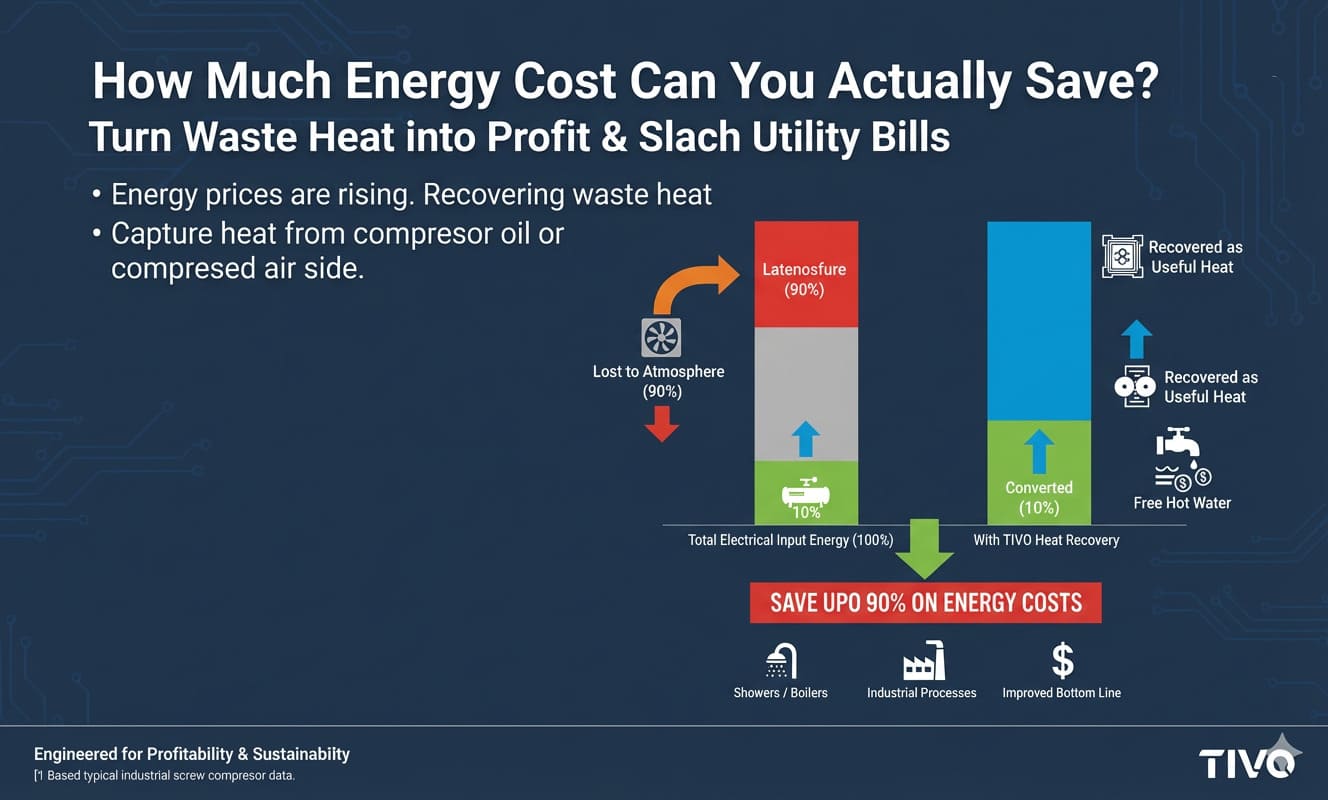
Let's do the math. It is simple, but the results are shocking. When you pay for electricity to run a compressor, where does that energy go? Only about 10% actually becomes compressed air energy. The other 90% turns into heat.
In a standard system, you use a fan to blow this heat away. You are literally paying for electricity, turning it into heat, and then throwing it outside. Sometimes, you even pay extra to run the fan to throw it away!
With a TIVO Brazed Plate Heat Exchanger, we intercept the hot oil before it goes to the cooler. We run it through the BPHE. We transfer that heat into a water circuit.
Here is a breakdown of the potential savings:
| Compressor Size | Recoverable Heat Energy | Equivalent Diesel Saved (Yearly) | Typical Application |
|---|---|---|---|
| 37 kW | ~27 kW | ~8,000 Liters | Boiler pre-heating |
| 75 kW | ~55 kW | ~16,000 Liters | Process water heating |
| 110 kW | ~80 kW | ~24,000 Liters | Factory heating / Showers |
| 160 kW | ~117 kW | ~35,000 Liters | District heating support |
Note: Based on 4000 operating hours per year.
If you have a 110 kW compressor, you are generating 80 kW of free heat. If you use natural gas or diesel to heat water for your boiler feed or for cleaning parts, you can stop using that fuel. You use the compressor heat instead.
The Return on Investment (ROI)13 is usually very fast. For many of our customers, the cost of the heat exchanger pays for itself in less than six months. After that, the heat is free money.
This also helps with your sustainability goals14. You burn less fossil fuel. You reduce your carbon footprint. This is very important for companies in Europe and other regions with strict environmental rules. By using a simple device like our BPHE, you solve a financial problem and an environmental problem at the same time.
Conclusion
Using Brazed Plate Heat Exchangers in your air compressors saves space, ensures safety under high pressure, eliminates maintenance headaches, and recovers 90% of your wasted energy.
Explore the advantages of BPHEs for energy efficiency and cost savings in industrial applications. ↩
Learn effective methods to recover waste heat and improve energy efficiency in your facility. ↩
Explore best practices for optimizing compressed air systems and improving efficiency. ↩
Understand the workings of heat recovery systems and their benefits for energy efficiency. ↩
Explore JIANGYIN TIVO TECHNOLOGY's innovative heat exchanger solutions to understand how they can significantly reduce energy costs and improve efficiency. ↩
Learn about brazed technology and its advantages in modern heat exchanger design. ↩
Learn about thermal shock and its implications for the reliability of heat exchangers. ↩
Discover the challenges and solutions for managing high-pressure systems effectively. ↩
Explore the advantages of maintenance-free systems for reducing downtime and costs. ↩
Understand the key differences between GPHE and BPHE for better heat exchanger selection. ↩
Understanding fouling helps maintain efficiency and prolongs the lifespan of heat exchangers, ensuring optimal performance. ↩
Explore ways to minimize operational expenses and improve your bottom line. ↩
Learn how to calculate ROI and assess the financial benefits of industrial investments. ↩
Discover strategies for achieving sustainability in manufacturing and reducing environmental impact. ↩